

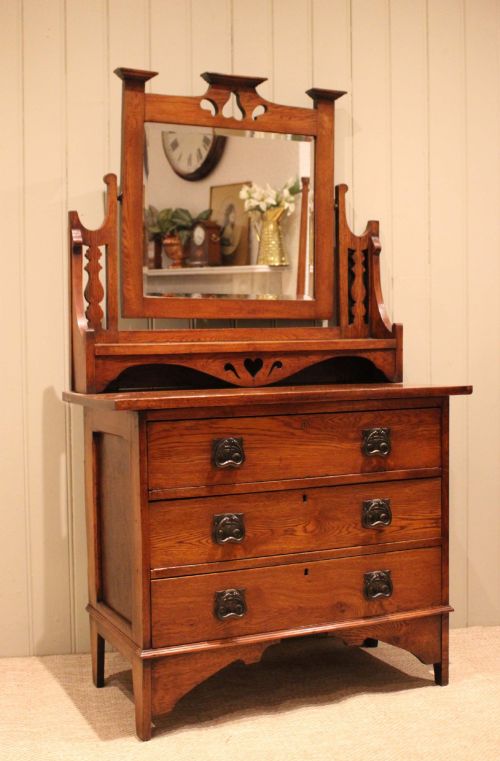
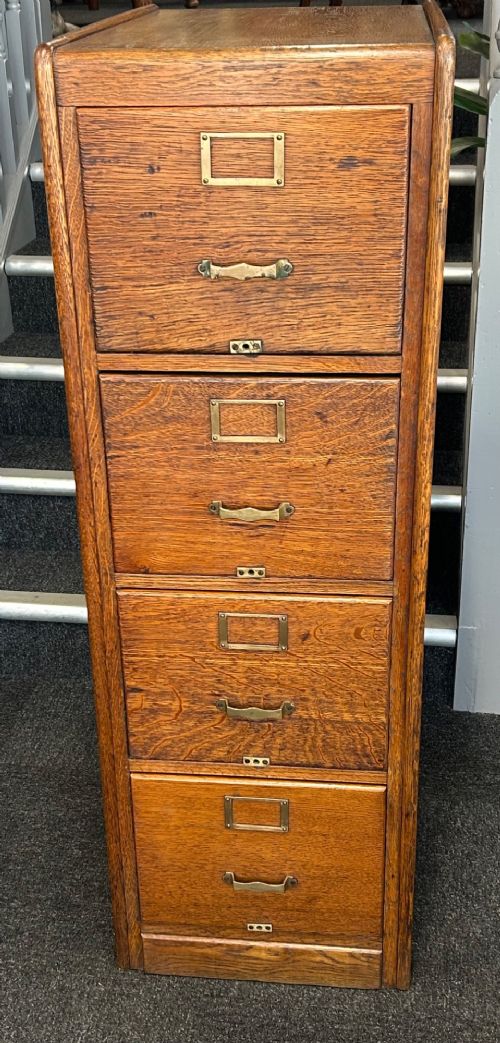
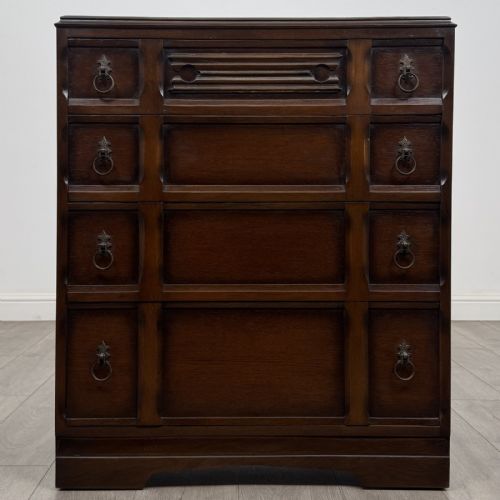
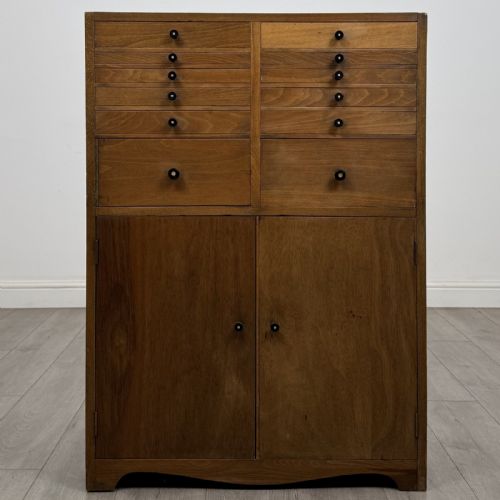
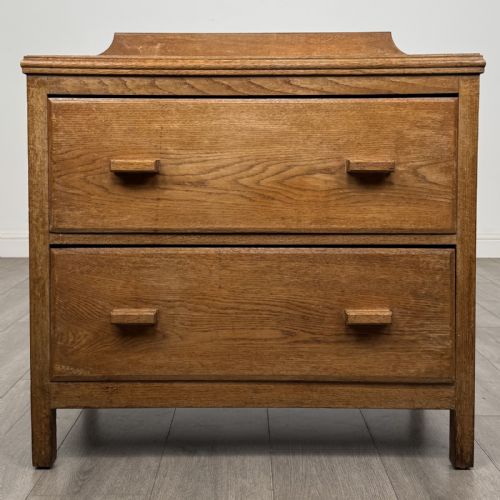
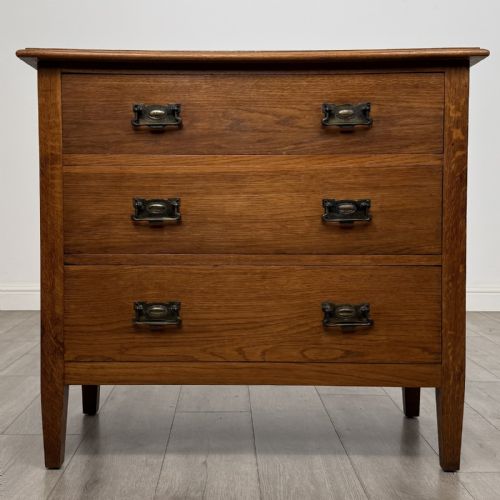
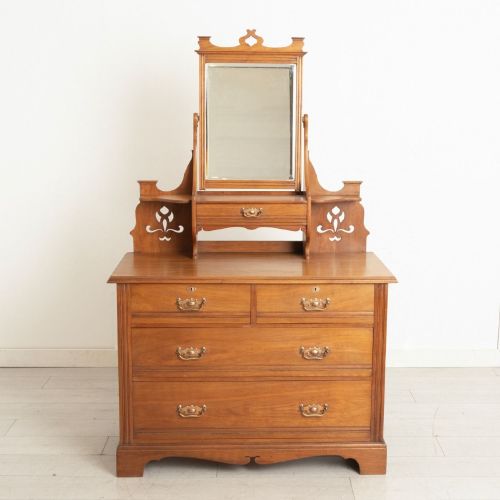
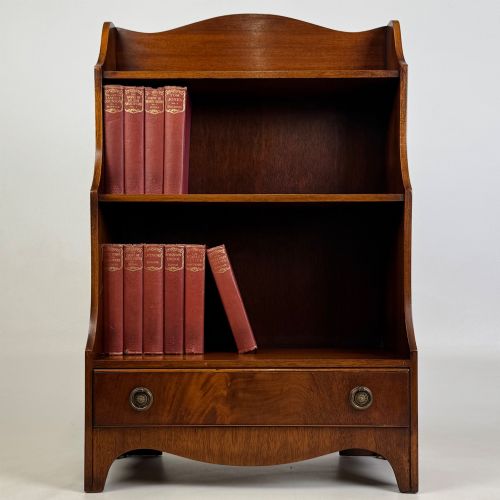
Edwardian Drawer Unit
An edwardian drawer unit is a practical piece of storage furniture combining timber construction with multiple tiers.
Edwardian Drawer Unit
An edwardian drawer unit encompasses various timber storage forms designed for domestic and commercial interiors around the turn of the twentieth century. These pieces range from bedroom chests and dressing tables to specialised filing cabinets, collectors cabinets, and shop counters.
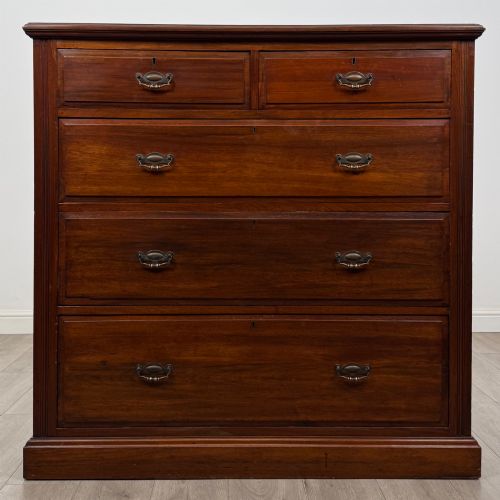
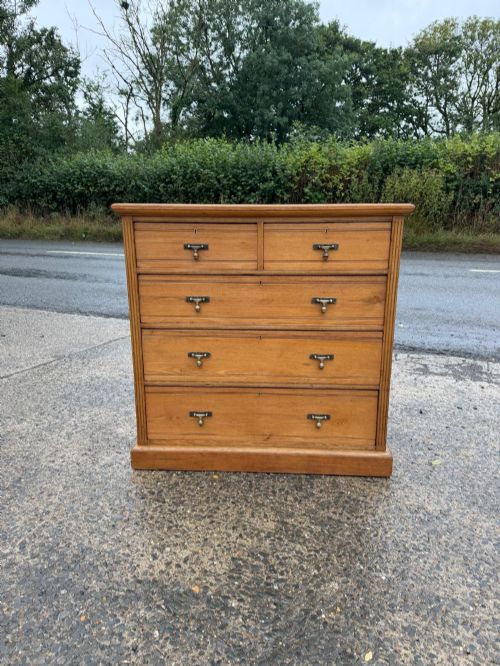
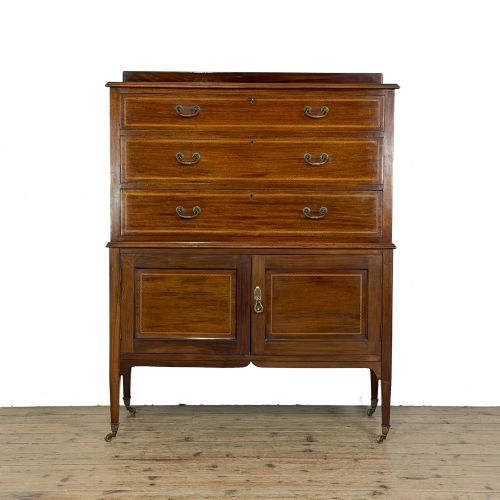
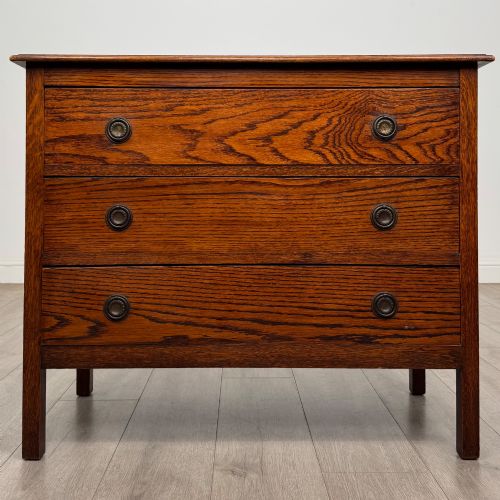
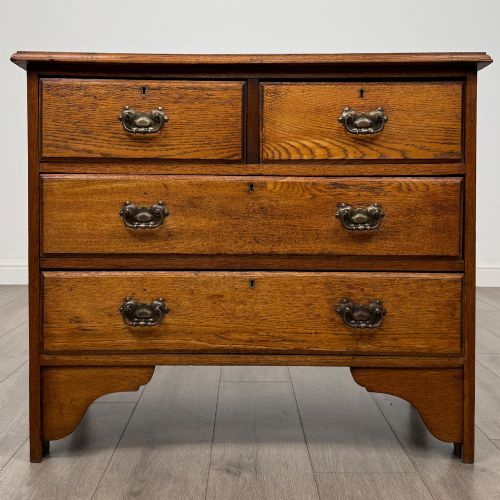
The most common examples on this page are oak and mahogany chests of drawers, often configured with two short drawers over three long drawers. Collectors cabinets, music cabinets, and multi-drawer filing units also appear alongside dressing chests and open bookcases.
While the primary period focus is Edwardian, the inventory extends across related eras including Victorian, Regency, and the early twentieth century. Styles vary from utilitarian industrial designs to Arts and Crafts pieces and Jacobean revivals.
Materials and construction methods
Cabinet makers relied heavily on hardwoods such as oak, walnut, and mahogany, occasionally utilising pine for secondary components and satinwood for decorative surfaces. These timbers were selected for their durability and grain patterns, providing a sturdy carcase for multi-drawer configurations.
Hardware details such as brass acorn handles, shell pulls, label holders, and knob handles are integral to the construction of these units. Raised galleries, turned legs, and shaped sides further define the carpentry techniques applied during the period.
Edwardian Drawer Unit Retail Price Guide 2026
Typical asking prices for edwardian drawer unit among the pieces listed under this phrase on Sellingantiques today, from the lower quarter to the upper quarter. They describe what is for sale here now, not the wider market.
Listings feature timbers such as oak, mahogany, walnut, satinwood, pine, and brass across various Edwardian, Victorian, and Regency forms.
Distinguishing quality in multi-drawer furniture
Quality in an edwardian drawer unit relates directly to the selection of timber and the integrity of the joinery across multiple tiers. Heavier oak and mahogany builds with intact original hardware demonstrate superior workshop standards compared to modified or heavily restored equivalents.
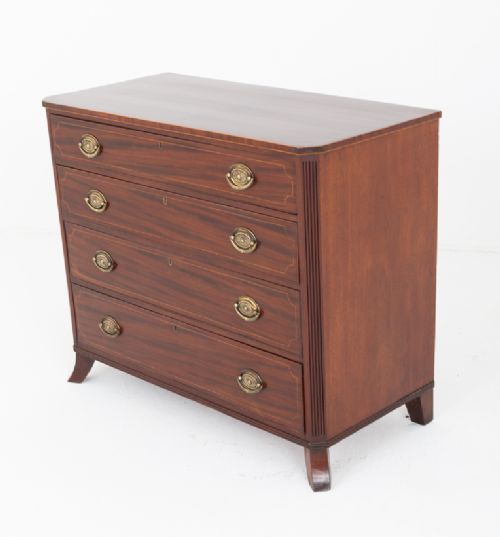
The sophistication of decorative details separates standard bedroom storage from notable maker pieces. Incorporated elements like raised galleries, inlay work, and specialised internal fittings distinguish standard utilitarian items from fine artistic outputs.
Shapland and Petter·J Shoolbred·Lamb of Manchester
The Edwardian Drawer Unit Glossary
- Raised gallery
- A low decorative wooden upstand positioned along the top rear edge of a chest or cabinet. It prevents items from sliding off the surface.
- Wellington chest
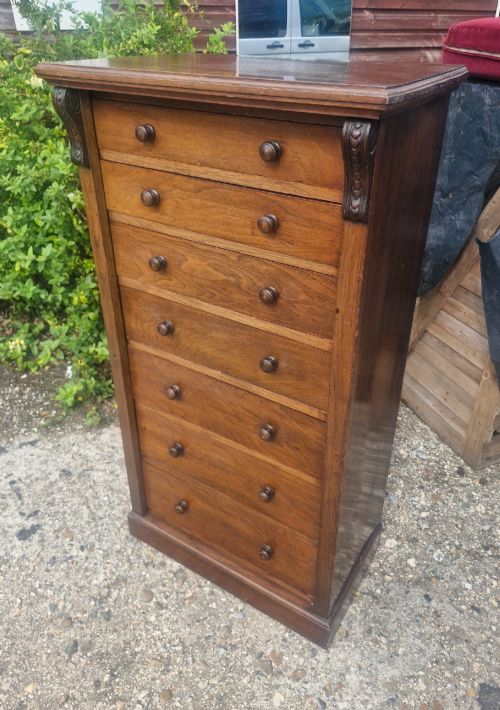
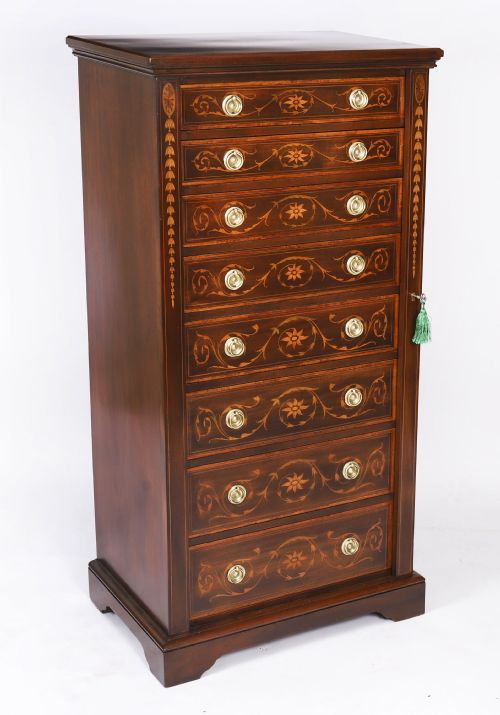
- A tall, narrow chest of drawers secured by a hinged vertical locking side bar that fastens with a key. This design originated in the nineteenth century.
- Haberdashery cabinet
- A multi-drawer storage unit originally utilised in retail shops for small clothing items and accessories. They frequently feature glass panels or numerous shallow drawers.
- Collectors cabinet
- A specialised piece of furniture designed to house botanical, geological, or curiosity specimens. These units typically contain many shallow, fitted interior drawers.
- Shell pull
- A stamped or cast metal handle shaped like a semi-circular shell, commonly found on filing cabinets and industrial drawer units of the period.
Edwardian Drawer Unit: Frequently Asked Questions
What defines an edwardian drawer unit?
An edwardian drawer unit is a storage piece produced during the Edwardian era, typically constructed from oak or mahogany. These units include standard bedroom chests, dressing tables, and specialised filing drawers.
Such pieces reflect the domestic and commercial storage needs of the early twentieth century, combining utility with period joinery.
How do I identify an original handle?
Original handles on these cabinets usually match the period metalwork style, such as brass acorn designs or shell pulls with label holders. Examine the fixing points on the timber to check for earlier screw holes that indicate replacements.
Matching patination between the hardware and the surrounding wood also points toward original factory assembly.
Where were filing cabinets used?
Filing cabinets and multi-drawer units served in offices, libraries, and commercial shops for organising paperwork, cards, or retail stock. Library card indexes and medical carrying chests fulfilled specific administrative functions.
Their robust timber construction allowed them to withstand heavy daily use in professional environments.
How should I care for antique oak?
Antique oak furniture benefits from a stable indoor environment away from direct heat sources and sudden humidity changes. Regular dusting with a dry, soft cloth preserves the timber surface.
Avoid silicone-based polishes, opting instead for traditional beeswax applied sparingly to nourish the grain.