





Edwardian Document Box
An Edwardian document box is a compact desk accessory designed to keep important papers tidy, offering practical desktop organisation wrapped in period craftsmanship.
Edwardian Document Box
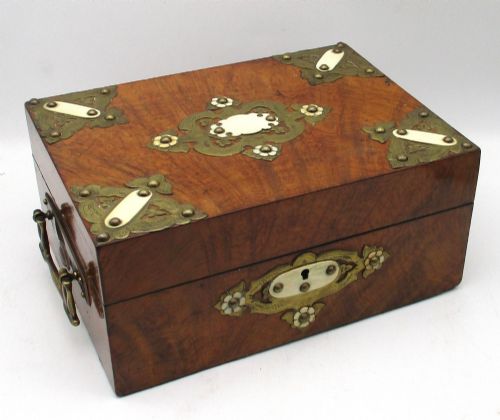
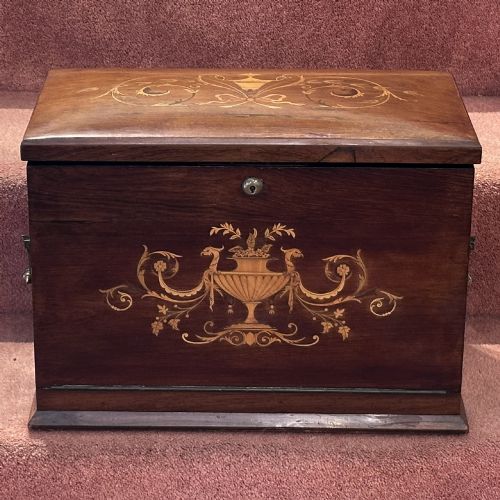
An edwardian document box typically appears as a tabletop cabinet, stationery box, or fall front deed box made to manage correspondence on a desk. While the search points to the Edwardian era, the selections span related Victorian and early twentieth-century designs, including writing slopes and storage tins.
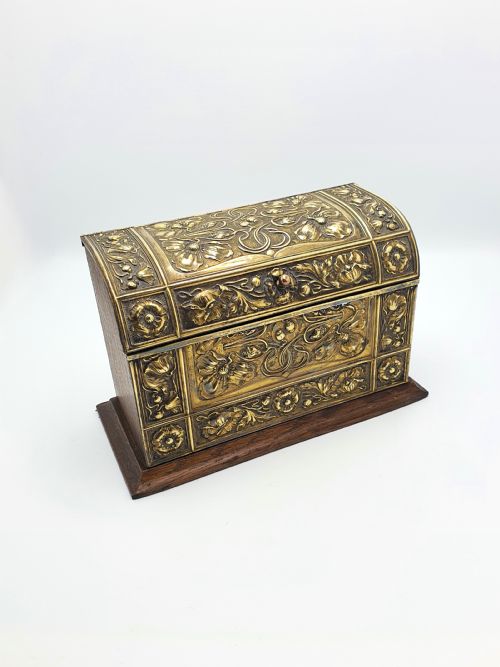
Makers of the period utilised various formats to suit domestic and legal needs, ranging from simple oak stationary boxes to more elaborate brass-mounted examples. Buyers encounter everything from desktop storage boxes to specialised filing cabinets and fall front deed boxes.
The objects bridge practical utility and decorative craftsmanship, often featuring fitted interiors for pens, paper, and letters. They represent a period when desk organisation required dedicated wooden or metal receptacles.
Materials and construction
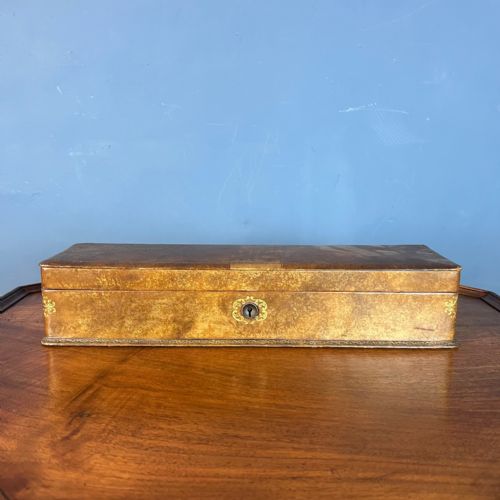
Cabinetmakers built these pieces using timbers like oak, mahogany, walnut, and ebony, frequently applying brass for corners, edges, and handles to reinforce the structure. Leather found frequent use for tooled surfaces, while specialised pieces incorporated materials such as porcupine quill, laburnum oyster veneer, or steel.
Construction methods focused on durability and refined surface finish, from hinged fall fronts to domed lids and secret drawers. The integration of metal hardware with hardwoods defined the standard manufacturing approach for desk storage.
Edwardian Document Box Retail Price Guide 2026
Typical asking prices for edwardian document box among the pieces listed under this phrase on Sellingantiques today, from the lower quarter to the upper quarter. They describe what is for sale here now, not the wider market.
Some past makers utilised porcupine quill to cover boxes, turning prickly natural defences into exotic desktop statement pieces.
Distinctions in quality
Quality rests upon the choice of timber and veneer figure, such as burr walnut or figured mahogany, paired with the precision of joinery and internal fittings. Finer pieces demonstrate careful attention to internal divisions, secret drawers, and substantial brass mounts.
The execution of decorative elements, whether subtle reeded decoration, tooled leather, or specialised cabinet hardware, separates standard utility boxes from superior examples. Better construction ensures that joints, lids, and drop fronts operate smoothly over decades of use.
The Edwardian Document Box Glossary
- Fall Front Deed Box
- A storage box featuring a hinged front panel that drops down to reveal internal compartments or files. This design allows easy access to documents without lifting the main lid.
- Writing Slope
- A portable desk fitted with a slanted writing surface that often lifts to reveal storage space for paper and ink. These pieces combine the function of a box and a writing desk.
- Stationery Box
- A desktop cabinet designed to hold envelopes, writing paper, and cards in upright slots. They frequently feature domed or sloping hinged lids.
- Toleware
- Painted or japanned metalware, often formed into storage tins or document boxes. The technique provides a durable, decorated surface.
- Oyster Veneer
- Slices cut transversely from branches to create circular patterns in the wood grain. This decorative technique appears on select collectors boxes.
- Reeded Decoration
- Parallel convex mouldings carved directly into the timber surface. It adds texture and linear detail to edges and panels.
Edwardian Document Box: Frequently Asked Questions
What is an edwardian document box used for?
These boxes were originally created to hold letters, legal papers, and writing materials securely on a desk or table.
Today, they serve the same practical purpose for storing modern correspondence, photographs, or keepsakes while adding period character to a room.
How do I tell an edwardian piece from a victorian one?
Dating often relies on stylistic cues, with Victorian pieces tending towards heavier, highly ornamented walnut or rosewood, and Edwardian items frequently showing lighter oak or simplified Arts and Crafts influences.
Examining internal construction, hardware styles, and any registration marks can also help narrow down the manufacturing decade.
Can I use these boxes for modern storage?
Yes, their internal dividers and compartments make them well-suited for organising modern stationery, documents, or small collection items.
Their sturdy timber construction ensures they remain functional for daily use in a contemporary study or office.
What maintenance do wood and leather boxes need?
Keeping the wood conditioned with appropriate wax helps prevent the timber from drying out, especially when placed near heat sources.
Leather surfaces benefit from gentle cleaning and minimal exposure to direct sunlight to preserve the tooling and material integrity.