

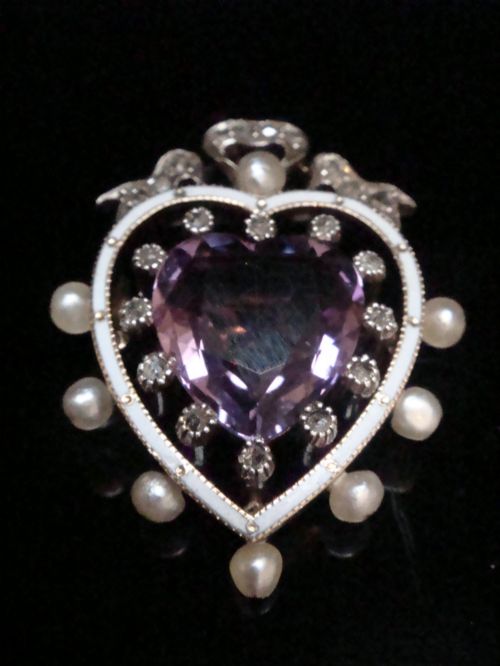


Edwardian Diamond Necklet
An edwardian diamond necklet brings together delicate precious metals and sparkling stones, offering a touch of early twentieth-century elegance for everyday wear.
Edwardian Diamond Necklet
When you search for an edwardian diamond necklet, you are looking at intricate pendants and necklaces that span the Edwardian era, alongside pieces touching into the Victorian, Art Deco, and nineteen-twenties periods. These items feature refined designs suspended on fine chains, often incorporating central stones or drop motifs.
The selections you encounter here predominantly showcase platinum and gold, reflecting the manufacturing standards of the early nineteen-hundreds. You will find forms ranging from bows and heart pendants to starbursts and gemstone drops.
While the search term specifies the Edwardian period, the inventory naturally extends to surrounding decades like nineteen-ten, nineteen-twenty, and nineteen-thirty. This broadens your choice to include transitional styles that bridge late nineteenth-century ornamentation and early twentieth-century geometry.
Factors That Distinguish Quality
The standard of a necklet often rests on the finesse of the metalwork and the condition of the delicate platinum settings. Pieces that demonstrate superior craftsmanship feature exceptionally fine piercing and secure, even stone placement without visible distortion in the structure.
Stone selection and combination dictate much of the visual weight and appeal within this category. Superior examples balance the carat weight of diamonds with high-grade accompanying gems like natural saltwater pearls or vivid opals, ensuring each material complements the other harmoniously.
The integrity of secondary materials, such as undamaged guilloche enamel or well-preserved original chains, separates standard examples from exceptional survivals. Original condition across both the pendant body and its mounting heightens the historical completeness of the item.
Edwardian Diamond Necklet Retail Price Guide 2026
Typical asking prices for edwardian diamond necklet among the pieces listed under this phrase on Sellingantiques today, from the lower quarter to the upper quarter. They describe what is for sale here now, not the wider market.
Some Edwardian makers hid tiny platinum bows so small they require a loupe just to appreciate the stitch work.
The Edwardian Diamond Necklet Glossary
- Guilloche enamel
- A decorative technique involving precise engine-turned patterns beneath a translucent layer of coloured enamel. It creates a shimmering, patterned background often found on early pendants.
- Old cut diamond
- A vintage diamond cutting style characterised by a small table, high crown, and large culet. These stones produce a soft, candlelight glow rather than the sharp brilliance of modern cuts.
- Natural pearl
- A pearl formed organically within an oyster or mollusc without human intervention. They are prized for their organic lustre and distinct formation compared to cultured varieties.
- Platinum
- A dense, ductile precious metal widely adopted in the early twentieth century for jewellery. Its strength enabled artisans to create ultra-fine wirework and secure prong settings.
- Starburst pendant
- A jewellery motif radiating outwards from a central point to resemble a star. These designs utilise multiple small diamonds and gold rays to capture light from every angle.
Edwardian Diamond Necklet: Frequently Asked Questions
How do I wear a delicate necklet safely?
Handle the piece with care by fastening and unfastening the clasp on a soft surface to prevent accidental drops onto hard floors. Avoid wearing delicate platinum and gold chains during physical activities or while sleeping.
Store the necklet flat in a lined jewellery box or a soft pouch to prevent the fine chain from tangling or kinking. Keep the piece away from household chemicals, perfumes, and lotions to protect the enamel and pearls.
Can I replace the chain on an antique pendant?
Many pendant necklaces from this era survived with later replacement chains due to the fragility of original mountings. If a chain requires replacement for security, select a matching gold or platinum trace chain that mirrors the gauge of the original.
Consult a specialist jeweller to ensure any replacement ring or bail matches the metal purity of the pendant. Preserving the connection point maintains the structural integrity of the piece without altering the pendant itself.
How do I clean antique diamond jewellery?
Clean your items gently using warm water, a mild soap, and a very soft brush to remove everyday oils from the stones. Avoid ultrasonic cleaners, especially if the piece contains pearls, opals, or enamel, as vibrations and harsh liquids can cause damage.
Dry the necklet thoroughly with a lint-free cloth before storing it away. Regular inspection by a professional jeweller ensures the tiny platinum settings and claws remain tight around each diamond.
Are these pieces suitable for daily wear?
These items can be worn regularly provided you take sensible precautions against knocks and heavy impacts. The use of platinum provides durable settings for the diamonds, but the delicate nature of fine Edwardian chains requires mindfulness.
Reserve the necklet for lighter daily activities and special occasions to preserve fragile elements like enamel and natural pearls. Taking the piece off before swimming or exercising prevents unnecessary wear on the vintage materials.