
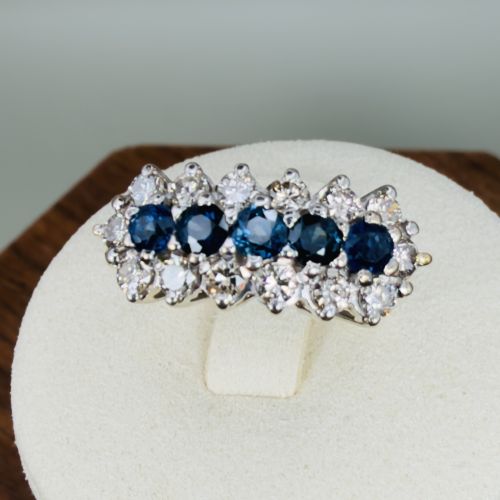

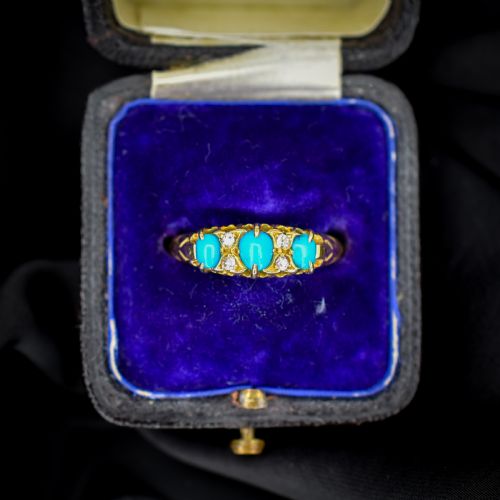


Edwardian Diamond Boat Ring
An edwardian diamond boat ring holds a gentle, curved cluster of gems designed to sit low on the finger with unmistakable period grace.
Edwardian Diamond Boat Ring
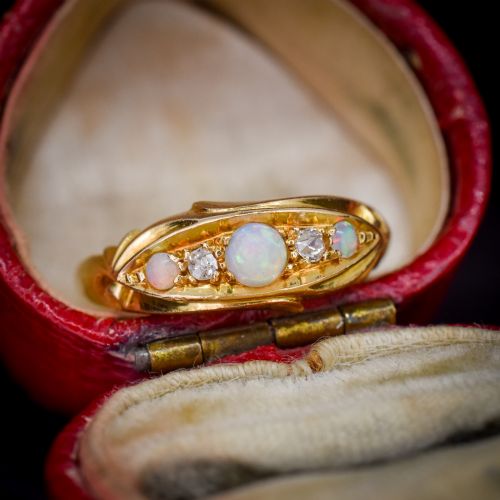
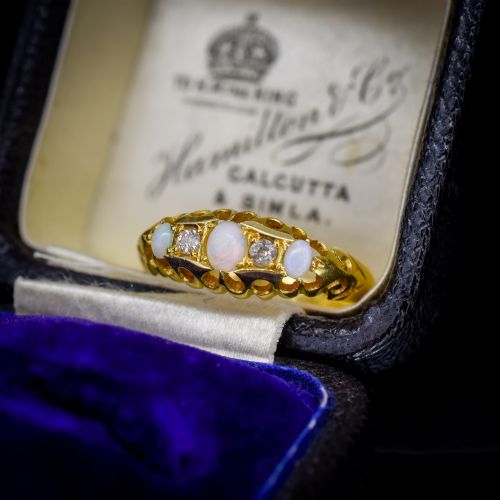
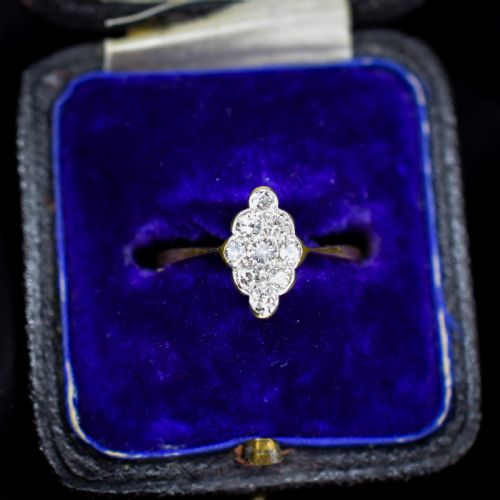
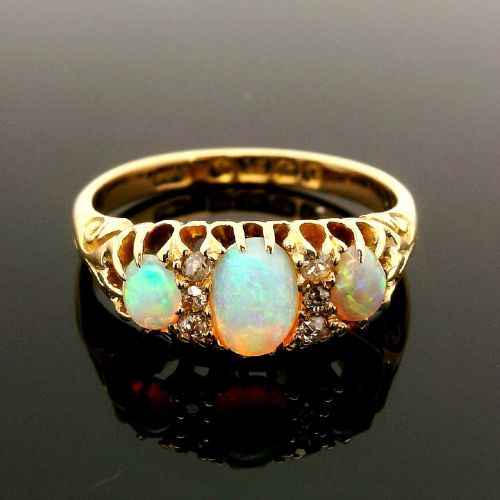
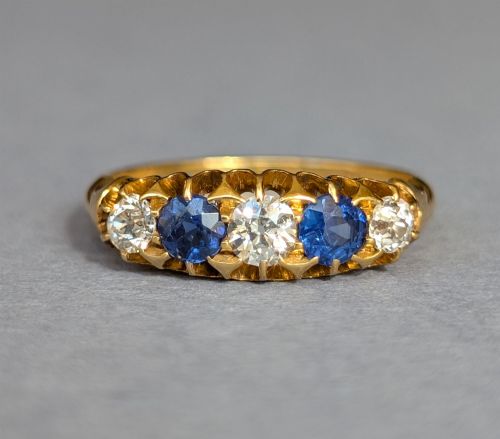
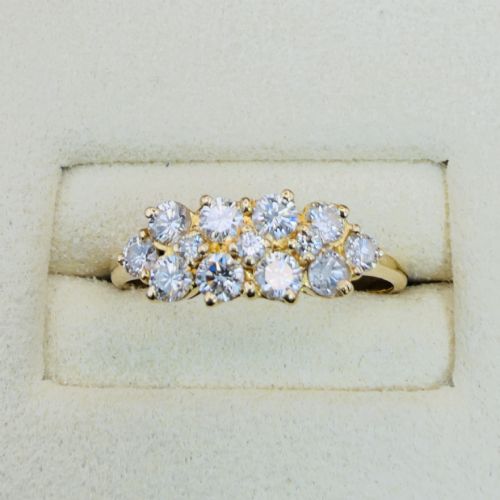
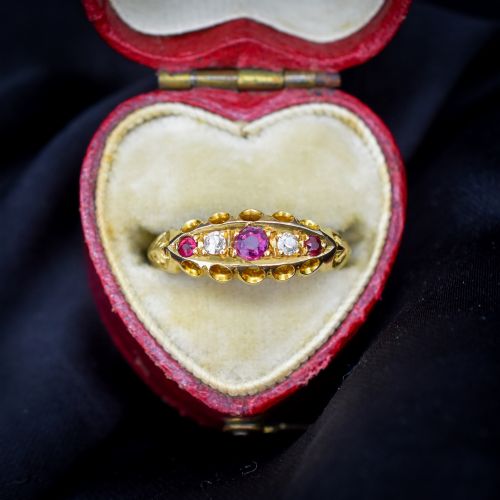
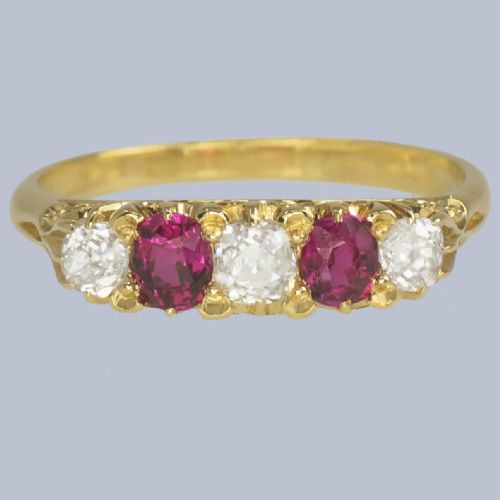
When you search for an edwardian diamond boat ring, you encounter low-profile clusters formed of diamonds paired with sapphires, rubies, opals, or turquoise. These pieces typically take an elongated, curved shape reminiscent of a hull, stretching gracefully across the finger.
The versions most common on this page hail from the early twentieth century, bearing hallmarks from English assay offices such as Chester and Birmingham. Alongside definitive Edwardian examples, you find late Victorian precursors and George V iterations sharing the same distinctive horizontal silhouette.
Makers constructed these rings to showcase old cut diamonds alongside rich coloured stones in eighteen-carat yellow gold and platinum. The overall effect remains delicate, prioritising balanced proportions and low-set mounts intended for daily wear.
Materials and construction
Goldsmiths built these rings using eighteen-carat yellow gold for the shanks and mounts, frequently combining platinum on the face to brighten the setting around the stones. This technical choice allowed jewellers to use minimal metal claws, creating a seamless white surface that made old cut diamonds appear larger.
Settings incorporated natural gemstones including sapphires, rubies, opals, and turquoise, secured alongside diamonds in hand-carved boat or navette shapes. Hallmarks stamped inside the bands record assay office origins in cities like Birmingham and Chester alongside precise assay years.
Listings feature eighteen-carat gold and platinum rings set with diamonds, sapphires, rubies, opals, and turquoise across Victorian, Edwardian, and George V periods.
Proportion and stone selection
Quality in these rings rests upon the harmony of the cluster and the matching of the stones. Superior examples feature well-matched natural coloured gems and bright old cut diamonds that follow the tapering curve of the boat shape without awkward gaps.
The crispness of the hand-engraving and the preservation of the original claw settings distinguish finer pieces. Rings that retain their crisp Chester or Birmingham hallmarks and show minimal thinning to the eighteen-carat gold band demonstrate careful preservation over the decades.
The Edwardian Diamond Boat Ring Glossary
- Boat ring
- A ring featuring a curved, horizontally elongated cluster setting resembling the hull of a vessel. This specific silhouette typifies jewellery design from the late nineteenth and early twentieth centuries.
- Navette
- A pointed, boat-shaped gemstone setting also known as a marquise shape. It creates an elongated profile along the finger.
- Old cut
- A diamond facet style hand-polished before modern machine precision, featuring a smaller table, higher crown, and open culet. These stones throw a softer, candlelit sparkle.
- Hallmark
- Official stamps pressed into the precious metal indicating the purity standard, assay office, and year of manufacture. British marks often include a crown and a letter denoting the specific year.
- Cluster ring
- A design arrangement where a central stone is surrounded by a border of smaller gems. In boat rings, this cluster is stretched horizontally.
Edwardian Diamond Boat Ring: Frequently Asked Questions
How do I wear an edwardian diamond boat ring?
These rings sit flat enough on the hand to suit daily wear, though care should be taken with softer gems like opal or turquoise. Pairing them with plain stacking bands allows the curved boat shape to sit comfortably alongside other rings without friction.
Because the mounts use delicate gold and platinum claws, removing the ring during heavy manual tasks protects the structural integrity of the antique setting.
Are these rings made of solid gold?
The pieces recorded here utilise solid eighteen-carat yellow gold for the shanks and body of the ring. Platinum frequently appears on the face of the setting to provide a bright, durable white background for the diamonds.
Assay office stamps inside the band confirm the metal purity alongside the year of production and town of origin.
How do I tell an Edwardian ring from a Victorian one?
Late Victorian examples often feature slightly heavier gold work and darker rubies or sapphires, while Edwardian pieces lean towards lighter, airier platinum-topped mounts. Both periods overlap significantly in style, sharing the same boat shapes and old cut diamond configurations.
Checking the hallmark year letter provides the exact date of assay, clarifying whether the ring was made during the reign of Victoria, Edward VII, or George V.
What stones accompany the diamonds in these rings?
Natural sapphires and rubies appear frequently alongside the diamonds, adding deep blue and red tones to the boat-shaped clusters. Softer stones such as natural opals and turquoise also feature prominently in surviving examples.
These coloured gems are arranged in symmetrical patterns that accentuate the curving silhouette of the mounting.