

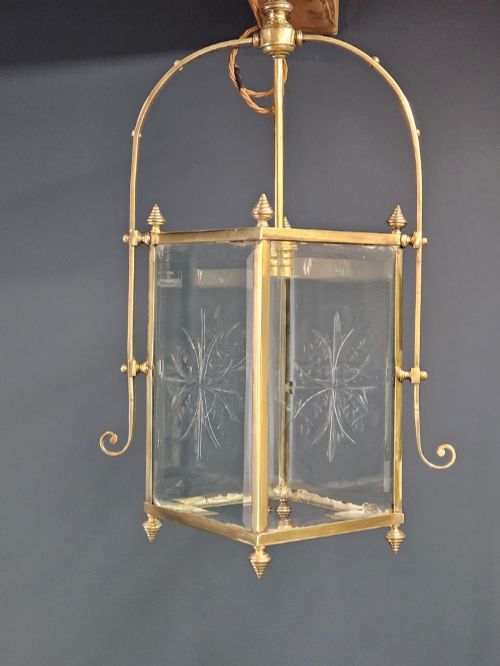


Edwardian Cut Glass Fixture
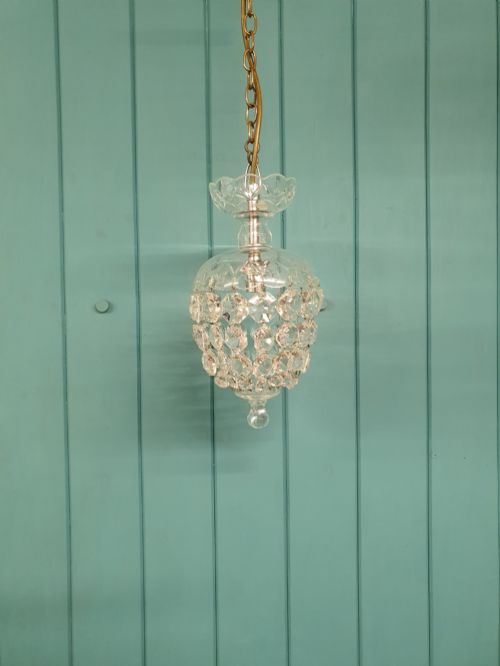
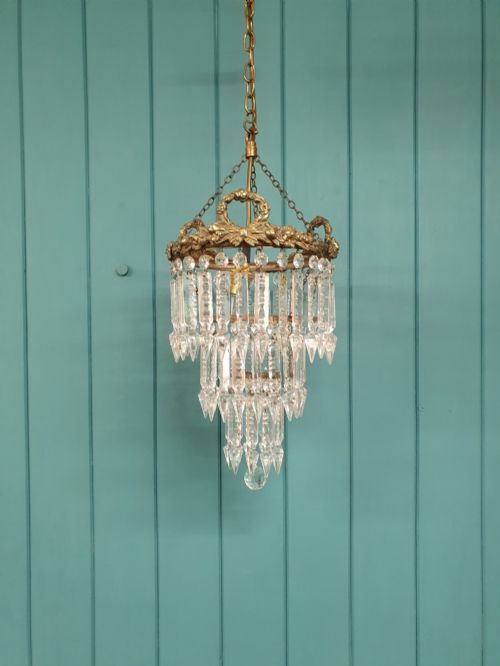
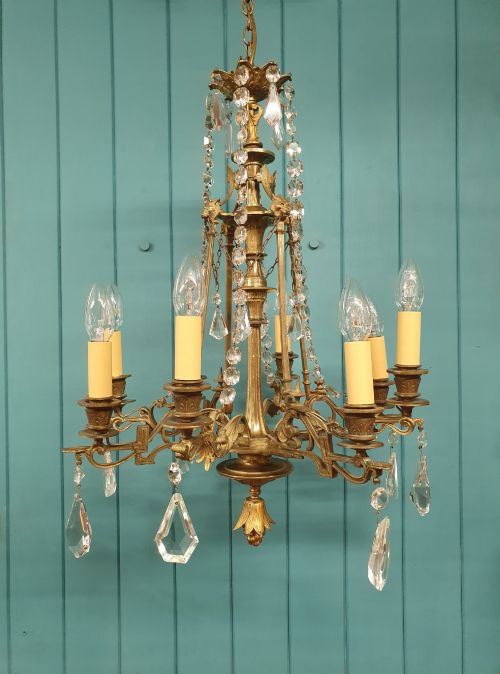
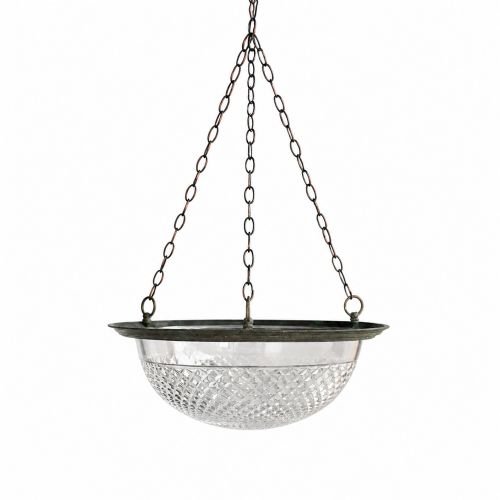
An Edwardian cut glass fixture brings sparkle and period character to a room through faceted crystal drops and metal mounts.
Edwardian Cut Glass Fixture
An edwardian cut glass fixture encompasses ceiling lights, chandeliers, hall lanterns, and plafonniers designed to illuminate interior spaces. The selection relies heavily on Edwardian examples alongside pieces spanning the nineteenth century through the early twentieth century.
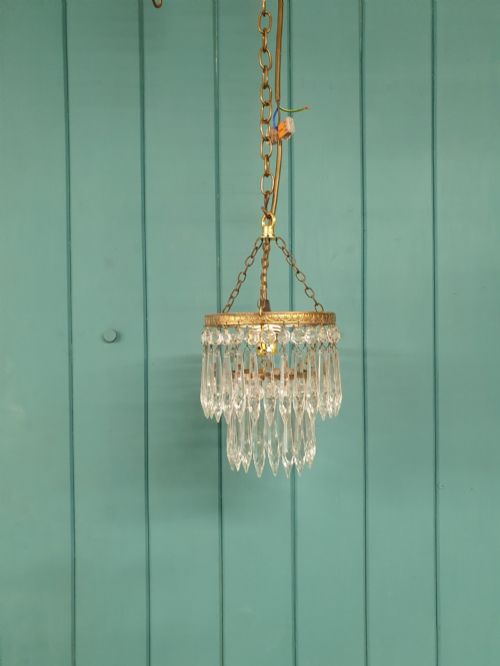
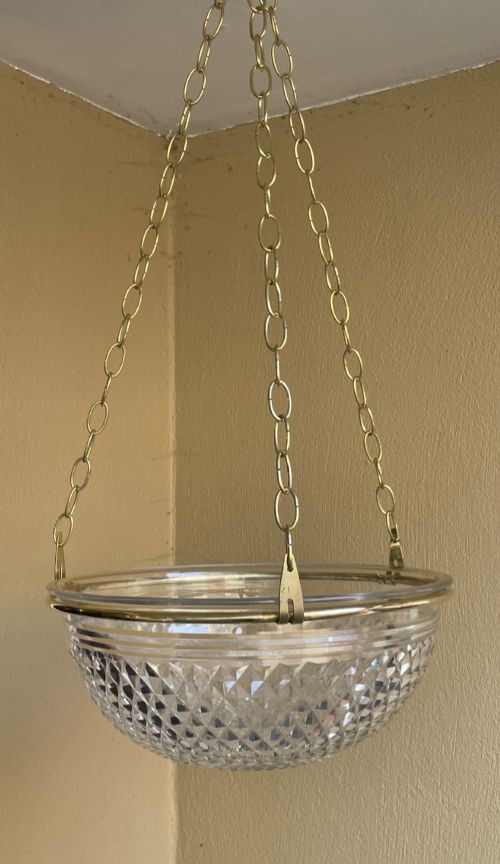
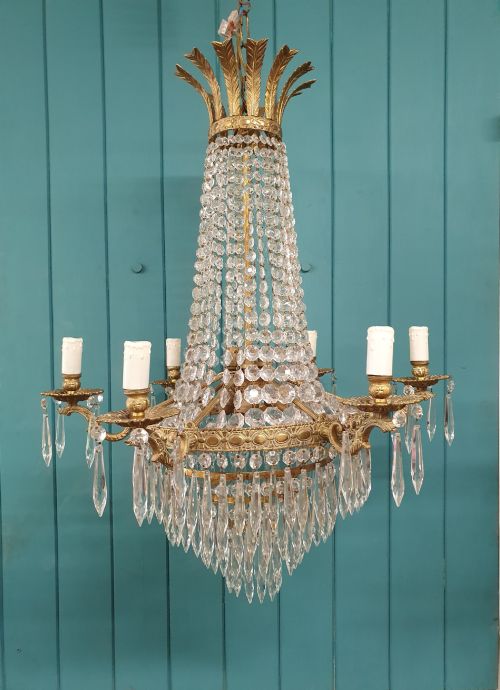
Forms range from compact single-light bowls and dish lights to multi-armed chandeliers adorned with crystal prisms and beaded swags. Brass and bronze frames support the glass elements, creating functional overhead lighting with distinct period detailing.
How they were made
Glass components are cast, blown, and finished with hand-cut facets designed to refract light across a room. Metal frames utilise brass, bronze, silver plate, or gilt brass, cast and joined to support the heavy glass drops.
Prisms, beads, and pendants hang from the metal armature using wire loops or pins, forming tent and bag configurations that catch illumination from internal burners or electric bulbs.
The listings combine brass, bronze, and silver-plated frames with cut glass and crystal across Edwardian and Victorian periods.
What varies in quality
The clarity and weight of the glass determine the brilliance of the fixture, with finer pieces utilising dense crystal and deep, crisp cutting. Metalwork craftsmanship is evident in the precision of the casting, from plain brass bands to elaborate leaf decoration and lion masks.
The completeness and integrity of the hanging drops and beaded strands affect the overall harmony of the design. Heavier armatures and larger multi-light configurations indicate higher ambition in the original manufacture.
F&C Osler
The Edwardian Cut Glass Fixture Glossary
- Plafonnier
- A shallow bowl-shaped ceiling light mounted close to the ceiling. These fixtures project downwards and often feature cut glass decoration.
- Tent and bag chandelier
- A lighting form featuring an upper triangular section of strings of beads above a gathered lower basket or bag of crystals. This traditional construction creates layered tiers of glass drops.
- Prism
- A cut glass pendant designed to refract light into spectral colours. Prisms hang from the arms and frames of chandeliers.
- Hall lantern
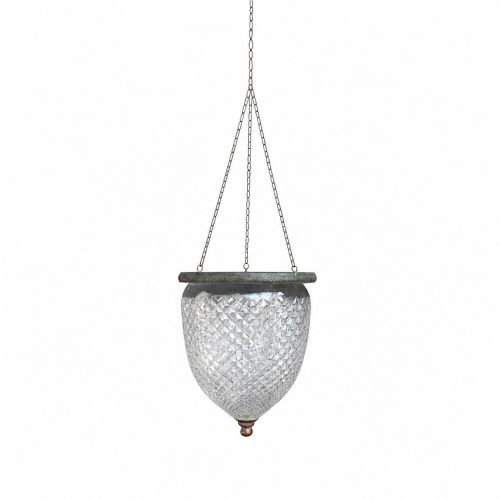
- An enclosed ceiling-hung light fixture designed for entranceways and corridors. They typically feature metal frames enclosing glass panels or hanging crystals.
Edwardian Cut Glass Fixture: Frequently Asked Questions
How do I clean an edwardian cut glass fixture?
Cleaning requires a mild solution of warm water and washing-up liquid applied gently with a soft cloth to avoid scratching the glass or straining delicate wire mountings.
It is often best to clean glass drops in situ or remove them individually rather than immersing the entire metal and crystal assembly at once.
Are these fixtures wired for modern electricity?
Many period ceiling lights have been adapted over time to accept standard modern electrical fittings and bulbs. Rewiring may be necessary to meet current safety standards upon installation.
A qualified electrician should inspect the internal wiring and ceiling fixings before hanging a heavy brass and crystal piece.
What is the difference between a plafonnier and a chandelier?
A plafonnier mounts directly against the ceiling as a bowl or dish light, offering a compact profile for rooms with lower ceiling heights. Chandeliers suspend downwards on a chain or rod, utilising multiple arms and hanging drops to illuminate larger spaces.
Both forms utilise cut glass and crystal elements, but their structural distribution of weight and light differs significantly.
How do I date an edwardian cut glass fixture?
Dating relies on stylistic clues such as the presence of Edwardian proportions, specific metal casting techniques, and the cut of the crystal drops. Comparing the frame materials against known Victorian and early twentieth-century manufacturing methods helps narrow the production era.
Hardware details like screw types and suspension loops also offer useful indicators of age.