






Edwardian Crystal Scent Bottle
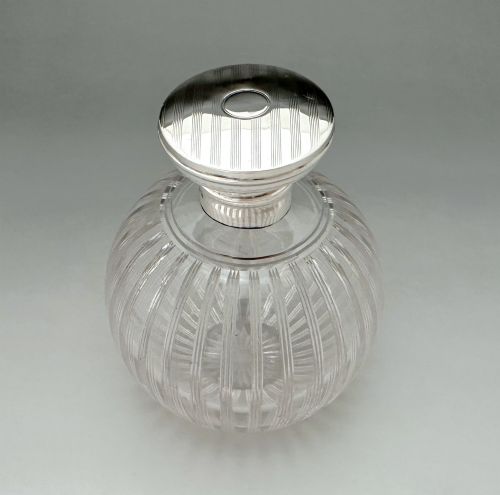
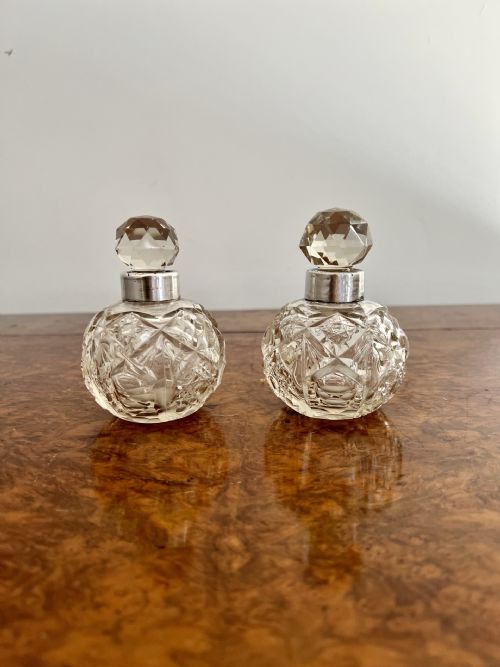
An edwardian crystal scent bottle brings together weighty cut glass and bright sterling silver mounts for the dressing table.
Edwardian Crystal Scent Bottle
These pieces cross several periods beyond the core Edwardian years, including Victorian and George V examples, alongside French Belle Epoque and Art Deco items. The range encompasses small pocket sizes as well as larger decanter styles meant to stay fixed on a vanity.
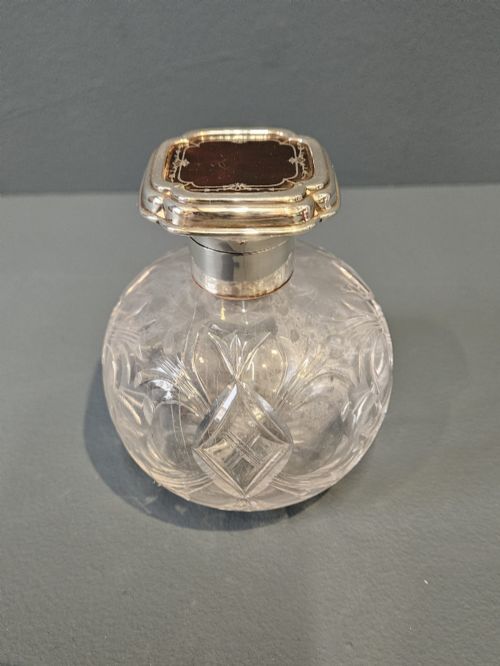
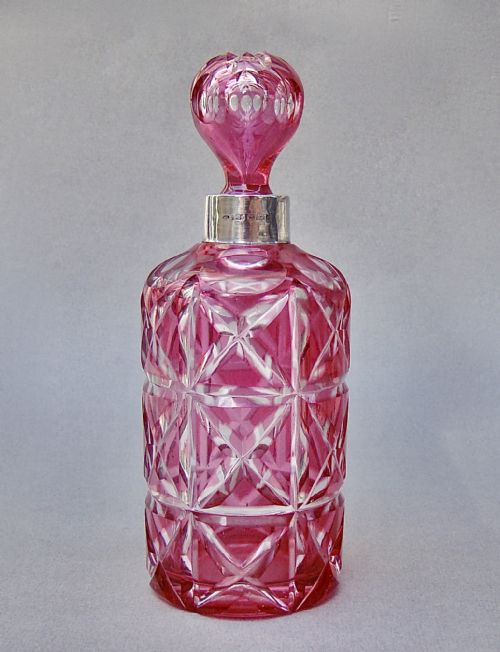
Makers often shaped the glass into panels, flutes, or heart forms, sometimes incorporating cranberry glass, ruby glass, or green overlay. Silver tops frequently feature chased decoration, whilst others receive a sophisticated layer of guilloche enamel or tortoiseshell.
Materials and manufacture
Glass bodies were produced using lead crystal or coloured glass, shaped by blowing into moulds or free-blowing before artisans cut deep facets and geometric patterns across the exterior surface. Cranberry and ruby glass achieved their rich hues through mineral additions during the melting process.
Silver mounts, collars, and lids were worked separately, often stamped or chased with floral and scroll motifs, then fitted securely to the glass necks. Specialised additions like guilloche enamel required intricate engine-turned metal bases underneath translucent coloured layers.
Edwardian Crystal Scent Bottle Retail Price Guide 2026
Typical asking prices for edwardian crystal scent bottle among the pieces listed under this phrase on Sellingantiques today, from the lower quarter to the upper quarter. They describe what is for sale here now, not the wider market.
Listings feature items spanning the Victorian era through to the nineteen-thirties, incorporating materials like tortoiseshell, guilloche enamel, and cranberry glass.
Distinctions in craftsmanship
Quality reveals itself in the crispness of the glass cutting and the depth of the lead crystal refraction. Superior vessels show sharp, clean facets without softening, whereas lesser examples display rounded edges and minor surface ripples.
The weight and gauge of the sterling silver mount further define the tier of the piece. Substantial silver with clear hallmarks and intricate hand-chased detail contrasts with thin, easily dented metal collars.
Harold Bushell & Co·Barnsley & Co·George Unite
The Edwardian Crystal Scent Bottle Glossary
- Cut Glass
- Glass shaped and patterned by holding it against a rotating abrasive wheel. This technique creates sharp geometric facets that catch the light.
- Guilloche Enamel
- A decorative technique where a metal surface is engraved with an intricate engine-turned pattern beneath translucent enamel. It frequently appears on vanity accessories.
- Hallmark
- An official stamp applied to precious metals indicating the standard of purity, the assay office, and the date letter. English silver pieces routinely display these marks on the collar or lid.
- Overlay Glass
- Glass created by casing a core of clear or coloured glass with one or more distinct outer layers of contrasting colour. Cutting through the top layer reveals the contrasting base beneath.
- Cranberry Glass
- A pinkish-red glass produced by adding gold chloride to the molten batch. It became a popular choice for Victorian and Edwardian tablewares.
Edwardian Crystal Scent Bottle: Frequently Asked Questions
How do I identify an Edwardian scent bottle?
Look for a combination of heavy cut crystal bodies and hallmarked sterling silver mounts that reflect early twentieth-century dressing table styles.
Date letters on the silver collars provide the exact year of manufacture and confirm the period of the piece.
What is the difference between glass and crystal?
Lead crystal contains a proportion of lead oxide, which increases the weight, density, and refractive index compared to standard glass.
This high lead content allows artisans to cut deeper, sharper facets that sparkle more brightly under light.
Were these bottles meant for travel?
Some small pocket-sized examples with secure screw or lockable lids served travellers who carried personal scents away from home.
Larger vanity decanters remained stationary on dressing tables as part of matching accessory collections.
How are enamel lids decorated?
Enamel lids often utilise guilloche techniques, where metal is engine-turned into geometric patterns before translucent coloured enamel is applied.
This creates a shimmering, patterned depth beneath the smooth glass-like surface of the enamel.