


Edwardian Coastal Art
Edwardian coastal art captures harbours, fishing fleets and coastal villages through traditional watercolours and oil paintings.
Edwardian Coastal Art
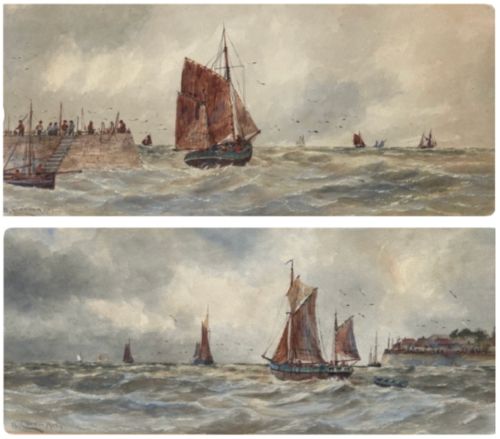
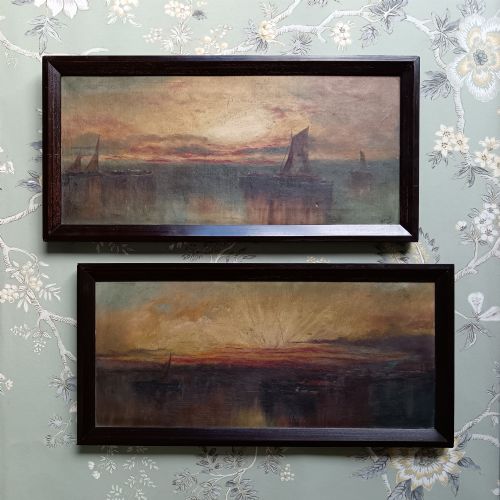
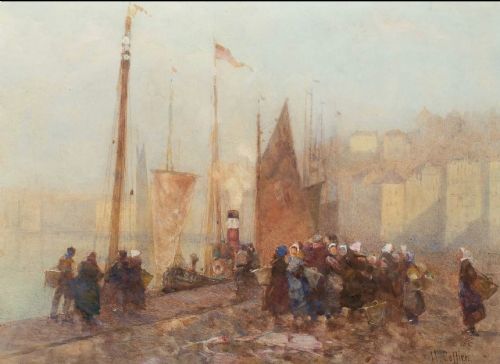
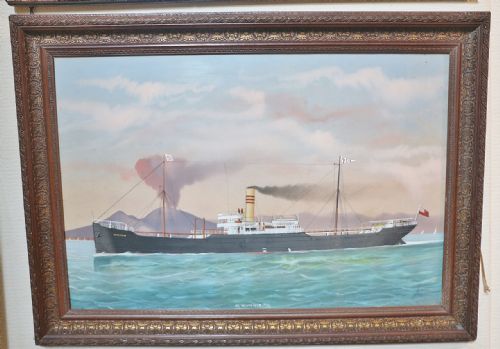
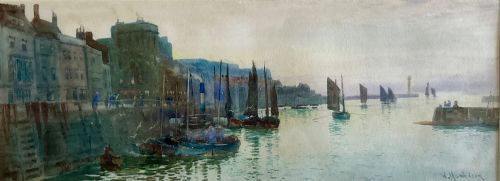
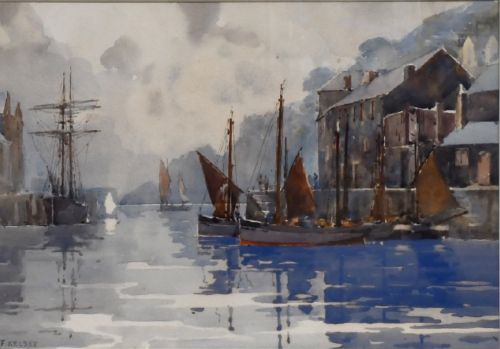
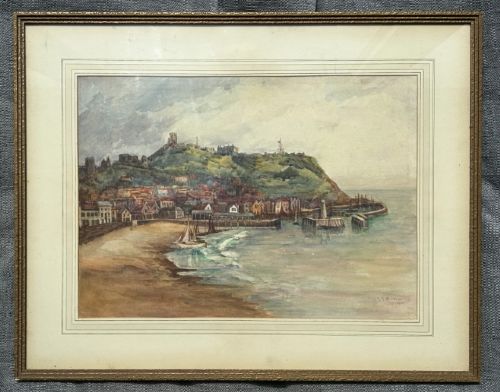
When you examine edwardian coastal art, you encounter maritime scenes, harbour views and open seascapes originating from the early twentieth century. These works document working fishing ports, traditional vessels and coastal life across Britain and Europe during a distinct artistic period.
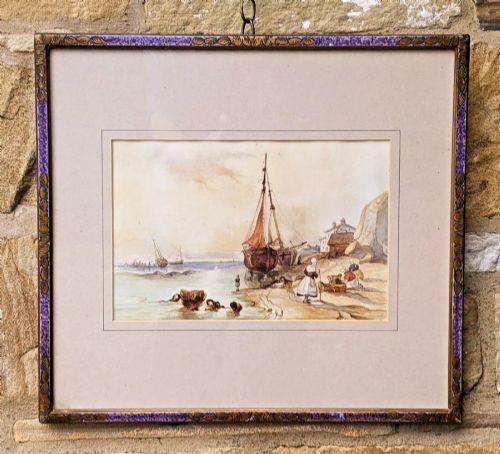
The selections on this page rely heavily on watercolours on paper and oil paintings on canvas, frequently framed for display. Many pieces capture specific locations such as Whitby, St Ives, and various Cornish harbours.
Representations span British Impressionism, marine art, and realism, often bearing signatures and dates from the period. You will also find decorative pieces incorporating materials like shell alongside traditional framed artworks.
Materials and methods of production
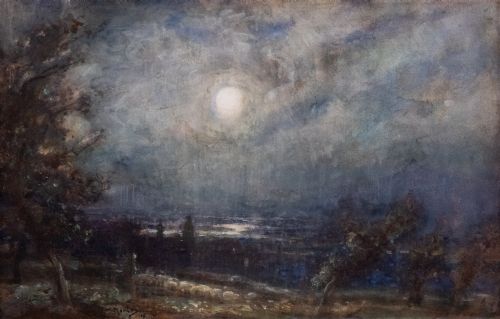
Artists utilised watercolour pigment on paper or applied oil paint to canvas and board, creating textured surfaces that captured maritime light and atmosphere. Gilt framing frequently complemented these works, preserving the delicate paper or sturdy canvas supports.
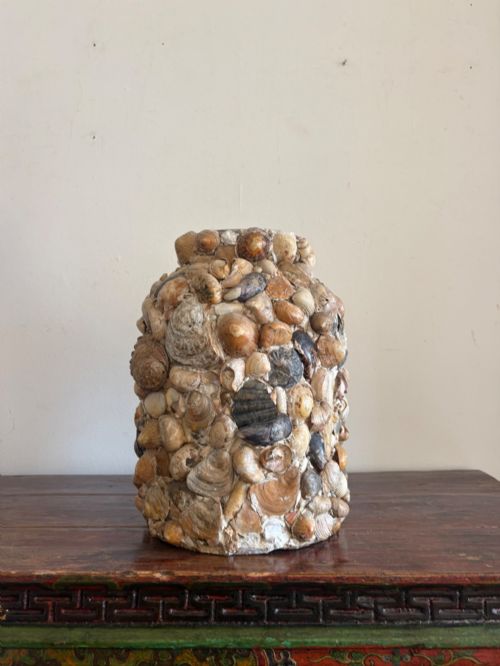
Decorative elements in this category extend to folk art objects constructed from wood and glass, decorated with organic materials such as shells.
Among the coastal scenes rests a French folk art jar entirely decorated with tiny sea shells.
Distinctions in quality
Quality rests upon the artist's ability to handle light, water, and atmosphere within the medium, distinguishing competent topographical records from masterful maritime compositions. Brushwork control and compositional balance dictate the visual impact of each canvas or paper sheet.
Preservation of the original paper, pigment vibrancy, and the integrity of the canvas and gilt frame further divide standard examples from exceptional survivals.
William Cannon·Thomas William Morley·Hector Caffieri·William Matthison·Frank Kelsey·Charles Napier Hemy·Richard Harry Carter·Pieter Cornelis Dommersen·Arthur Tucker·Herbert Royle·Fred Waugh·James Watson·George Hamilton Constantine·James Thomas Watts·Leslie Rackham·Sir Herbert Hughes Stanton·H E Tidmarsh·Ernest F Hill·Frederick Stuart Richardson·Edith E Caswall
The Edwardian Coastal Art Glossary
- Watercolour pigment
- Finely ground colour particles mixed with a water-soluble binder, applied to paper to create translucent washes of tone.
- Oil on canvas
- Pigment suspended in a drying oil applied to a woven fabric support stretched over a wooden frame.
- Marine art
- Artistic representation of ships, maritime scenes, harbours, and coastal landscapes.
- Gilt frame
- A wooden decorative border covered with a thin layer of gold leaf or metallic gilding.
- Folk art
- Utilitarian or decorative objects created by self-taught or traditional makers utilising accessible local materials.
Edwardian Coastal Art: Frequently Asked Questions
What subjects appear in edwardian coastal art?
Paintings from this era focus primarily on working harbours, fishing boats, sailing vessels, and coastal settlements. Scenes often record specific British locations such as Whitby, Scarborough, and Cornish fishing ports.
Artists also documented broader coastal landscapes, marine views, and international shores, reflecting contemporary maritime life and leisure.
How do watercolours and oils differ here?
Watercolours utilise pigment on paper to achieve delicate atmospheric effects of light, sky, and sea. Oil paintings on canvas employ heavier brushwork and richer textures to capture turbulent waters and changing weather.
Both mediums served artists recording the coastal environment during the early twentieth century.
How do I date these artworks?
Many pieces feature visible signatures alongside handwritten dates or inscriptions indicating the year of creation. Stylistic markers and period framing methods offer further clues to the era of production.
Documentation on the reverse of the work frequently provides additional historical context.
How should I display framed maritime art?
Framed watercolours require placement away from direct sunlight to prevent fading of the delicate pigments on paper. Oil paintings on canvas benefit from stable indoor environments with moderate humidity.
Secure wall fixings are essential for heavier framed works and large canvases.