

Edwardian Clothing Armoire
When you search for an edwardian clothing armoire, you find substantial bedroom storage built to hold coats, linen and gowns in period houses.
Edwardian Clothing Armoire
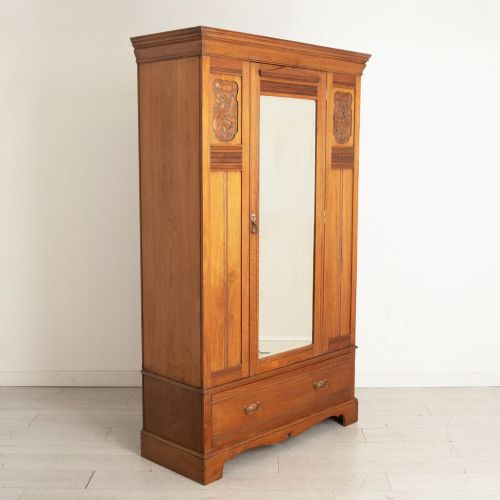
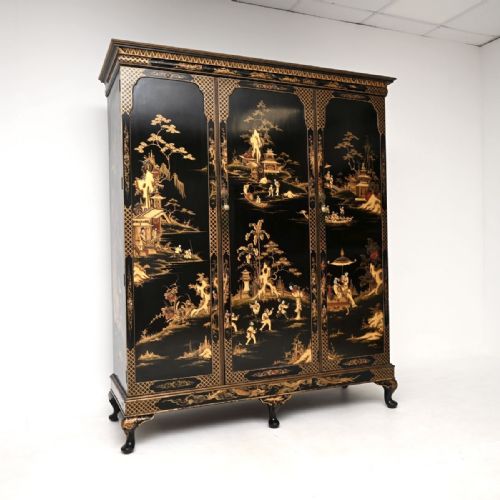
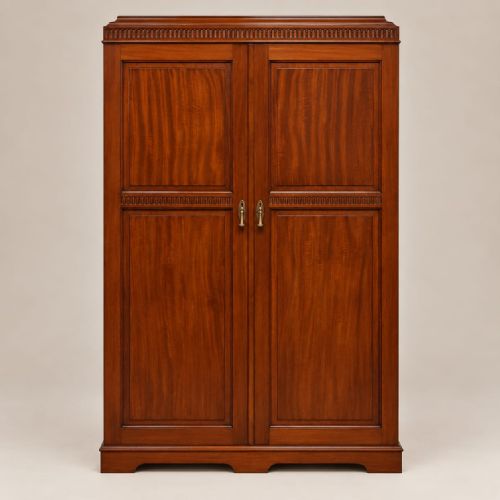
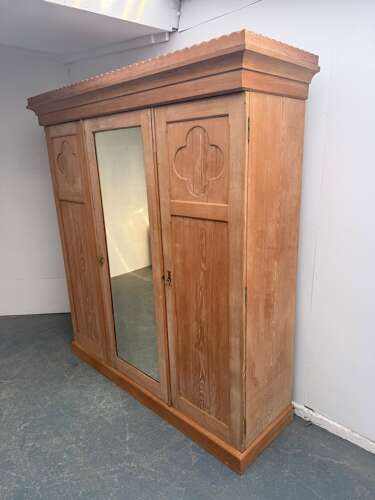
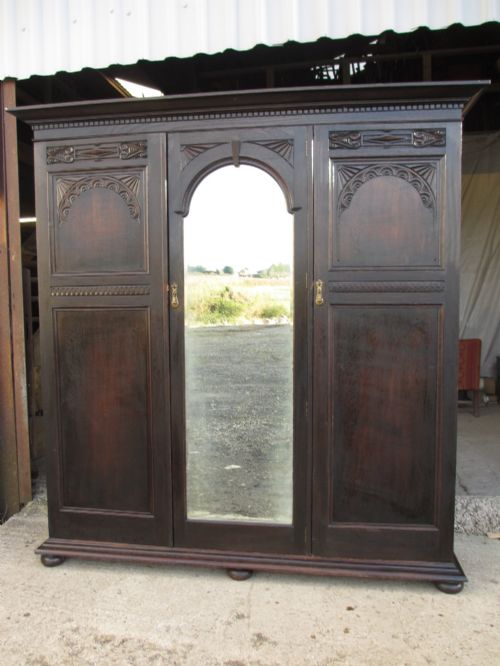
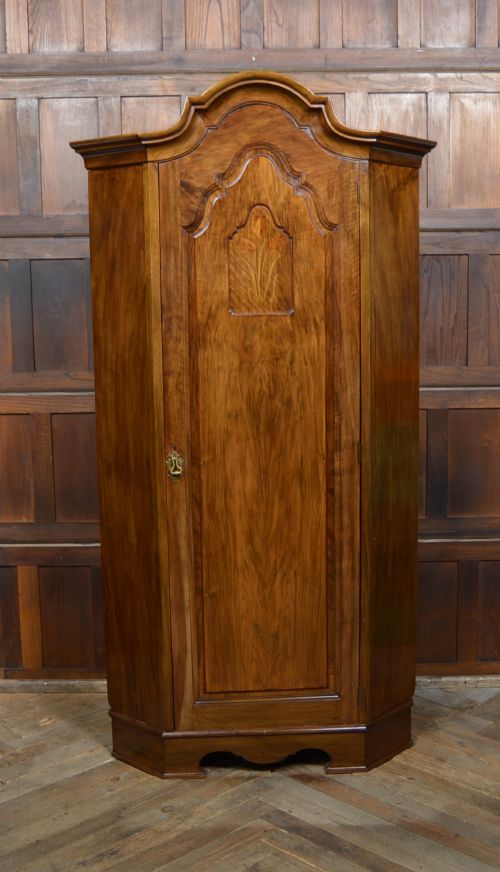
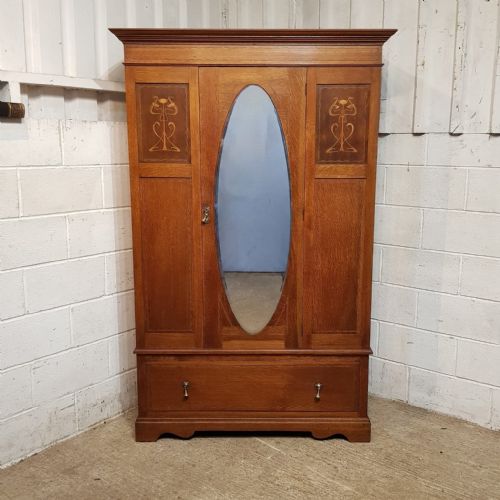
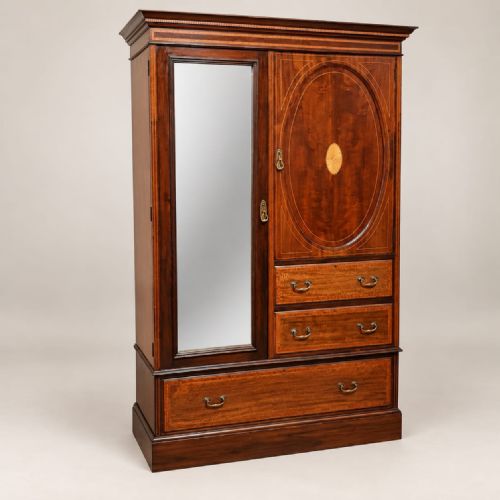
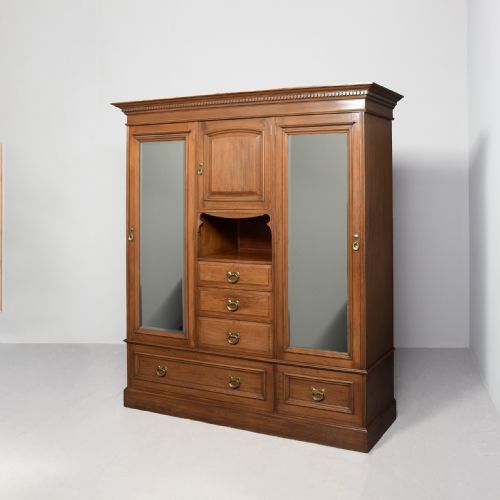
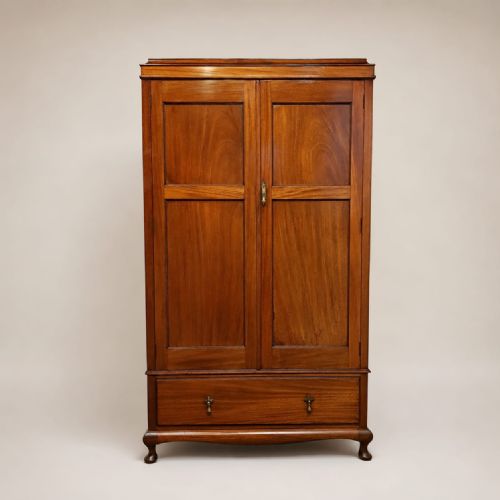
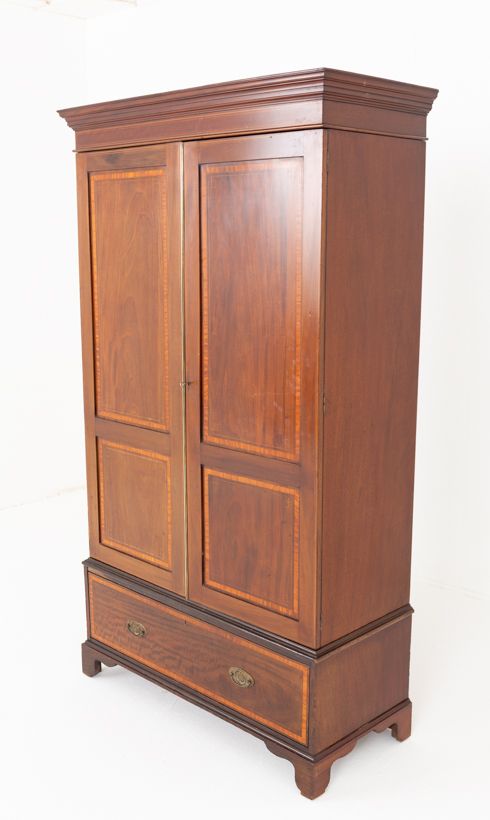
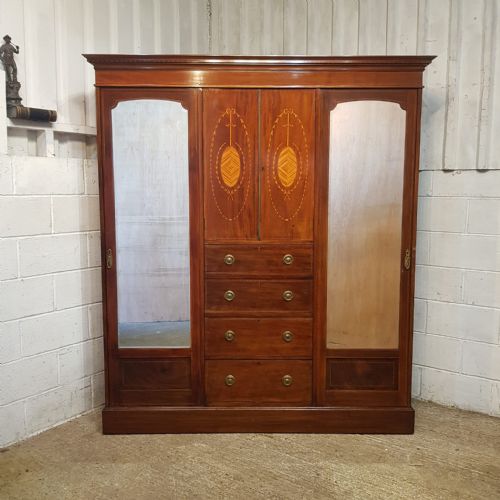
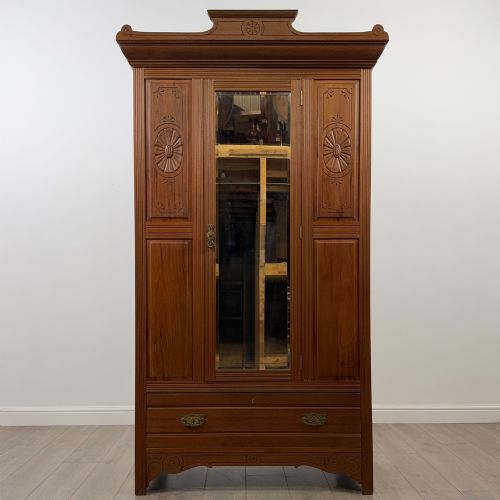
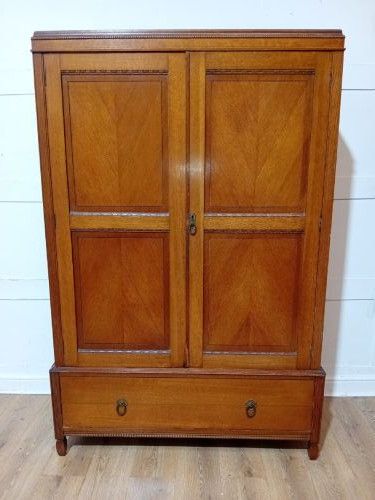
An edwardian clothing armoire typically takes the form of a large wardrobe, double wardrobe, or triple wardrobe made around the start of the twentieth century. These pieces serve as deep storage for garments, often incorporating mirrored doors, hanging space, and internal shelving.
Many examples span related styles including Arts and Crafts, Art Nouveau, and Sheraton Revival, reflecting the design movements active in late Victorian and Edwardian households. While single wardrobes and compactums appear frequently, larger triple configurations and combination pieces provide extensive internal capacity.
Origins stretch from large workshops and department stores to regional cabinet makers working in mahogany, oak, walnut, and pine. Buyers encounter both polished hardwood finishes and painted surfaces intended for lighter domestic interiors.
Materials and Construction
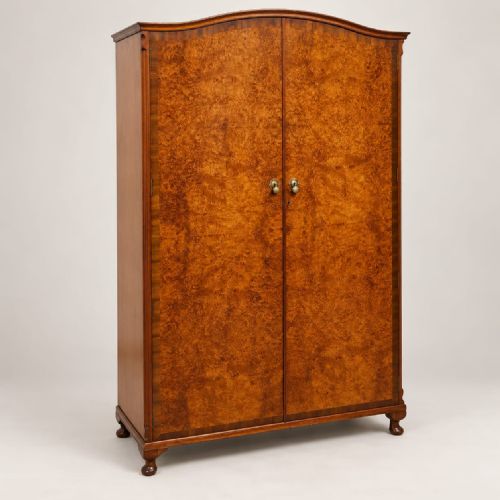
Cabinet makers utilised solid timbers and veneers such as mahogany, oak, walnut, burr walnut, satinwood, ash, and pine, often embellished with brass hardware and bevelled glass mirror plates. Natural grain patterns provide visual texture across large flat surfaces and panelled doors.
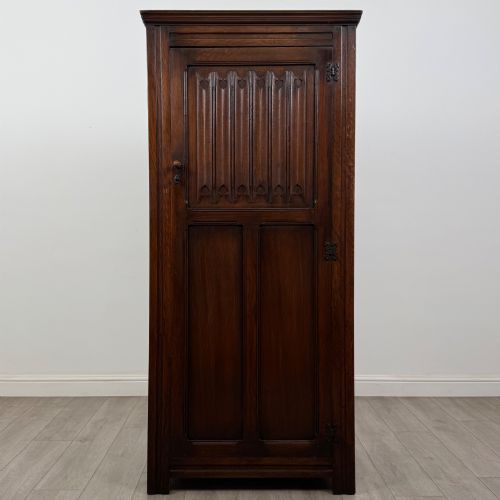
Construction methods include panel-and-frame assembly, dovetail joints for internal drawers, and applied mouldings or carved details like linenfold motifs. Many larger wardrobes utilise knockdown construction or modular sections to allow transport and placement in tall bedrooms.
Edwardian Clothing Armoire Retail Price Guide 2026
Typical asking prices for edwardian clothing armoire among the pieces listed under this phrase on Sellingantiques today, from the lower quarter to the upper quarter. They describe what is for sale here now, not the wider market.
Compactums sometimes hide tiny tie drawers behind heavy panelled doors, built for gentlemen who guarded their cravats with architectural seriousness.
Gradations in Execution
The distinction between standard commercial output and high workshop production rests on timber selection, such as matched burr walnut veneers or figured mahogany, alongside the crispness of hand-carved details and inlay work. Makers associated with specific design schools or noted retail houses demonstrate finer execution in internal fittings and structural joinery.
Proportion and internal planning set apart simple single robes from extensive compactums and triple wardrobes equipped with fitted drawers, linen presses, and sliding trays. The retention of original bevelled mirror glass, brass handles, and matching keys indicates a higher degree of preservation.
Shapland & Petter·Hille for Harrods·Heals·Harris Lebus·Druce & Co·Lamb of Manchester·Wylie Lochhead of Glasgow
The Edwardian Clothing Armoire Glossary
- Compactum
- A large fitted wardrobe combining hanging space, shelves, and internal drawers within a single multi-door carcass.
- Linen Press
- A tall storage piece featuring upper cupboard doors enclosing sliding trays, positioned above a base chest of drawers.
- Linenfold
- A carved wooden panel motif resembling folded cloth, commonly found on oak furniture from the Arts and Crafts period.
- Sheraton Revival
- A late nineteenth and early twentieth century style drawing inspiration from eighteenth century neoclassical furniture designs, frequently featuring satinwood and painted decoration.
- Chinoiserie
- European decorative style employing simulated Chinese motifs, often executed in lacquer on cabinet furniture.
Edwardian Clothing Armoire: Frequently Asked Questions
What fits inside an edwardian clothing armoire?
These pieces provide deep hanging space for garments, alongside internal shelves, hat compartments, and sometimes dedicated linen slides or small drawers.
Larger triple models and compactums often include modular interior sections that separate long coats from folded items and accessories.
How do I dismantle a large wardrobe?
Many period wardrobes use knockdown construction with pegged joints, securing bolts, or tongue-and-groove panels designed to separate into a cornice, base, and side sections.
Careful examination of internal fixings reveals how the crown and plinth detach from the main carcass for transport.
Are these wardrobes suitable for modern hangers?
Original hanging rails inside older wardrobes often sit shallower than modern coat hangers require, meaning contemporary garments may brush the doors.
Some owners adjust the internal wooden rail forward or add modern brackets to accommodate wider clothing items without altering the exterior.
How do I tell Arts and Crafts from Edwardian styles?
Arts and Crafts pieces emphasise visible construction, plain oak surfaces, hand-beaten brass hardware, and structural honesty inspired by reform movements.
Edwardian production frequently employs lighter satinwood inlays, painted decoration, polished mahogany, and symmetrical neoclassical revival motifs.