





.jpg)
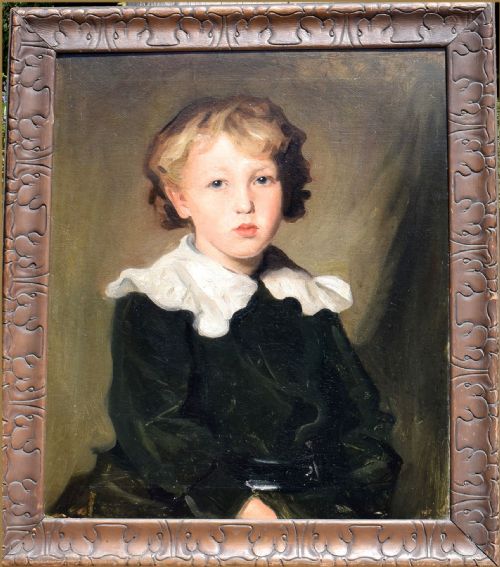
Edwardian Child Oil Painting
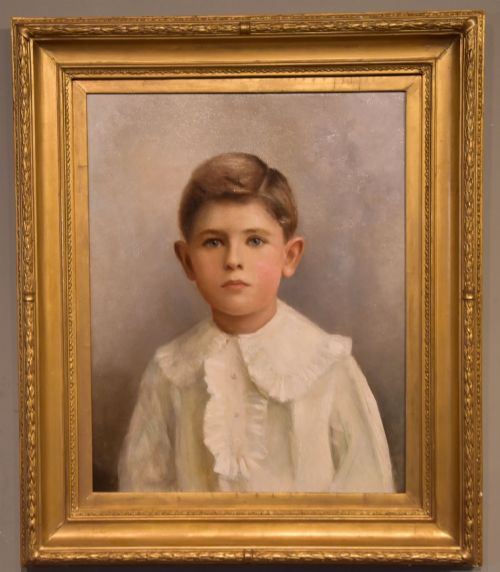
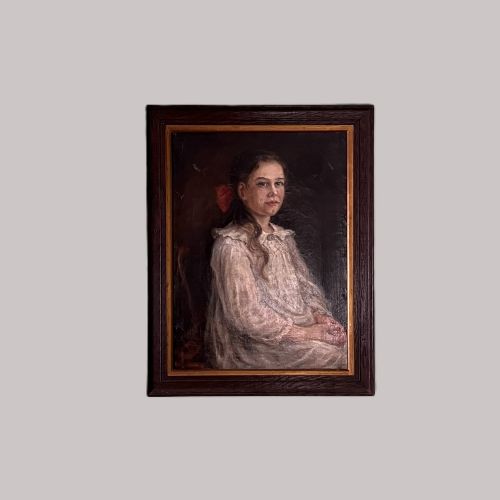
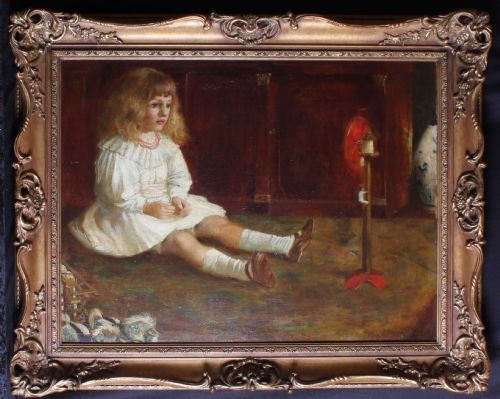
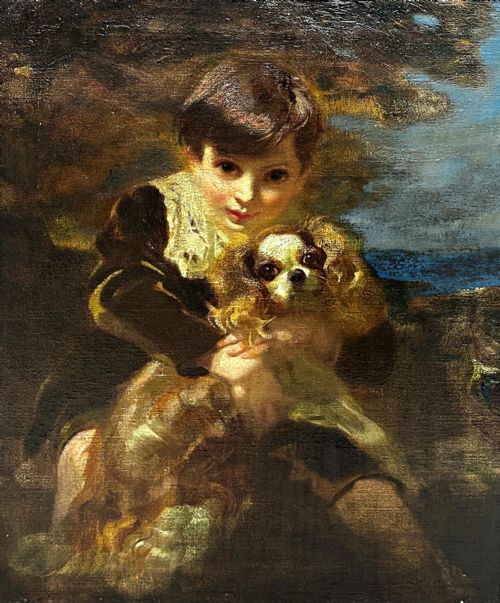
These edwardian child oil painting works capture youth with brushwork spanning the 19th Century through the 1930s, offering buyers intimate windows into past childhoods.
Edwardian Child Oil Painting
An edwardian child oil painting represents a genre of portraiture and domestic scene capturing young subjects, frequently framed by the Victorian, Edwardian, and early twentieth-century periods. These works range from formal studio portraits of boys and girls to outdoor scenes depicting children gardening, playing by the sea, or resting in woodland settings.
Buyers exploring this selection encounter pieces originating from British Impressionism, the Scottish School, and Victorian Pastoral traditions. Subjects appear in varied attire, from simple dresses to historical Van Dyck dress, accompanied by elements such as toys or pets.
Materials and Techniques
The works rely upon oil paint applied to canvas, often supported by wood stretchers or mounted within decorative giltwood and gesso frames. Certain canvases remain unframed, revealing the raw weave and edges of the material.
Artists employed layered brushwork to build depth in skin tones and garments, utilising the rich consistency of oil to render intricate details like curly hair and textile folds. The combination of oil on canvas with carved wooden framing defines the physical structure of these pieces.
Listings feature works spanning the 19th Century, Edwardian era, 1900, 1910, 1920, and 1930 periods, executed in oil on canvas with wood and giltwood framing.
Assessing Artistic Quality
The distinction between standard works and superior examples rests upon the artist's ability to convey psychological depth and natural posture in the young subject. Masterful handling of light, particularly in outdoor scenes involving woodland or coastal settings, elevates a composition above standard portraiture.
Execution of background details and facial expression separates accomplished academic or impressionistic output from simpler decorative pieces. The harmony between the painted surface and the original gilt wood frame also influences the overall integrity of the piece.
Henry Windsor Fry·Arthur Percy Dixon·Byam Shaw·Thomas Bromley Blacklock·Kershaw Schofield·Alfred Banner·Frank Owen Salisbury·Harold Arthur Burke·John Mc Ghie·William Orpen·Harry John Pearson
The Edwardian Child Oil Painting Glossary
- Canvas
- A heavy woven fabric used as a surface for oil painting, typically stretched tightly over a wooden frame before application of paint.
- Giltwood
- Wood that has been coated with a thin layer of gold leaf or gold paint, frequently used for ornate period picture frames.
- Gesso
- A plaster-like mixture applied to wood frames or panels as a base before gilding or painting.
- British Impressionism
- An art movement characterised by visible brush strokes, emphasis on light, and everyday subject matter, practiced by British painters during the late nineteenth and early twentieth centuries.
- Scottish School
- A grouping of Scottish artists renowned for distinct approaches to landscape and genre painting, active across the nineteenth and twentieth centuries.
Edwardian Child Oil Painting: Frequently Asked Questions
How do I date an antique child portrait?
Dating relies on stylistic clues, clothing fashions of the young subjects, and the specific materials used in the canvas and framing. Signatures, inscriptions on the reverse, and artist biographical dates offer precise chronological anchors.
Examinations of the stretcher frames and canvas preparation also assist in confirming whether a work belongs to the Victorian era, the Edwardian period, or the subsequent decades.
Where should I hang an oil painting?
Oil paintings on canvas require stable indoor environments away from direct sunlight and excessive humidity. Placing them on interior walls prevents thermal shock to the wood stretcher and the paint layer.
Adequate spacing allows the giltwood frame to complement the room without competing with surrounding decor or direct heat sources.
What is Victorian pastoral art?
Victorian pastoral art depicts idealized rural scenes, often featuring children, agricultural settings, or coastal landscapes. These works romanticize country life and simple pleasures.
Artists in this tradition focused on harmonious colour palettes and natural light to evoke nostalgia for traditional rural communities.
How are unframed canvases displayed?
Unframed canvases, such as those depicting children on raw supports, can be hung directly to showcase the texture of the material and the edges of the work. Alternatively, conservation-grade box framing protects the perimeter while maintaining visibility of the composition.
Care must be taken to support the wooden stretcher properly to prevent sagging over time.