





Edwardian Carved Walnut Dining Chairs
Edwardian carved walnut dining chairs bring rich timber warmth and historic form to the modern dining room.
Edwardian Carved Walnut Dining Chairs
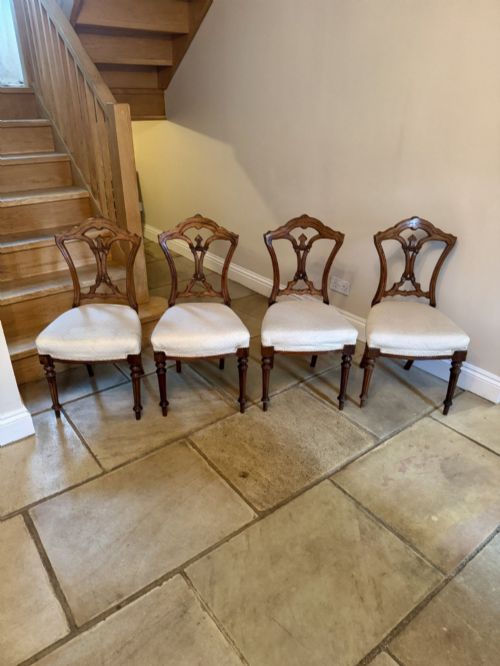
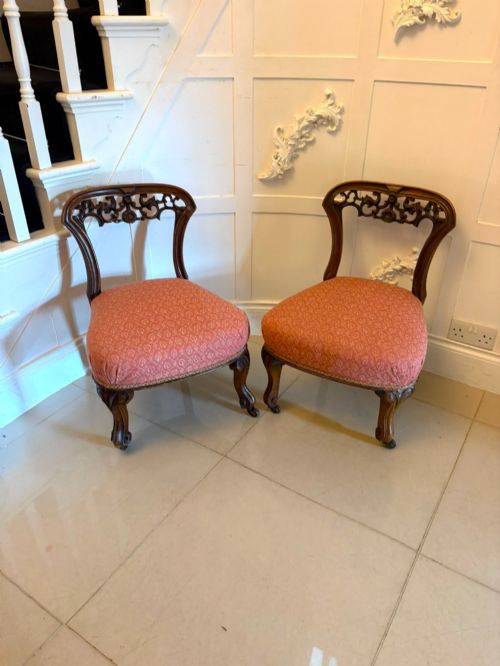
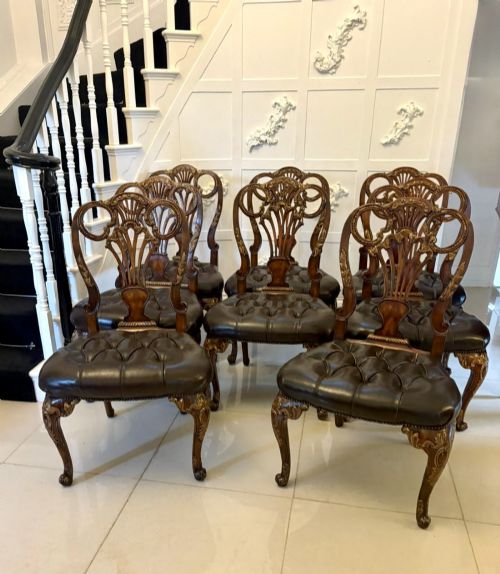
Edwardian carved walnut dining chairs combine the robust timber grain of walnut with period carving and upholstery in velvet, leather, and fabric. Buyers searching for Edwardian carved walnut dining chairs encounter various configurations, from single pairs to large matched sets of eight or more.
The material evidence on this page shows pieces spanning the Edwardian and Victorian eras, alongside earlier 17th century examples and revival styles. Forms range from simple side chairs and carver chairs to high back designs and complete salon suites.
Makers such as Charles Tozer, Blyth & Sons, and Spillman & Co appear in the records alongside various Queen Anne Revival and Arts and Crafts pieces. Buyers are most likely to meet sets of four or six chairs featuring walnut frames and upholstered seats.
How They Were Made
Makers shaped these edwardian carved walnut dining chairs from solid walnut timber, utilising the rich natural grain of the wood for structural frames and decorative carved details. Gilded accents and gold leaf occasionally highlight the carved portions of the walnut framework.
Upholstery techniques involve securing fabric, velvet, leather, or textile over interior padding, sometimes complemented by brass hardware or studs. The joinery relies on traditional woodworking methods to ensure stability across side chairs, armchairs, and high back dining seats.
Edwardian Carved Walnut Dining Chairs Retail Price Guide 2026
Typical asking prices for edwardian carved walnut dining chairs among the pieces listed under this phrase on Sellingantiques today, from the lower quarter to the upper quarter. They describe what is for sale here now, not the wider market.
Listings feature walnut construction combined with velvet, leather, and fabric upholstery across multiple historical periods.
What Varies in Quality
The distinction between standard dining chairs and exceptional pieces rests upon the crispness of the walnut carving and the integrity of the timber. Sets featuring consistent grain patterns and uniform colour across multiple chairs command greater appreciation than mismatched assemblies.
Original upholstery materials and documented maker attribution further elevate the standing of a set. The depth of the carving on the walnut frame and the preservation of any parcel gilt details dictate the upper tiers of quality.
Charles Tozer·Blyth & Sons·Spillman & Co
The Edwardian Carved Walnut Dining Chairs Glossary
- Walnut
- A dense, dark hardwood prized for its rich grain and durability in antique furniture frames. It forms the primary structural material for these dining chairs.
- Carver Chair
- An armchair, typically designed to sit at the head of a dining table or to match a set of smaller side chairs. These pieces often feature more elaborate arm supports.
- Queen Anne Style
- A furniture design movement characterised by curved lines, pad feet, and splat backs. This style appears frequently among the walnut dining chairs on this page.
- Arts and Crafts
- A design movement focusing on traditional craftsmanship and simple forms rather than mass production. Chairs in this style show distinctive honest construction.
- Parcel Gilt
- A decorative technique where specific carved areas of a wooden frame receive a thin application of gold leaf. This method highlights particular details against the dark walnut.
Edwardian Carved Walnut Dining Chairs: Frequently Asked Questions
How many chairs come in a set?
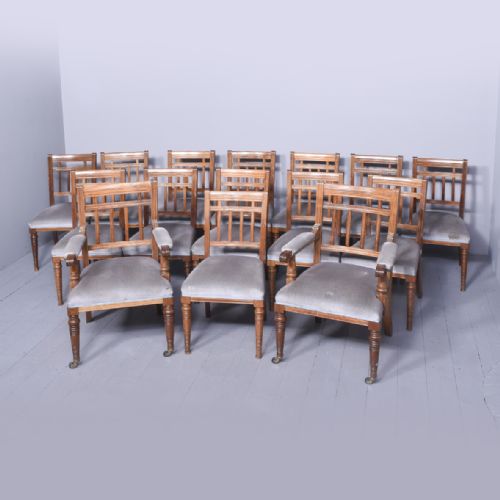
Sets vary widely from pairs to larger groupings of six, eight, or fourteen dining chairs. Buyers can find individual side chairs as well as extensive matched suites.
Larger sets often originate from maker workshops or larger dining rooms of the period. Checking the specific listing details confirms the exact quantity available in any given set.
What styles influence these chairs?
The designs draw heavily from Queen Anne Revival, Arts and Crafts, and Art Nouveau aesthetics. Carolean and general Victorian influences also appear across the inventory.
These varied styles manifest in different back shapes, carving motifs, and leg forms. Each style reflects the design preferences of its specific period of manufacture.
Are these chairs suitable for daily use?
Walnut construction provides substantial durability for regular dining room seating. The sturdy timber frames support everyday family meals when properly maintained.
Buyers should consider the condition of the upholstery and interior padding for daily comfort. Period chairs often benefit from careful handling and appropriate weight distribution.
How do I identify an Edwardian piece?
Edwardian furniture typically dates from the early twentieth century, showing lighter proportions than heavy Victorian pieces. Carving styles and revival motifs provide key dating clues.
Maker stamps or labels can also help confirm the exact period of origin. Comparing the timber finish and hardware style against known periods clarifies the date.