



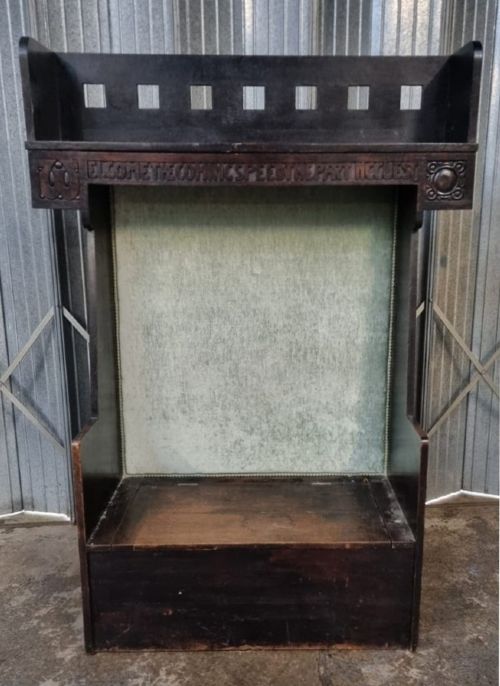


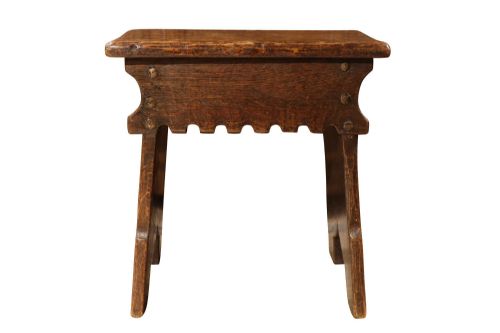

Edwardian Carved Oak Bench
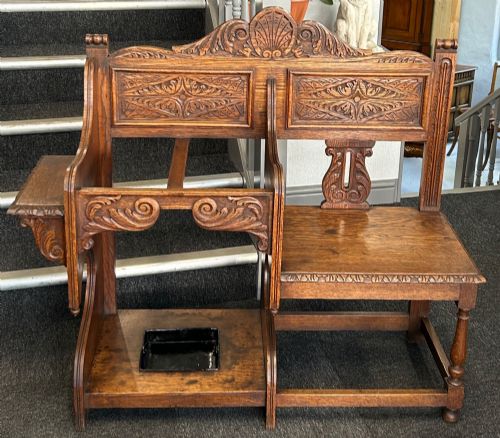
An edwardian carved oak bench brings robust craftsmanship and traditional character into an entrance hall or living space.
What these pieces are
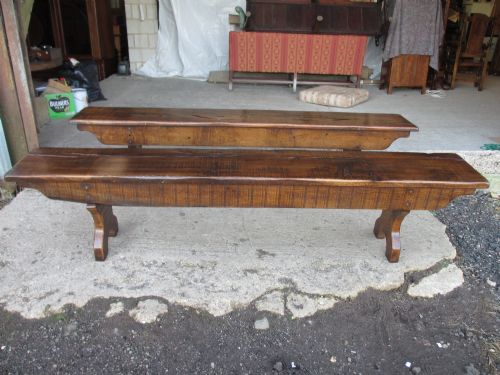
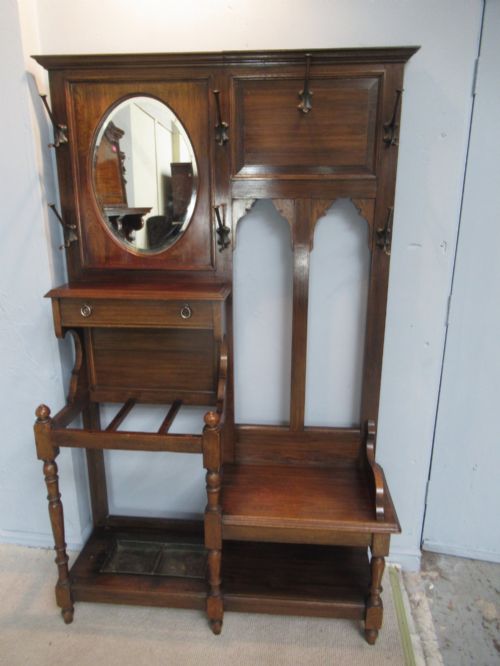
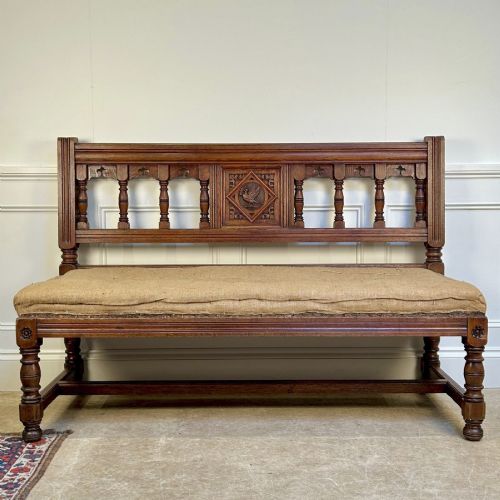
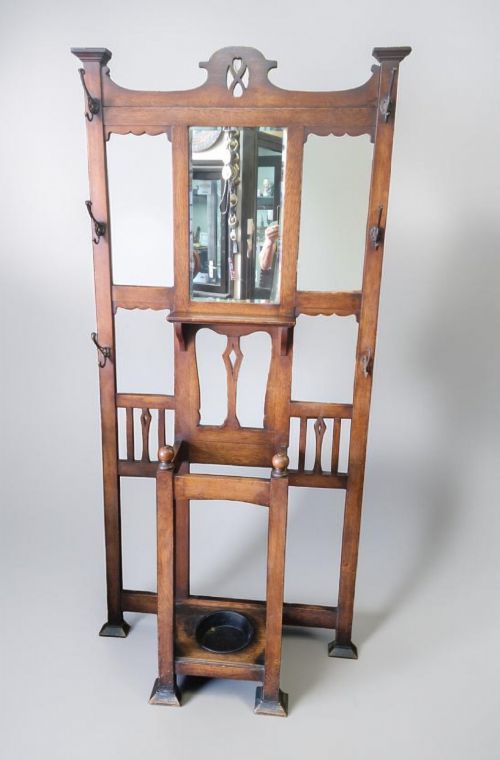
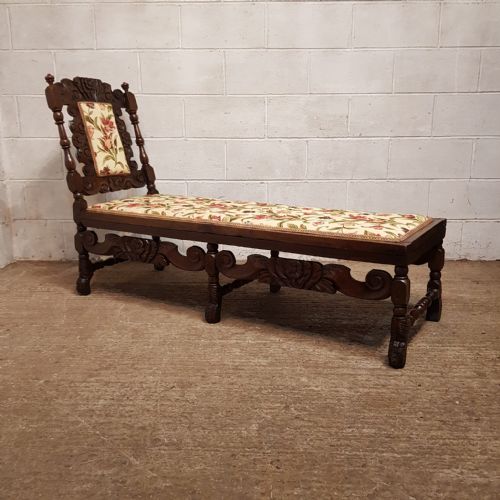
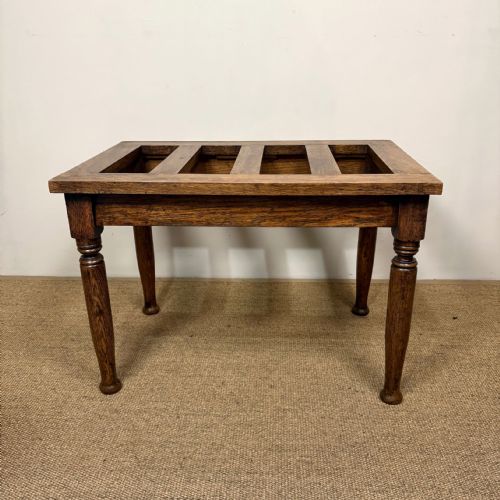
The search phrase edwardian carved oak bench covers a sturdy group of seating furniture designed primarily for hallways, boot rooms and reception areas. These items range from simple open benches and luggage stands to high-backed settles and multifunctional pieces with folding tops.
Most examples found here date from the Edwardian period or the late Victorian era, though earlier nineteenth-century pieces also appear alongside revival styles. Buyers encounter forms featuring lift-up lids, shaped trestle ends and panelled backs designed to provide both seating and storage.
The domestic origins of these oak benches reflect a taste for solid, practical wooden furniture with decorative carving. They serve equally well in modern homes as functional seats or as statement hallway furniture with deep historical roots.
How they were made
Construction relies heavily on solid oak timber, selected for its strength and durability in heavy-use areas like hallways. Workshops utilised traditional joinery techniques such as mortise and tenon joints to ensure the frames remained rigid over decades of daily use.
Surface decoration typically involves hand carving executed directly into the solid wood panels and framing. Iron fittings appear as functional hinges and hardware on pieces featuring lift-up lids or storage compartments.
Finishes range from dark tones to golden oak hues, highlighting the natural grain and figuring of the timber. Panelled construction provides structural stability while offering flat surfaces for relief carving.
Retail Price Guide 2026
Typical UK retail prices for edwardian carved oak bench, calculated from the Sellingantiques database of over a million retail prices indexed since 2003. This retail price guide relies exclusively on Sellingantiques data; no external sources or auction records are used, so the figures do not describe the wider market.
Court room benches occasionally wander into domestic halls, bringing stern judicial authority directly to your hallway.
What varies in quality
Quality in these benches rests on the depth and crispness of the hand carving rather than mechanical regularity. Finer pieces display deeply undercut relief work on the back panels and arms, whilst simpler examples rely on shallow geometric stamping.
The choice of timber creates a distinct tier in quality, with select golden oak or figured boards commanding greater visual presence than plain utility timber. Substantial thickness in the structural framing and heavy trestle ends separate robust seating from lighter constructions.
Maple and Co
The Edwardian Carved Oak Bench Glossary
- Settle
- A wooden bench with a high back, solid arms and frequently a box seat beneath the cushion area. This form protects occupants from draughts in entrance halls.
- Monks bench
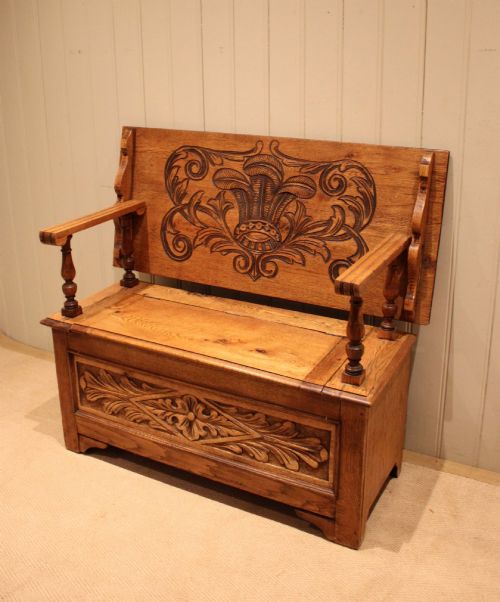
- A convertible piece of furniture featuring a pivoting back that folds down to form a table top above a box base. It combines two household functions in one wooden frame.
- Trestle ends
- Supporting uprights positioned at each end of a bench rather than standard four-legged designs. They distribute weight evenly across the floor.
- Panel set
- Wooden panels fitted within a grooved frame to allow for natural wood movement without splitting. This construction method keeps large flat areas stable.
Frequently Asked Questions
Where should I place an edwardian carved oak bench?
These benches suit entrance halls, boot rooms and wide corridors where their solid construction handles heavy daily use. They also work well in living rooms against blank walls.
Pieces with lift-up lids offer hidden storage for shoes, blankets and hallway clutter while providing practical seating.
What is a monks bench?
A monks bench is a versatile seat featuring a hinged back that folds flat over the arms to create a small table. This dual-purpose design originated in larger halls where space saving was useful.
Inside the base, a box compartment provides concealed storage accessed by lifting the seat lid.
How do I care for oak furniture?
Solid oak benefits from occasional treatment with quality beeswax to nourish the timber and maintain a soft sheen. Avoid placing wooden benches near direct heat sources to prevent the wood from drying out.
Regular dusting with a dry cloth keeps the carved details clear of debris without harming the patina.
How can I tell the period?
Edwardian and late Victorian pieces show distinct hand-carving styles, often drawing on Jacobean or Gothic revival motifs. Examine the fixings, timber colour and construction joints for clues to the era.
Secondary woods inside storage boxes and the type of iron hinges also help indicate when the piece was constructed.