

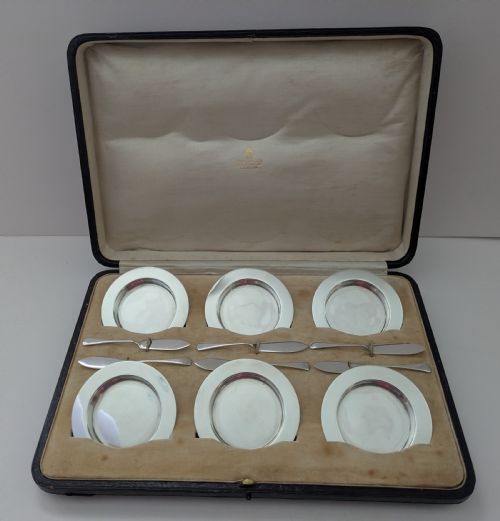


Edwardian Butter Dish
An edwardian butter dish brings tactile elegance to the dining table, combining practical form with period charm.
Edwardian Butter Dish
An edwardian butter dish is a dedicated tabletop vessel designed to hold and present dairy at formal meals, most frequently encountered in silver plate or sterling silver paired with cut glass liners.
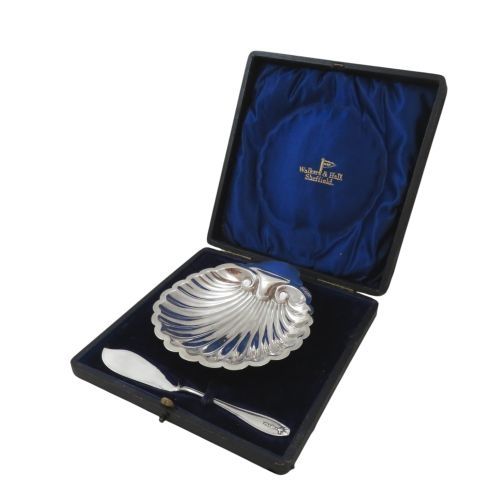
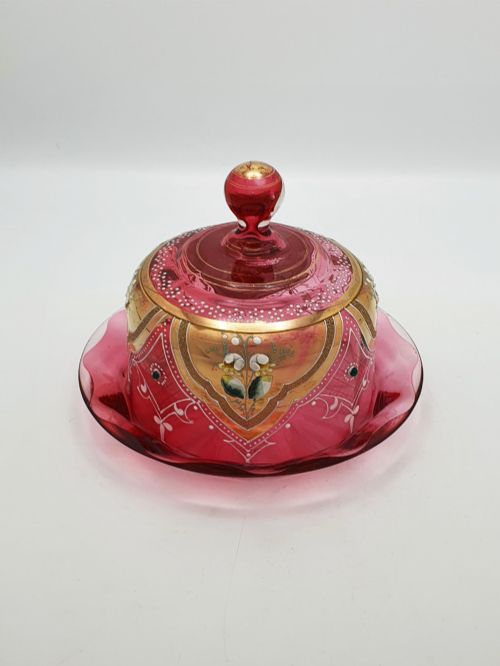
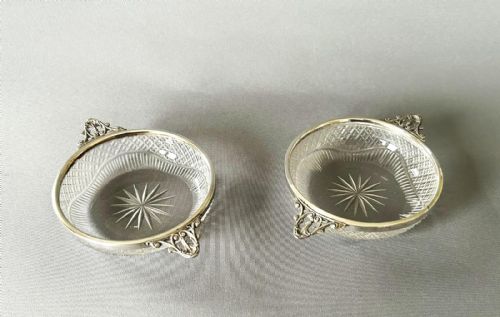
The pieces appearing in this selection span the early twentieth century, taking distinct shapes such as naturalistic shells, pierced framework, and lidded crystal servers.
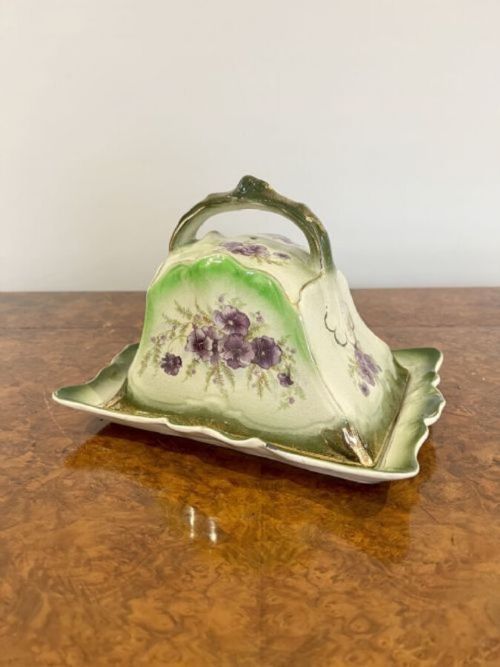
Alongside dedicated butter holders, the inventory encompasses related serveware including cheese dishes, jam pots, and small cased sets complete with original spreaders.
How they were made
Silversmiths utilised sterling silver and durable silver plate to form structured stands, mounting them with hand-cut or pressed glass inserts designed to protect the metal from dairy salts.
Decorative elements relied on traditional craftsmanship including piercing, delicate casting of shell motifs, and fitted silk-lined presentation cases for luxury retail.
Listings feature sterling silver, silver plate, cut glass, and cranberry glass across Victorian, Edwardian, and later periods.
What varies in quality
Quality rests upon the weight of the silver or silver plate and the crispness of any pierced or cast ornamentation, distinguishing mass-produced items from maker-marked pieces.
The integrity of the glass liner, particularly when original and free from chips, alongside the presence of matching silver butter knives, elevates the standing of an individual piece.
The Goldsmiths & Silversmiths·Asprey & Co.
The Edwardian Butter Dish Glossary
- Sterling silver
- A silver alloy containing 92.5 percent pure silver by mass, standard for high-end British tableware of the period.
- Silver plate
- A base metal coated with a thin layer of pure silver, offering the visual appeal of solid silver at a different cost.
- Cut glass
- Glass decorated by abrasive wheel cutting to create faceted geometric or floral patterns that catch the candlelight.
- Pierced work
- Metal pierced with geometric or organic openings to create lightweight decorative screens around glass liners.
- Butter knife
- A small flatware utensil with a blunt, rounded blade specifically proportioned for portioning and spreading butter.
Edwardian Butter Dish: Frequently Asked Questions
How were butter dishes used?
They were placed on the dining table holding a pat or block of butter, often accompanied by a small dedicated spreader or knife.
The glass liner prevented the butter from contacting the metal directly, which protected the silver from tarnishing prematurely.
Are glass liners usually original?
Many surviving pieces retain their original pressed or cut glass liners, which fit snugly into the metal framework.
Because glass is fragile, replacement liners are sometimes fitted later, so checking the fit and glass quality helps determine originality.
How do I care for silver butter dishes?
Regular gentle washing in warm soapy water removes dairy fats and prevents residue build-up on the metal and glass.
Silver surfaces require occasional polishing with a non-abrasive cream to maintain their shine without wearing away thin plating.