



Edwardian Brass Plant Table
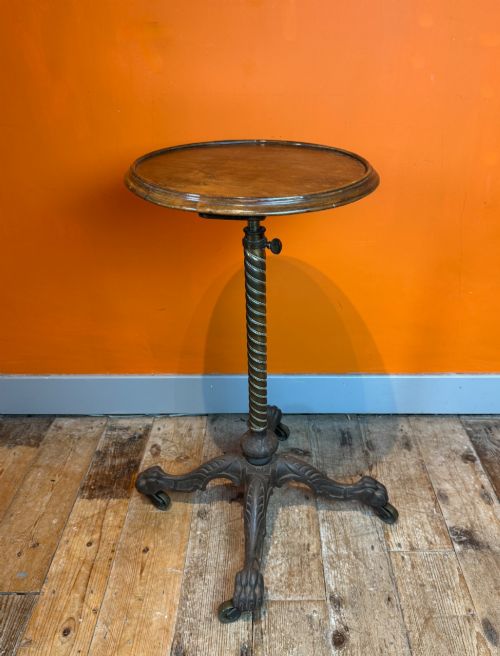
An edwardian brass plant table brings together metalwork and timber to hold flora, offering both function and period character for a room.
Edwardian Brass Plant Table
When someone searches for an edwardian brass plant table, they encounter a range of occasional furniture designed to display greenery within domestic interiors. These pieces typically incorporate metal frames or galleries paired with wooden or stone surfaces.
The versions most commonly met across these listings combine brass elements with timbers such as mahogany, walnut, and satinwood. Alongside traditional plant stands and jardinieres, related forms like side tables, tiered stands, and dumb waiters appear under this heading.
The periods represented span from the Victorian era into the early twentieth century, showing influences from French Louis XV style, Empire, and Art Deco designs. Such variety means buyers find both restrained gallery stands and more ornate mounted pieces.
How they were made
Makers utilised solid timbers and veneers, incorporating mahogany, walnut, and satinwood into tops, shelves, and marquetry details. These woods were often polished to highlight natural grain patterns before being fitted with metal components.
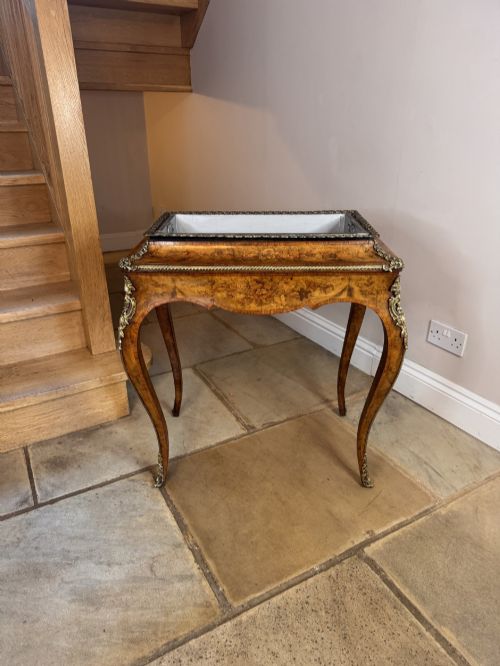
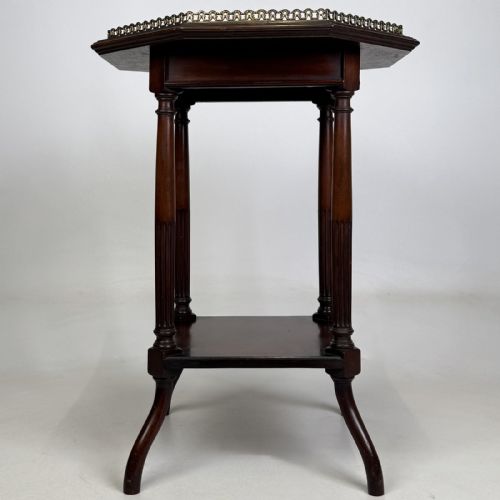
Metalwork played a structural and decorative role, featuring brass galleries, frames, and ormolu mounts fixed securely to the timber bodies. In some examples, stone or mineral elements like onyx and marble formed the primary display surface.
Construction techniques included inlaid marquetry work, tiered shelving arrangements, and raised galleries designed to keep pots stable. Zinc liners also appeared within planter sections to hold moisture away from the surrounding woodwork.
Edwardian Brass Plant Table Retail Price Guide 2026
Typical asking prices for edwardian brass plant table among the pieces listed under this phrase on Sellingantiques today, from the lower quarter to the upper quarter. They describe what is for sale here now, not the wider market.
Zinc liners wait quietly beneath foliage, protecting centuries of polished mahogany from a splash of watering-can water.
What varies in quality
Quality in these pieces rests upon the precision of the timber joinery and the weight of the metal fittings. Heavier cast brass galleries and well-fitted marble or onyx tops indicate a higher standard of original manufacture.
The refinement of decorative details, such as inlaid marquetry and ormolu mounts, distinguishes simpler utility stands from finer salon furniture. Finer examples display crisp casting work and seamless integration between metal and wood.
The Edwardian Brass Plant Table Glossary
- Jardiniere
- An ornamental pot or stand designed specifically for holding plants or flowers. These vessels often feature metal liners to protect the surrounding furniture.
- Gallery
- A raised railing of pierced metal or turned wood fitted around the edge of a table top. Its purpose is to prevent items from sliding off the surface.
- Ormolu
- Gilt bronze or brass mounts applied to furniture for decorative effect. This technique was frequently utilised in French revival and Empire styles.
- Marquetry
- Decorative patterns formed by the insertion of different woods, veneers, or shells into a wooden surface. This method creates pictorial or geometric designs on tabletops.
- Dumb waiter
- A freestanding tiered stand used historically for serving food or displaying objects. Examples often feature multiple circular trays supported on a central column.
Edwardian Brass Plant Table: Frequently Asked Questions
What is an edwardian brass plant table?
It is a small piece of period furniture designed to hold plants, featuring a brass frame, gallery, or decorative mounts combined with a wooden or stone top.
These items range from simple tiered stands to ornate occasional tables influenced by French design styles.
How were these tables used originally?
Households utilised them in reception rooms and parlours to elevate potted ferns and flowering plants into better view and light.
The raised galleries kept pots secure, while lower tiers provided space for additional display or horticultural accessories.
How do I style one at home?
Placing a potted plant with trailing foliage upon the top surface allows the brass gallery and timber structure to remain visible beneath the leaves.
Such tables fit well beside seating areas or in empty corners where vertical height and a touch of metallic shine benefit the room.
How can I tell the period apart?
Victorian and Edwardian examples often rely on mahogany or walnut with simpler brass galleries, whereas pieces with ormolu mounts frequently draw on earlier French Empire or Louis XV styles.
Materials like onyx and marble tops combined with tiered brass supports tend to point towards the later decades represented in the listings.