
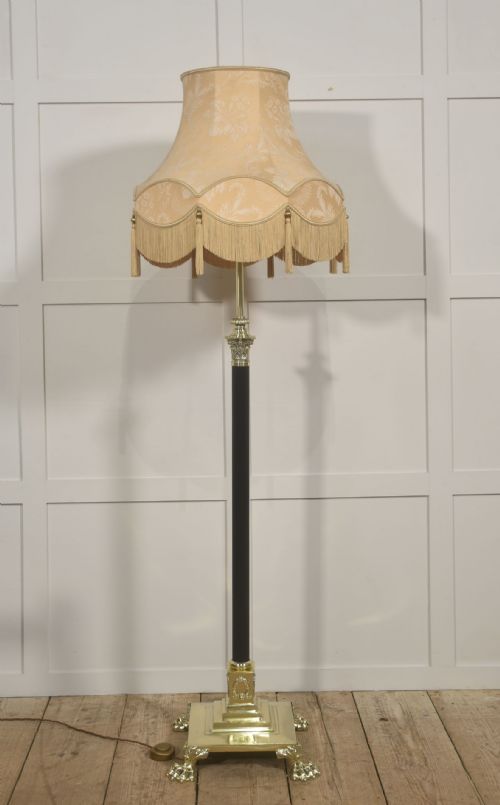


Edwardian Black Floor Lamp
An edwardian black floor lamp brings dark lacquer, painted decoration and tall proportion to a room, offering both character and functional illumination.
Edwardian Black Floor Lamp
When buyers search for an edwardian black floor lamp, they encounter tall lighting fixtures designed to stand on the floor, frequently described as standard lamps in the evidence. These pieces span the Edwardian period alongside items dated from the nineteenth century up through the 1930s, reflecting overlapping production eras.
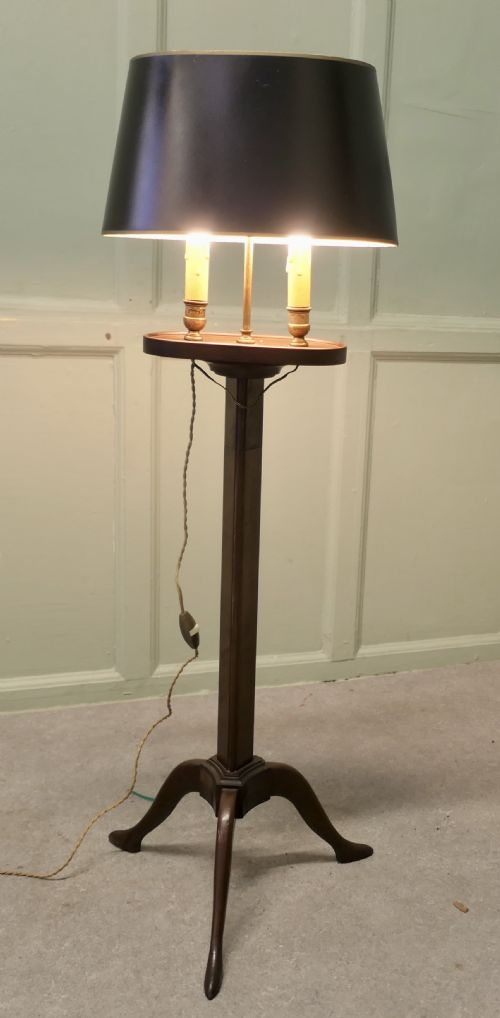
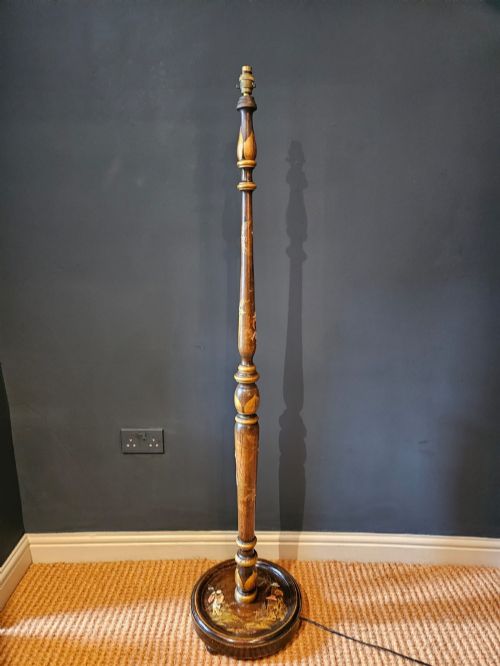
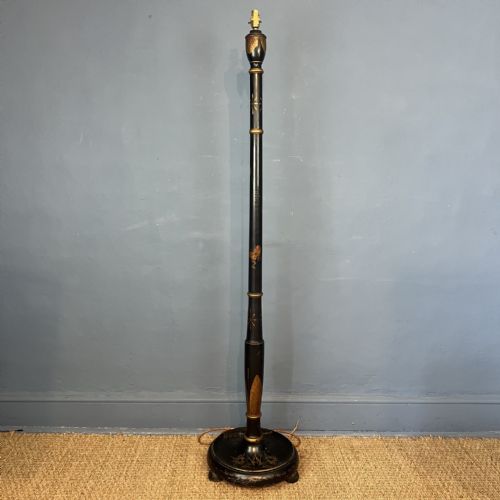
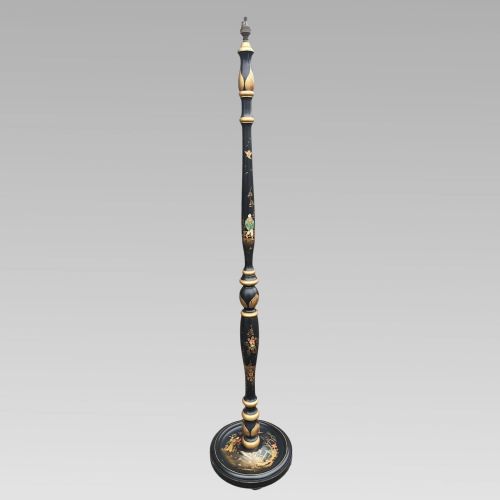
The most common style associated with these dark finishes is Chinoiserie, featuring black lacquer and decorative motifs that draw upon Asian design traditions. Alongside these lacquered examples, the selection includes brass columns, wrought iron telescopic frames, and mahogany structures carrying various forms of electric or electrified oil mechanisms.
Makers and manufacturers utilised several materials to achieve stability and visual impact, combining wood, metal, and fabric shades. Pieces appear under descriptions ranging from bouillotte and Neoclassical styles to Art Nouveau ironwork, demonstrating a breadth of aesthetic influences within the category.
Materials and construction
Construction relies heavily on timber and metal foundations, with lacquered wood and mahogany providing the core body for Chinoiserie standard lamps. Black lacquer finishes receive detailed painted or gilt decoration, while brass and wrought iron supply structural rigidity and adjustable stems.
Wiring and illumination methods evolved over time, converting early oil lamps or candle configurations into electrified fittings while retaining telescopic height adjustments and heavy weighted bases necessary for balance.
Some telescopic iron floor lamps started life burning oil before welcoming the twentieth-century spark.
Factors determining quality
Quality rests upon the execution of the surface decoration, particularly the depth and preservation of the black lacquer and its painted Chinoiserie motifs. Finer examples display crisp detail in the ornamentation and superior hand-finishing on the wooden or metal columns.
The integrity of the structural hardware, including adjustable brass stems, heavy iron bases, and solid joinery, separates standard production from superior pieces. Original fittings and well-preserved structural materials elevate the overall standard of the lamp.
The Edwardian Black Floor Lamp Glossary
- Standard lamp
- A tall floor-standing lamp designed to illuminate a room from a standing position rather than a table top. This term appears frequently alongside floor lamp in the listings.
- Chinoiserie
- A decorative style reflecting European interpretations of Chinese and East Asian artistic traditions. It appears on lacquered lamp standards with painted motifs.
- Bouillotte
- A style of lamp originally designed for card games, featuring an adjustable shade on a central column. The evidence includes bouillotte floor lamp variants with twin candle fittings.
- Telescopic
- A stem construction allowing the height of the lamp to be adjusted up and down. This mechanism is found on nineteenth-century iron and brass floor lamps.
- Neoclassical
- A style drawing upon classical Greek and Roman motifs, visible in columns and symmetrical brass fittings. It represents one of the design influences found across the listed pieces.
Edwardian Black Floor Lamp: Frequently Asked Questions
What is an edwardian black floor lamp?
An edwardian black floor lamp is a tall lighting fixture featuring dark lacquer or painted wood, often decorated in a Chinoiserie style with motifs inspired by Asian art.
These pieces were produced around the early twentieth century and designed to provide ambient room lighting while serving as decorative furniture.
How do I date a black floor lamp?
Dating relies on examining the materials, construction methods, and stylistic markers such as Neoclassical brass columns or Art Nouveau ironwork.
Comparing the turned wood profile and lacquer finish against documented pieces from the Edwardian era and adjacent decades helps determine the period of origin.
Were these lamps originally electric?
Many early floor lamps began as oil lamps or candle standards before being converted to electricity during later periods.
Some surviving examples retain telescopic mechanisms and heavy bases originally engineered for oil burning prior to modern electrification.
Where should I place a standard lamp?
Standard lamps suit corners of reception rooms or beside seating areas where they can cast light downward from height.
Their decorative columns and painted lacquer finishes allow them to function as sculptural elements when unlit.