

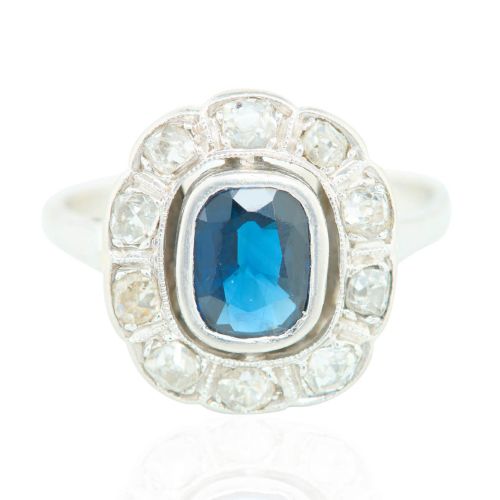
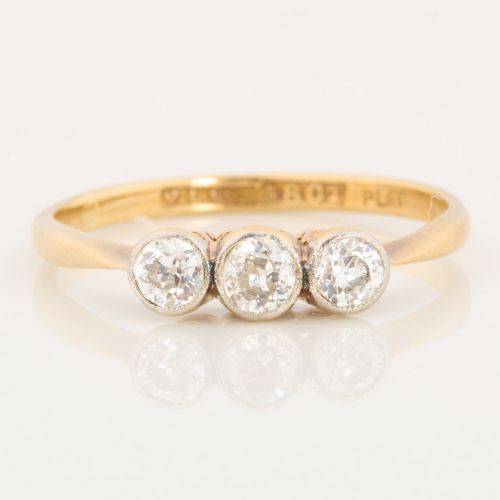


Edwardian Bezel Ring
An edwardian bezel ring secures a gem within a smooth metal rim, offering low-profile elegance and everyday security that buyers prize.
Edwardian Bezel Ring
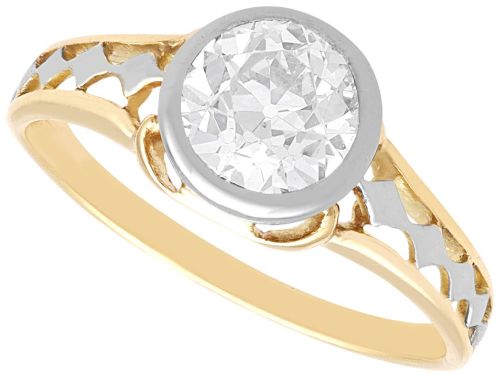
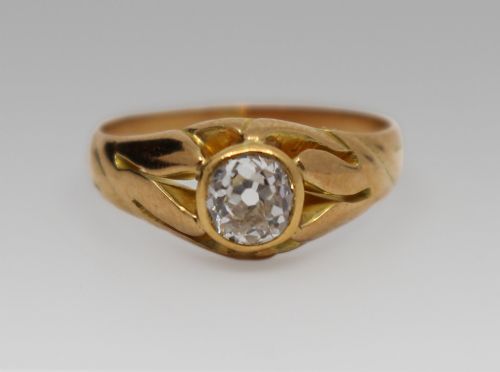
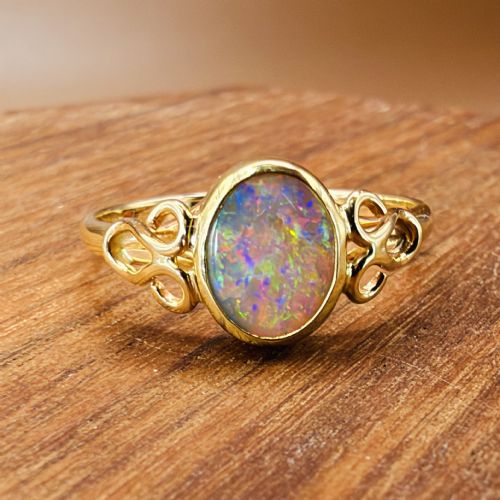
An edwardian bezel ring brings together stones and settings characteristic of the early twentieth century, though designs span periods from Victorian through Art Deco and mid-century. The versions most commonly encountered on this page feature diamonds, sapphires, or opals set in yellow gold, white gold, or platinum.
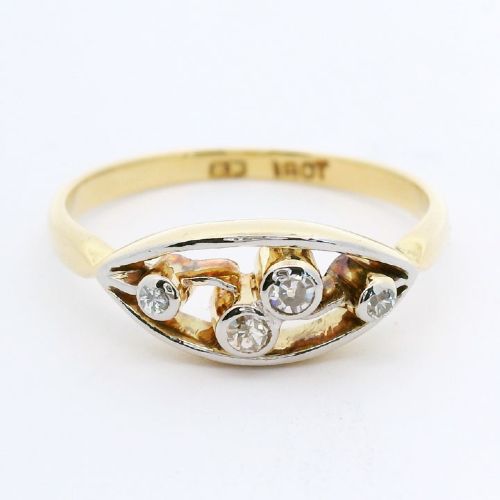
Forms range from simple solitaire and three-stone trilogy layouts to intricate floral daisy motifs and geometric cluster rings. These pieces originate across Britain and the Continent, showing stylistic influences from Edwardian refinement to Art Nouveau curves.
How they were made
Goldsmiths constructed these rings using durable metals including platinum, 18ct yellow gold, 18ct white gold, and silver gilt. Platinum and gold were shaped to tightly enclose the girdle of the stone in a continuous metal collar.
Gemstones such as old cut diamonds, sapphires, rubies, bloodstones, and chalcedonies were hand-set into rubover and bezel mounts. Artisans also integrated delicate details like enamel work and floral motifs into the precious metal foundations.
Listings feature platinum, yellow gold, and white gold alongside diamond, sapphire, opal, bloodstone, and chalcedony.
What varies in quality
The precision of the metal work around the stone defines the upper tier of these pieces, where the collar sits flush and even against the gem. Heavier gauge gold and platinum foundations provide structural integrity that lighter constructions lack.
The selection and cut of the central stones dictate the distinction of individual examples, with old cut diamonds and matched sapphires showing superior brilliance. Integration of supporting smaller stones and balanced proportions across cluster and target designs further separate standard pieces from exceptional ones.
The Edwardian Bezel Ring Glossary
- Bezel setting
- A method of securing a gemstone where a thin strip of metal is pushed or hammered over the girdle of the stone to hold it firmly in place. This technique is also known as a rubover setting.
- Old cut diamond
- A precursor to the modern brilliant cut, typically featuring a smaller table, higher crown, and a culet hole at the base. These stones were hand-faceted before the advent of automated cutting.
- Cluster ring
- A ring design featuring a prominent central stone surrounded by a tighter grouping of smaller gems. This layout maximises visual presence and light reflection.
- Trilogy ring
- A ring set with three stones, traditionally representing the past, present, and future. They frequently appear with a larger central gem flanked by two smaller side stones.
- Platinum
- A dense, strong, and malleable white metal utilised heavily in fine jewellery manufacture during the Edwardian and Art Deco eras. Its strength allowed jewelers to create delicate, lace-like settings.
Edwardian Bezel Ring: Frequently Asked Questions
What is a bezel setting?
A bezel setting surrounds the gemstone with a collar of precious metal that holds it securely by the edge. This technique protects the girdle of the stone and creates a smooth, snag-free profile.
It is distinct from prong settings, which use metal claws to lift the stone above the band. Bezel-set rings sit closer to the finger and offer robust everyday wear.
How do I care for my ring?
Clean your ring regularly using warm water, mild soap, and a soft brush to remove oils and dirt from beneath the bezel. Avoid harsh chemical cleaners that might affect softer gems or vintage metal treatments.
Have a professional jeweler inspect the metal collar periodically to ensure the stone remains tightly enclosed. Regular checks prevent accidental loss of the primary gem.
Can these rings be resized?
Most gold and platinum rings can be altered by a skilled jeweler who understands antique construction methods. The complexity of the resizing depends on the shank thickness and any shoulder engravings.
Consult a specialist who works with vintage pieces to preserve structural integrity and avoid damaging surrounding stones or delicate bezel edges.