





Edwardian Barometer Wall Hanging
These edwardian barometer wall hanging pieces bring period weather-tracking into domestic spaces with rich timber cases and clear dials.
Edwardian Barometer Wall Hanging
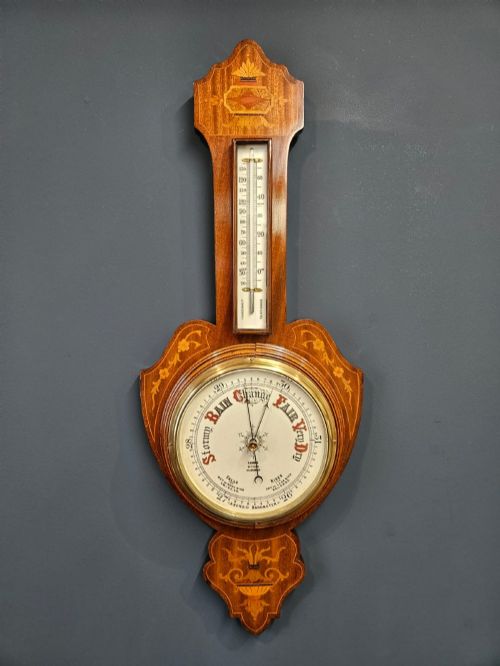
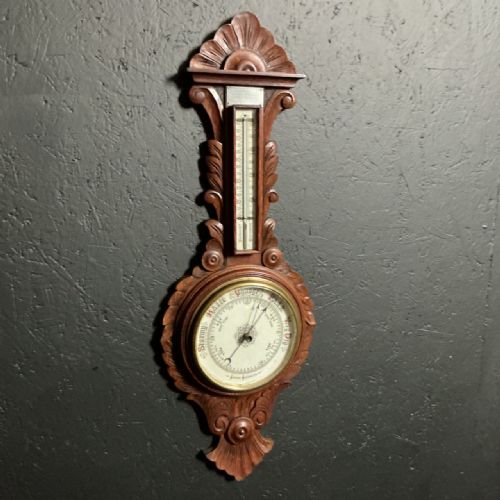
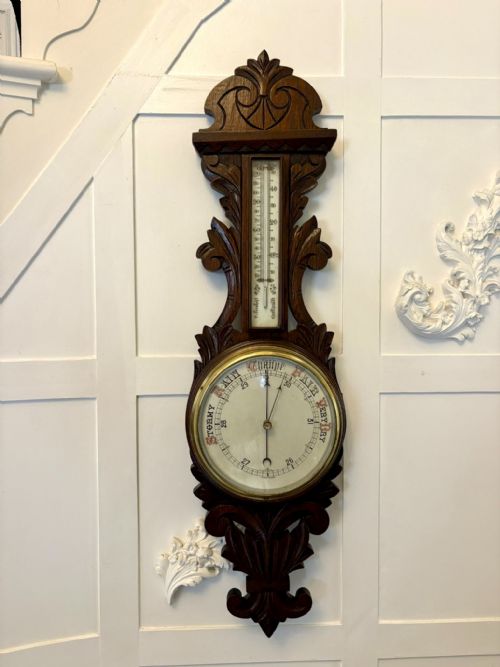
An edwardian barometer wall hanging combines practical atmospheric measurement with domestic decoration, fixed securely to the wall for daily observation. The listings show forms ranging from banjo shapes to circular dials, often paired with working thermometers.
Most examples found here date from the Edwardian period or late Victorian years, housed in carved oak, mahogany, rosewood or beechwood. These timber frames provide the structure for brass bezels, glass faces and silvered metal register scales.
Makers and retailers sometimes branded these instruments for commercial or domestic use, ranging from household names to local provincial clockmakers. The primary appeal lies in the warm grain of the wood combined with the crisp mechanics of aneroid or mercury movements.
Materials and construction
Cabinetmakers utilised solid and veneered timbers such as oak, mahogany, rosewood and satinwood to shape the heavy wall housings. Woodcarving and delicate string inlay define the aesthetic of banjo and circular wall barometers.
Internal mechanisms rely on sealed aneroid capsules or mercury columns connected to visible indicators behind glass faces. Silvered metal dials feature engraved or printed graduations that track barometric pressure changes over time.
Edwardian Barometer Wall Hanging Retail Price Guide 2026
Typical asking prices for edwardian barometer wall hanging among the pieces listed under this phrase on Sellingantiques today, from the lower quarter to the upper quarter. They describe what is for sale here now, not the wider market.
Recorded styles span the Victorian, late Victorian, Edwardian and Art Nouveau periods across multiple decades.
Assessing quality and craftsmanship
Superior pieces display deep relief carving in the timber case and intricate wood inlay rather than plain surfaces. The quality of the engraving on the silvered metal dial and the weight of the brass bezel distinguish finer workshops from standard production.
Intact mercury tubes or fully responsive aneroid movements indicate better preservation and professional assembly. Original components and signed maker plates add historical depth to the instrument.
Hyde and Sons Sleaford·Aitchison for Zambrene
The Edwardian Barometer Wall Hanging Glossary
- Aneroid barometer
- An instrument that measures atmospheric pressure using a flexible metal bellows without liquid. Changes in pressure cause the box to expand or contract, moving a needle across the dial.
- Stick barometer
- A tall, vertical instrument containing a mercury-filled glass tube and cistern. It offers a direct reading of atmospheric height.
- Banjo barometer
- A household barometer housed in a distinctive symmetrical wooden case shaped like a banjo. This form typically incorporates a hygrometer, thermometer and damp dial.
- Bezel
- The metal ring that holds the protective glass face in position over the barometer dial. Brass is the most common metal used for this component.
Edwardian Barometer Wall Hanging: Frequently Asked Questions
How do aneroid and mercury barometers differ?
Aneroid barometers use a sealed metal capsule that expands and contracts with air pressure changes, moving the needle mechanically. Mercury barometers rely on a column of liquid metal balancing against atmospheric pressure.
Both systems display weather trends effectively, but aneroid models contain no liquid and prove safer for standard wall hanging.
Where should I hang a wall barometer?
Mount the instrument securely on an interior wall away from direct sunlight, heating vents and heavy vibrations. Consistent indoor temperatures help the internal metal mechanisms maintain accurate pressure readings.
Ensure the wall plug or screw matches the weight of the dense oak or mahogany timber case.
Can these barometers be calibrated?
Most aneroid barometers feature a small adjustment screw accessible from the back or through the dial face. This screw allows you to align the needle with known local barometric pressure.
Consult local weather reports before making minor adjustments to the internal linkage.
How do I identify an Edwardian barometer?
Edwardian instruments often feature lighter mahogany or oak timbers, sometimes with subtle string inlay reflecting the transition away from heavy Victorian dark woods. Stylistic details borrow from late Victorian proportions while embracing cleaner Edwardian lines.
Date attributions rely on retailer signatures, style markers and construction techniques recorded in the wood.