


Edwardian Barley Twist Furniture
Edwardian barley twist furniture brings carved spiralling timber and rich period character into modern interiors.
Edwardian Barley Twist Furniture
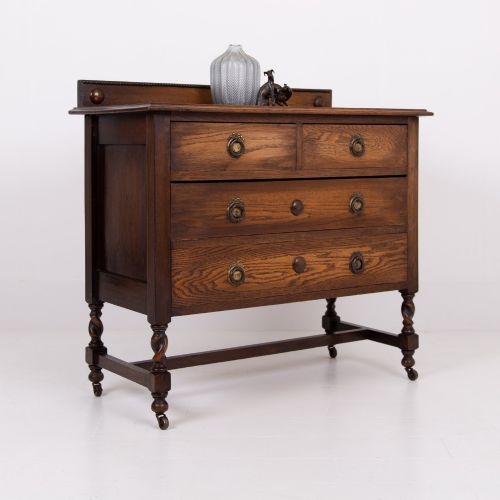
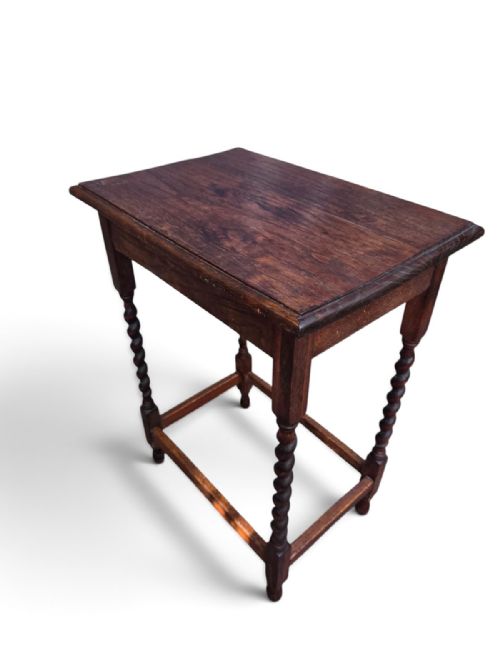
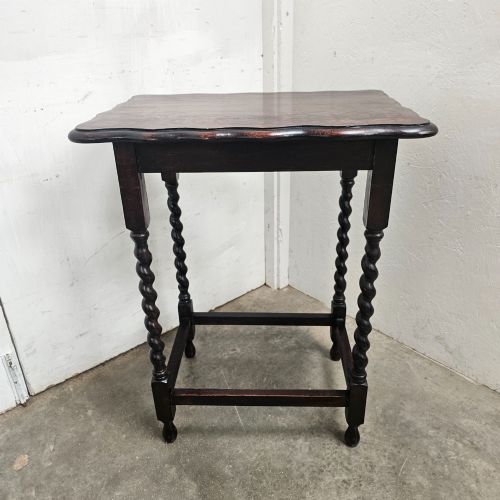
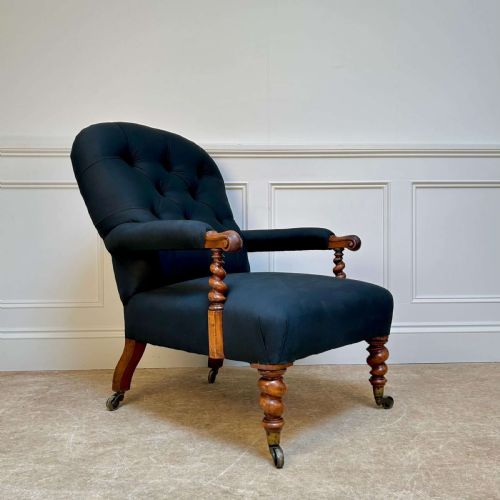
Edwardian barley twist furniture comprises practical household forms defined by distinctive spiral turning. Pieces span domestic utility and display, encompassing side tables, occasional tables, and seating.
The selection reflects both the Edwardian period and related 19th century or early 20th century eras. Oak and walnut form the primary structural foundations across the recorded items.
How they were made
Maker construction relies heavily on solid oak and walnut, shaped through lathe work and hand carving. Selected examples incorporate brass or glass elements alongside timber frames.
Joinery techniques balance structural stability with decorative presence, evident in turned supports and framed panels.
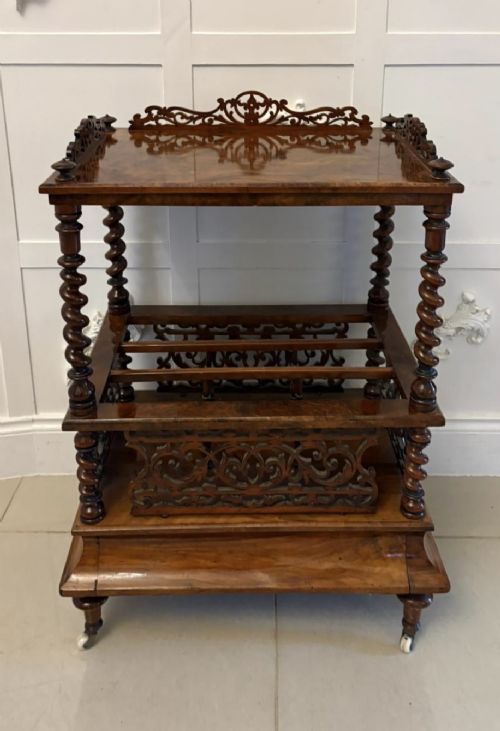
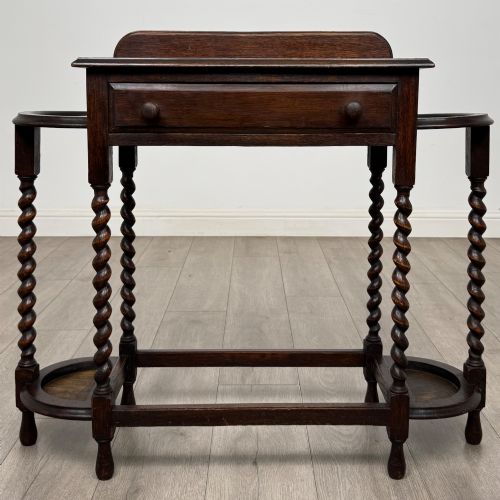
Object forms range from practical side tables and armchairs to multi-tiered whatnots and towel rails.
What varies in quality
Quality separates through the crispness of the spiral turning and the selection of timber grain. Denser figuring in walnut or oak indicates superior material choice.
Proportion and structural integrity define the higher end of the scale, where carved details remain sharp and balanced.
Hindley and Sons·Liberty and Co·Cottier and Co
The Edwardian Barley Twist Furniture Glossary
- Barley twist
- A type of spiral turning resembling a twisted rope, commonly found on table legs and furniture supports. This decorative form draws on earlier 17th century styles.
- Whatnot
- A multi-tiered shelving unit designed for displaying ornaments and small objects. These pieces utilise open uprights and multiple platforms.
- Canterbury
- A low multi-partitioned rack originally intended for holding sheet music or periodicals. The design often incorporates carrying handles and small legs.
- Side table
- A small domestic table intended to stand against a wall or beside seating. These forms serve functional surface needs within a room.
Edwardian Barley Twist Furniture: Frequently Asked Questions
How do I date barley twist furniture?
Dating relies on timber species, construction joints, and accompanying design motifs. Edwardian examples often feature lighter oak frames compared to darker Victorian counterparts.
Secondary materials and hardware further assist in establishing the correct period for each piece.
Where should I place a side table?
These tables function effectively beside armchairs or against hallways walls for practical surface space. Their compact footprints suit diverse room layouts.
Consider the surrounding timber tones to maintain visual harmony in the interior scheme.
How do I clean oak and walnut?
Maintenance requires dry dusting with a soft cloth to protect the polished timber surface. Avoid excess moisture and modern chemical sprays.
Occasional application of appropriate wax helps nourish the grain over time.
What is a whatnot used for?
Whatnots provide tiered display space for books, ceramics, and decorative objects. Their open shelving suits corner placements or wall spaces.
Victorian and Edwardian versions maximise vertical storage without occupying excessive floor area.