


Edwardian 18ct Gold Band
An edwardian 18ct gold band offers a refined circle of precious metal paired with old-cut gemstones, prized for daily wear.
Edwardian 18ct Gold Band
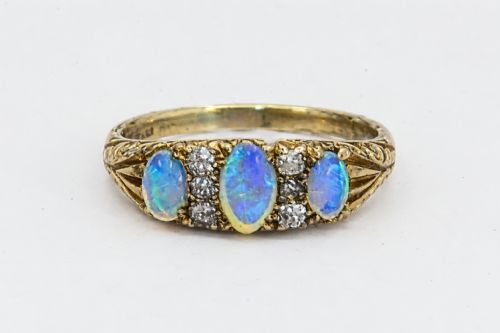
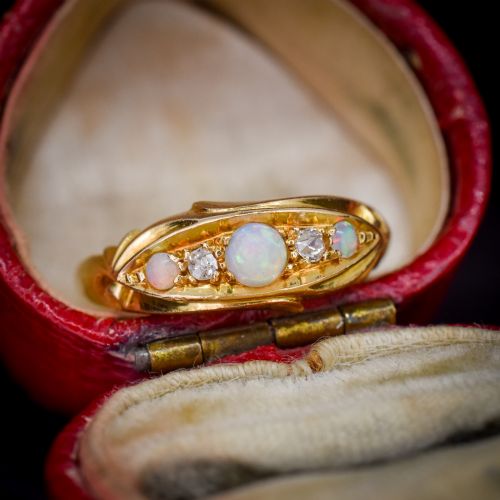
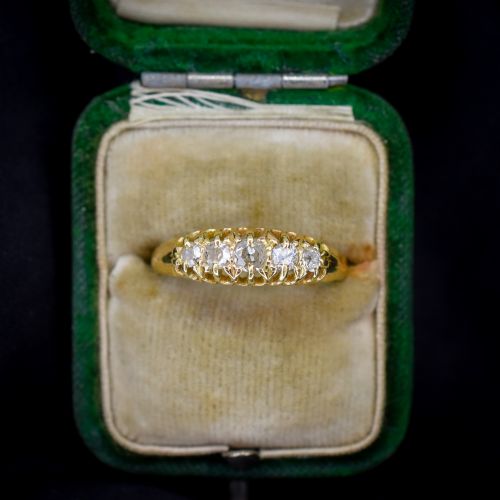
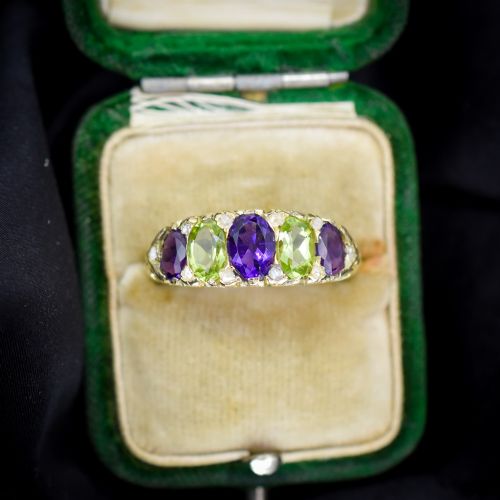
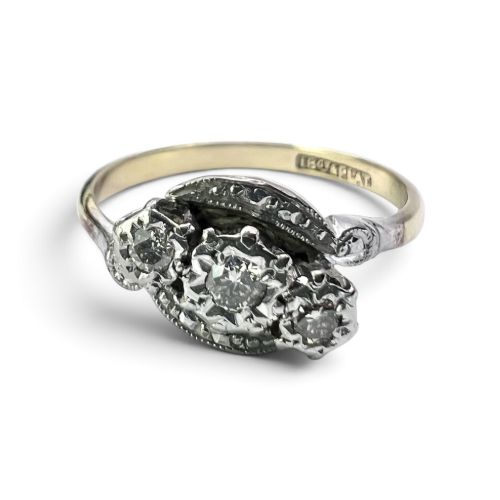
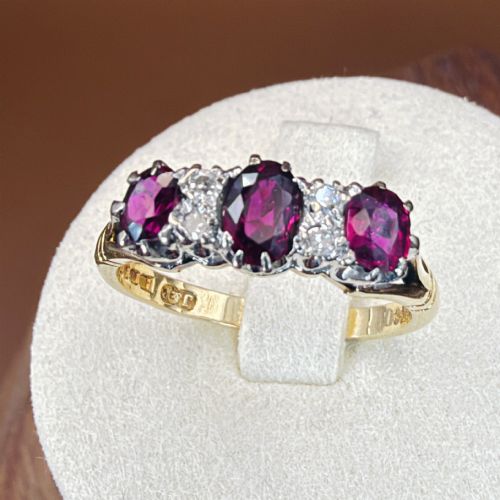
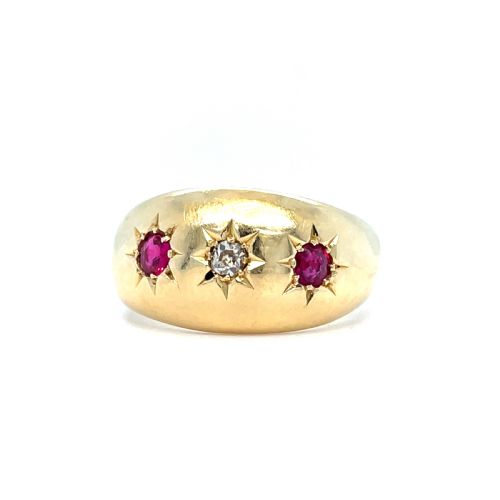
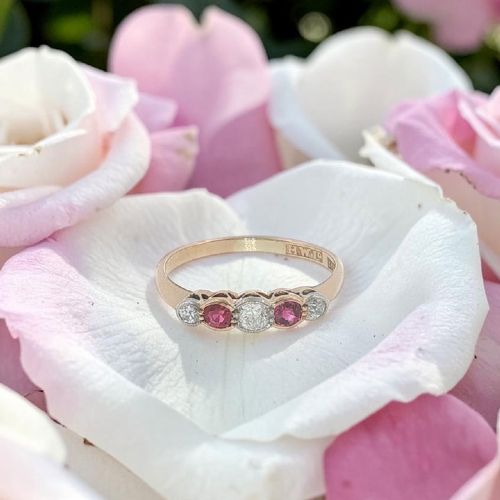
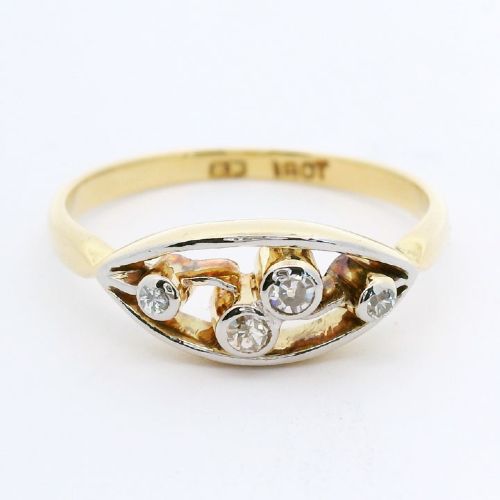
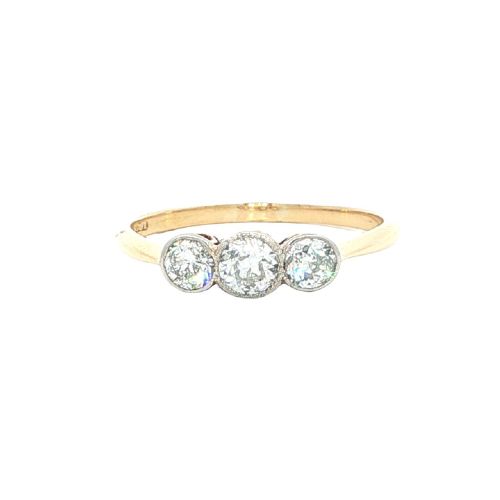
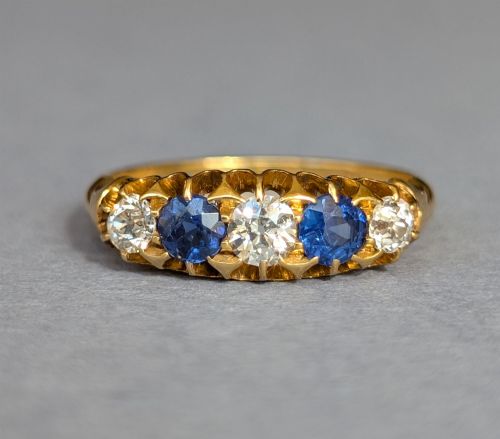
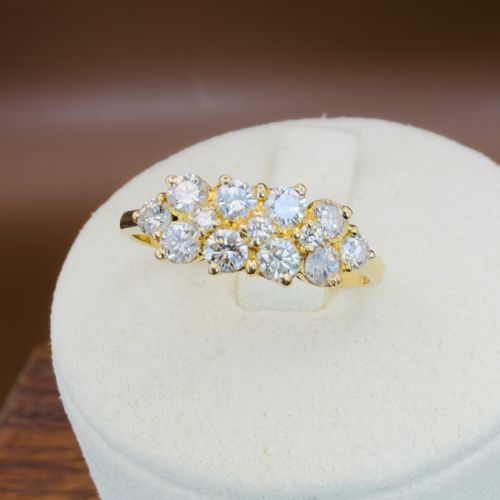
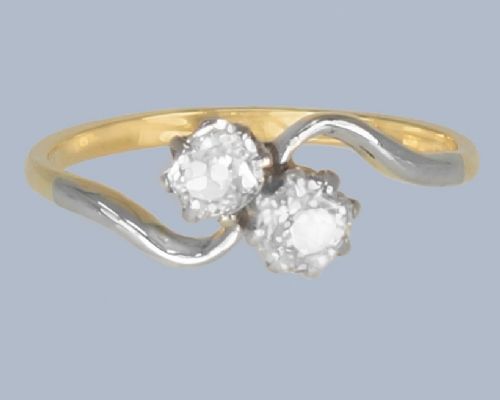
When searching for an edwardian 18ct gold band, buyers encounter rings shaped as boat settings, five-stone rows, gypsy mounts, and traditional wedding bands. These pieces span the Edwardian period alongside Victorian and Art Deco eras, constructed primarily from 18ct yellow gold and platinum.
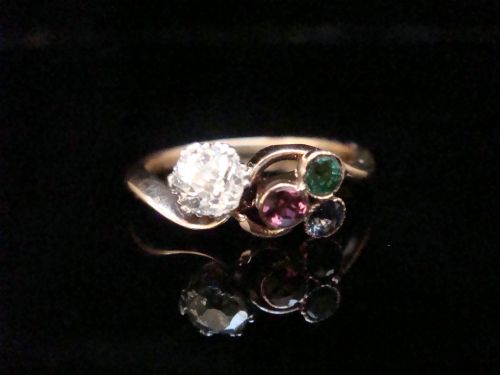
The selections on this page feature combinations of diamonds, rubies, sapphires, opals, and turquoise arranged in clusters, starbursts, or simple rows. Most survivors from this timeframe show the hallmarks of British assay offices such as Chester and Birmingham.
How they were made
Goldsmiths worked with 18ct yellow and white gold alongside emerging platinum settings to house hand-cut gems. Stones such as old-cut diamonds, rubies, and opals were secured using claw, flush gypsy, or boat-shaped settings.
Assay office hallmarks stamped directly into the interior of the shank record the metal purity and the year of manufacture. Jewelers hand-engraved decorative shoulders and ivy leaf patterns onto the solid gold bands.
Mizpah rings carry secret messages of emotional attachment, letting Victorian wearers keep a tangible piece of absent company right on their finger.
What varies in quality
The distinction between tiers rests on the calibre of the central gemstones and the crispness of the hand-engraved details along the band. Crisp, legible assay marks and substantial shank thickness indicate better preservation through decades of wear.
Finer examples retain original old-mine or old-European cut diamonds with high clarity, whereas simpler versions utilise smaller stones or standard commercial settings from the period.
The Edwardian 18ct Gold Band Glossary
- Boat ring
- A ring featuring a navette-shaped setting that curves across the finger, typical of early twentieth-century design. This tapered silhouette makes the central stones appear prominent.
- Gypsy ring
- A style where gemstones are flush-set directly into the thick metal band, creating a smooth exterior surface. This mounting style protects the stone edges during everyday use.
- Old-cut diamond
- A hand-faceted diamond cut before modern machinery standardisation, featuring a smaller table and open culet. These stones display broad facet patterns under candle or low light.
- Hallmark
- Official stamps pressed into the metal indicating the alloy standard, assay office, and year of creation. These marks provide definitive proof of period origin.
Edwardian 18ct Gold Band: Frequently Asked Questions
Can I wear an Edwardian gold band every day?
These rings were built for daily wear, though softer gems like opals or turquoise require mindful handling. Pairing a gold band with modern activities is generally fine if checked by a jeweler.
Regular inspections ensure the claw settings and flush mounts keep the stones secure over decades of use.
How do I know if the ring is genuine Edwardian?
Authenticity is verified through British assay office hallmarks stamped inside the shank, indicating specific Birmingham or Chester date letters. The presence of hand-cut old European or old mine diamonds further supports the period.
Stylistic markers like boat settings, starburst engravings, and platinum-topped gold provide additional clues to the era.
What is the difference between yellow gold and platinum settings?
Edwardian jewellers often used yellow gold for the main shank while introducing platinum for the top settings holding the diamonds. Platinum provided a bright, durable white metal that did not distract from the sparkle of the stones.
Yellow gold offers a warmer traditional tone that contrasts sharply against dark blue sapphires or deep red rubies.
Are these rings easy to resize?
Most solid 18ct gold bands can be adjusted by a skilled jeweller without damaging the structural integrity of the shank. Rings with heavy engraving around the entire circumference require careful planning to avoid disrupting the pattern.
Consulting a professional ensures the hallmark and side details remain intact during the adjustment process.