


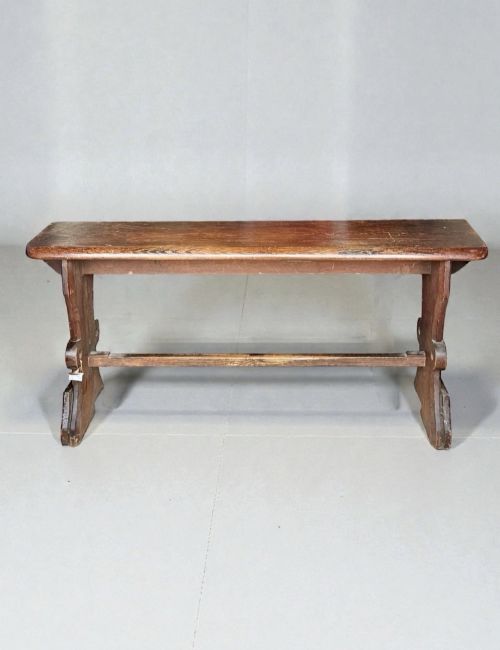
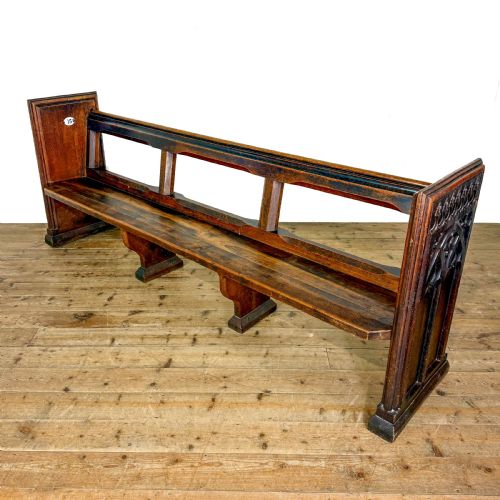


Ecclesiastical Bench
An ecclesiastical bench brings solemn architectural presence and solid timber construction directly into a domestic interior.
Ecclesiastical Bench
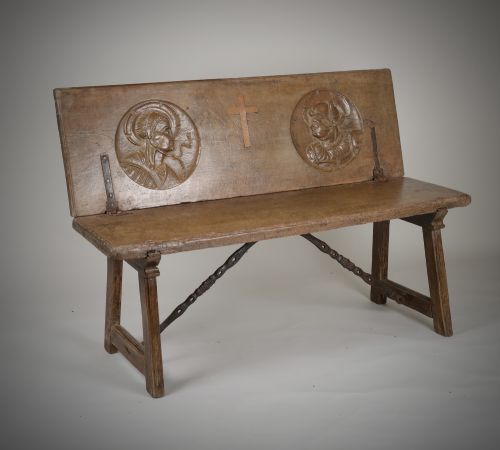
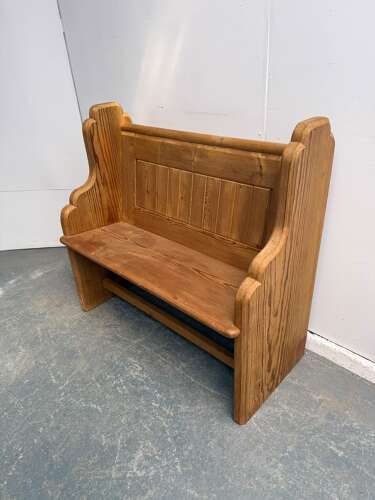
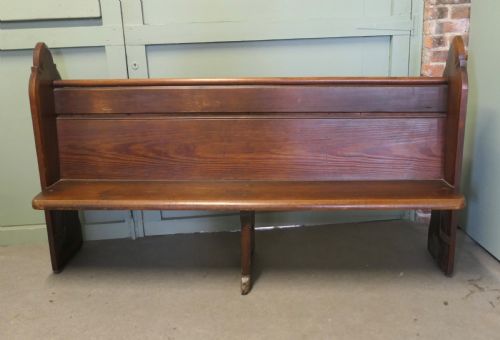
An ecclesiastical bench serves as heavy, functional seating rooted in centuries of church history and monastic tradition. When exploring this category, buyers frequently encounter substantial oak pews, pine seating, and specialised prayer desks.
The pieces listed here span several distinct eras, stretching from sixteenth-century Renaissance forms through seventeenth-century survivals up to nineteenth-century Gothic Revival output. Victorian interpretations and Arts and Crafts examples dominate the available selection.
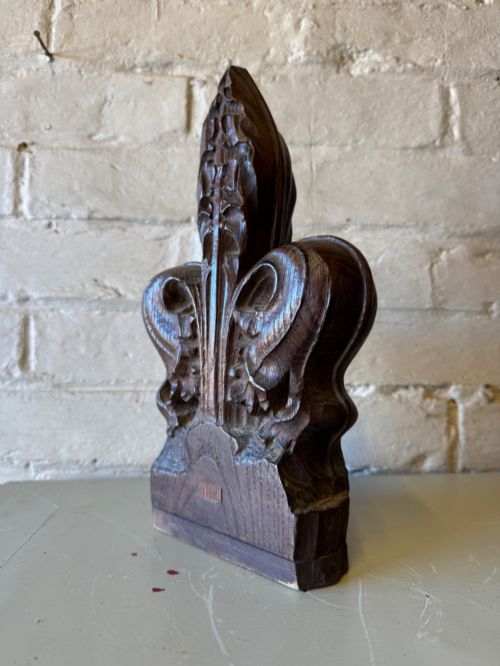
Beyond standard seating, the material record includes architectural salvage, prayer desks, organist benches, and carved finials. These forms reflect the diverse joinery commissioned for ecclesiastical interiors across Britain and Europe.
How they were made
Makers relied primarily on native timbers, utilising solid oak for robust construction and durable pine for simpler or larger pews. Pitch pine also appears in nineteenth-century examples, selected for its strong grain pattern.
Carving and joinery define the decorative elements, featuring poppy head finials, barleytwist metalwork, and wax finishes to protect the wood. Brass fittings and velvet upholstery occasionally supplement the primary timber structures.
Ecclesiastical Bench Retail Price Guide 2026
Typical asking prices for ecclesiastical bench among the pieces listed under this phrase on Sellingantiques today, from the lower quarter to the upper quarter. They describe what is for sale here now, not the wider market.
Listings span periods from the 16th century to the late 19th century, predominantly constructed in solid oak and pine.
What varies in quality
Depth of carving and architectural provenance separate standard utilitarian seating from superior pieces. Hand-carved poppy heads and documented origins from specific churches elevate the standing of an individual bench.
Timber selection and structural integrity dictate the grade of each item. Heavy solid oak construction retains longevity and presence far beyond simpler pine alternatives designed for secondary spaces.
The Ecclesiastical Bench Glossary
- Poppy head
- An ornamental carved finial topping the end of a bench or pew, frequently taking leaf or flower forms. This detail appears on seventeenth-century and eighteenth-century examples.
- Prie-dieu
- A devotional prayer desk equipped with a narrow shelf for kneeling and an upper rest for books. These pieces often incorporate storage compartments for texts.
- Barleytwist
- A turned column or rod resembling a twisted rope, commonly found in nineteenth-century brass rail supports and wooden furniture legs.
- Settle
- A wooden bench featuring a high solid back and enclosed arms to block draughts, sometimes incorporating storage beneath the seat.
Ecclesiastical Bench: Frequently Asked Questions
Where did these benches come from?
Most pieces originate from parish churches, chapels, and monastic foundations across Britain and Europe. They were built to accommodate congregations during lengthy services.
Over time, changing architectural layouts led to ecclesiastical furnishings being released into the wider market through salvage and dispersal.
How do I style a church pew at home?
A long wooden pew works effectively against a hallway wall or positioned alongside a large dining table. Its linear silhouette provides strong vertical contrast in contemporary rooms.
Adding simple textiles or cushions softens the rigid timber frame while maintaining the architectural character of the piece.
Can I date a pew by its wood?
Earlier pieces from the sixteenth and seventeenth centuries are almost exclusively constructed from heavy English oak. The grain tightens and darkens naturally over centuries of handling and wax polishing.
Nineteenth-century Gothic Revival items frequently introduce softer pine and pitch pine, reflecting industrial timber imports and shifting workshop practices.
What is an organist bench?
An organist bench is a specialised seat designed to allow the player freedom of movement across foot pedals. These examples often feature specific height proportions and robust joinery.
They function well today as compact alternative seating within studies or narrow hallways.