


Ebony Inlay Table
An ebony inlay table brings dark, dense timber and sharp contrasting lines into a room, offering both utility and distinct period character.
Ebony Inlay Table
When you search for an ebony inlay table, you encounter diverse forms spanning side tables, games tables, occasional pieces, and larger centre tables. These pieces emerge predominantly from the nineteenth century, alongside Georgian, Edwardian, and Art Deco examples.
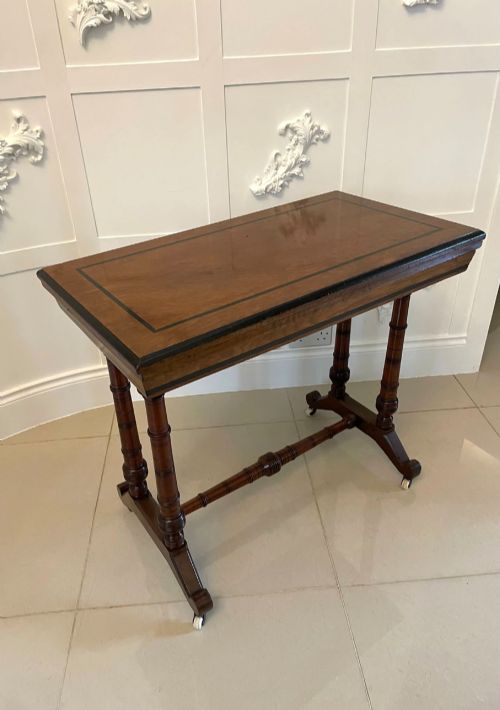
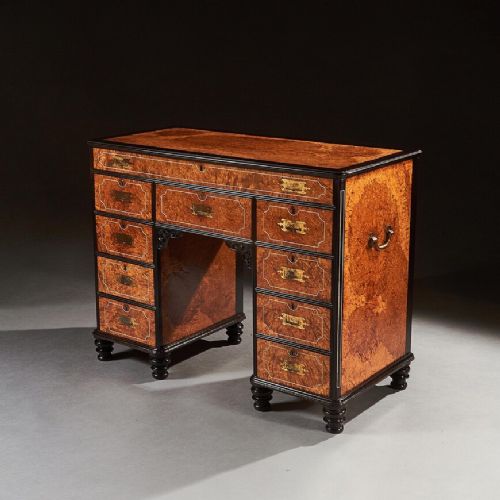
The most frequent form on this page is the mahogany or satinwood occasional and side table decorated with fine linear stringing or banding in dark wood. Alongside these British pieces appear Anglo-Indian, Ceylonese, and continental examples utilising rich exotic timbers and intricate contrasting work.
Materials and construction methods
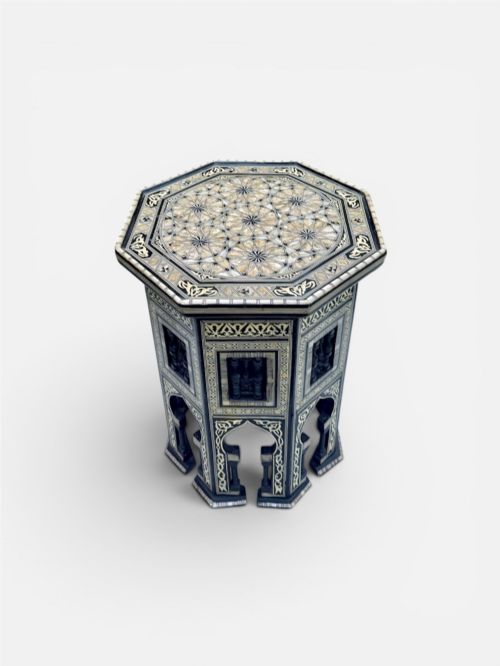
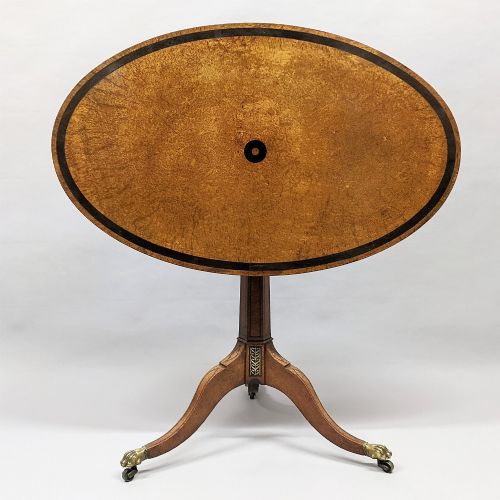
Cabinet makers constructed carcass frames in solid mahogany, satinwood, or rosewood, applying contrasting stringing, banding, or geometric inlays directly into recessed channels. Dense black ebony provides the dark linear contrast, frequently paired with boxwood, bone, or mother of pearl.
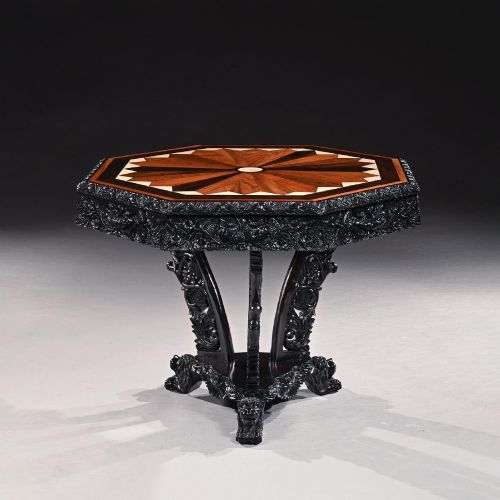
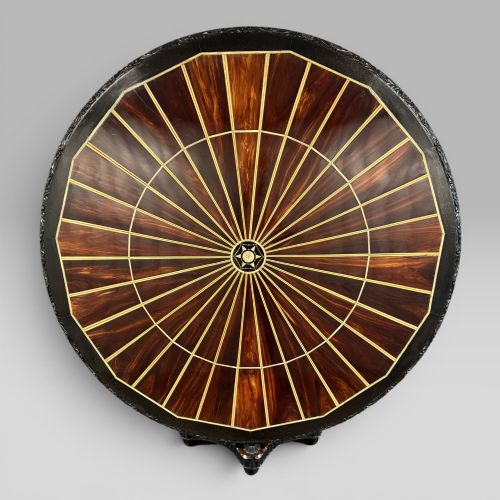
In colonial workshops across Ceylon and India, artisans carved dense tropical hardwoods like calamander and teak, setting detailed bone, ivory, and ebony elements into dense floral and geometric surface patterns.
Materials documented in the inventory include ebony, brass, mahogany, bone, satinwood, rosewood, and amboyna.
Distinctions in craftsmanship and design
The standard of an ebony inlay table rests on the precision of the joinery and the integration of the contrasting elements into the primary timber. Finer examples display tight, unbroken stringing that follows complex curves without gaps or filling.
Design ambition separates basic utility pieces from high workshop productions. Superior items incorporate secondary exotic veneers, finely turned supports, and balanced proportions that reflect specific Regency or neoclassical traditions.
Marsh and Tatham·George Oakley·Gillows·Maison Millet·Gregory and Co
The Ebony Inlay Table Glossary
- Stringing
- A narrow strip of contrasting wood inlaid into the surface of a table to form fine linear borders. This technique defines much of the Regency furniture on this page.
- Banding
- A broader border composed of veneer segments arranged to create a repeating pattern around the edge of a tabletop. It frames the primary timber panel.
- Calamander
- A heavy, durable wood featuring distinctive dark brown and black stripes, native to India and Sri Lanka. It appears frequently in Ceylonese regional furniture.
- Boulle
- A decorative technique involving intricate inlay of tortoiseshell and brass, occasionally integrated with ebony frameworks in French revival pieces.
Ebony Inlay Table: Frequently Asked Questions
How do I date an ebony inlay table?
Dating relies on timber choice, construction methods, and prevailing design styles recorded across the periods. Regency and Georgian examples generally feature linear stringing on mahogany or satinwood, whereas Victorian and Edwardian pieces often incorporate heavier proportions or eclectic revival motifs.
Secondary woods and drawer construction techniques provide further clues. Hand-cut dovetails and native secondary timbers point firmly to earlier manufacture before mass production standardisation took hold.
What is Anglo-Indian inlay work?
Anglo-Indian and Ceylonese furniture combines British furniture forms with local carving traditions from regions like Hoshiarpur or Galle. These pieces frequently utilise dense native woods decorated with elaborate geometric or botanical patterns.
Instead of simple linear stringing, these tables often feature extensive bone, ivory, or contrasting wood inserts set into deeply carved surfaces such as octagonal tripod frames.
Where should I place an occasional table?
An occasional table suits small spaces, acting as a lamp stand, a bedside surface, or a display point in a reception room. Their compact footprints allow them to sit beside seating without dominating the floor plan.
Because these surfaces often feature delicate wood inlays and polished finishes, keeping them away from direct heat sources and strong sunlight preserves the timber and prevents the inlay work from lifting.
How do I care for antique wood surfaces?
Maintenance involves gentle dusting with a dry, soft cloth and occasional application of traditional beeswax to nourish the timber. Avoid modern silicone sprays or excessive moisture, which can damage aged polishes and loosen fragile inlay elements.
Checking room humidity levels helps prevent the wood from expanding or contracting too rapidly, which protects both the structural joints and the delicate contrasting stringing.