
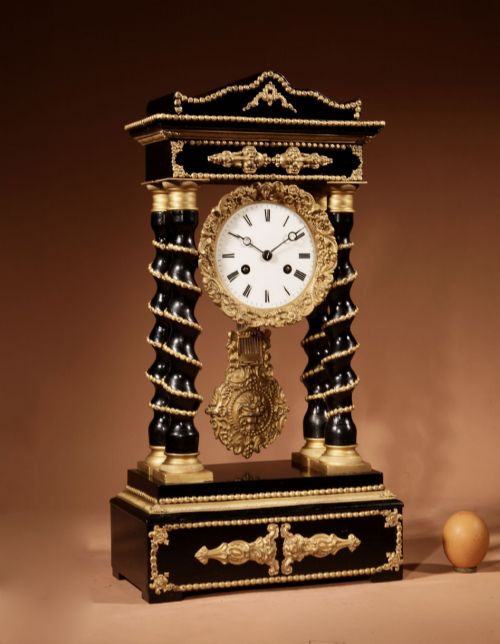


Ebonised Timepiece
An ebonised timepiece brings dark, striking elegance to a room with its sharp finish and precise mechanism.
Ebonised Timepiece
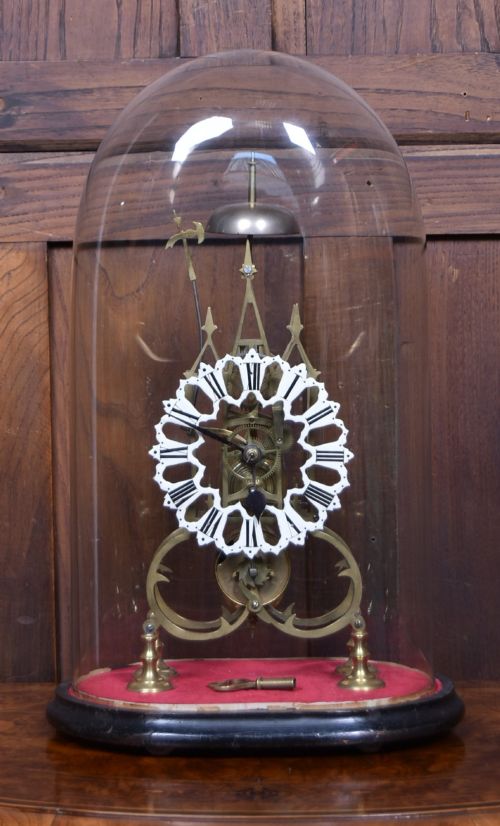
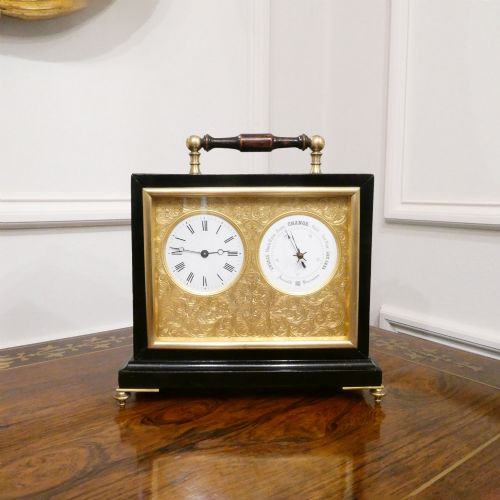
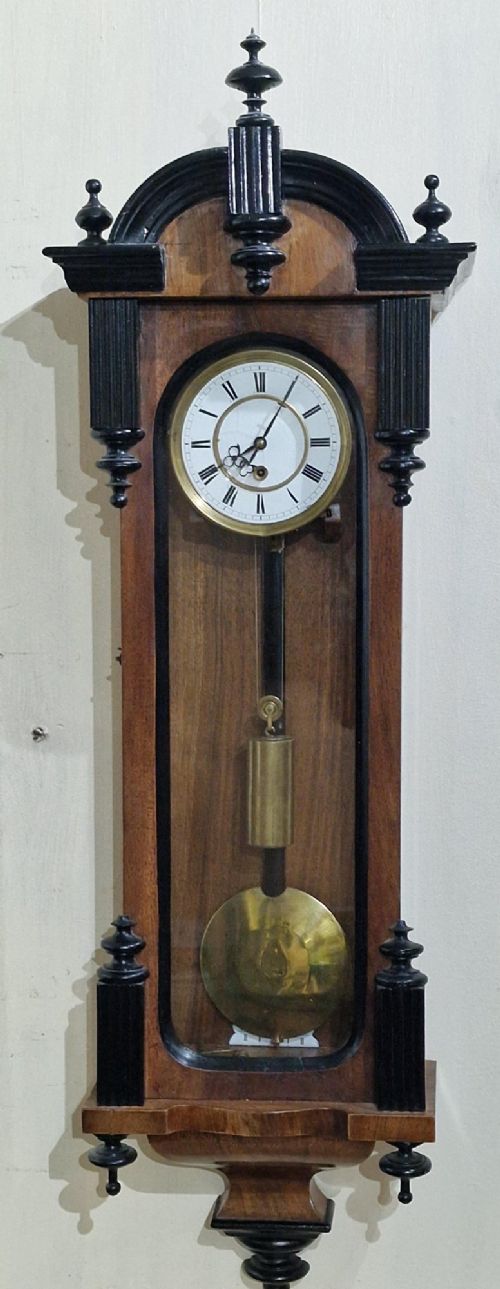
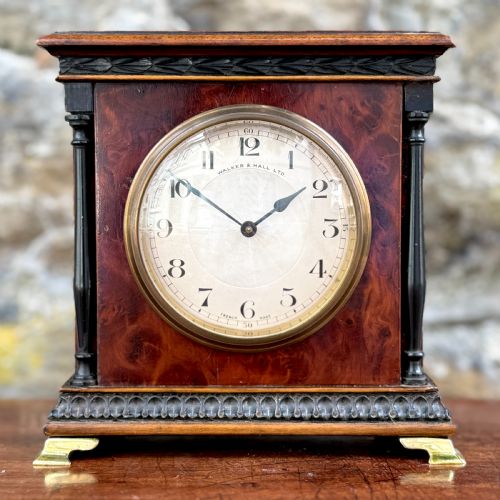
An ebonised timepiece is a clock housed in dark-finished wood, designed primarily to tell the time rather than strike hours on a bell. The selection spans periods from the 18th century through to the Edwardian era, taking forms such as bracket clocks, mantel clocks, wall regulators, and delicate carriage timepieces. Makers from London, Paris, and Vienna are represented, alongside French portico clocks and skeleton designs.
Buyers will encounter various styles across the inventory, including Victorian aesthetic movement pieces, French neoclassical designs, and Grand Regency bracket clocks. Materials paired with the ebonised wood frequently include brass, gilt bronze, ormolu, and glass panels that reveal the inner workings. These objects served both a practical domestic purpose and a decorative role in period libraries, halls, and drawing rooms.
How they were made
Cabinetmakers constructed the outer cases using hardwoods such as walnut or subsidiary timbers, which were then stained, painted, or polished to imitate costly ebony. This dark surface finish provides a high-contrast background for brass bezels, silvered dials, and gilt ormolu mounts.
The mechanical movements rely on brass plates, steel pivots, and often single fusee chains or spring-driven mechanisms to regulate power evenly. Enamel dials, delicate steel hands, and bevelled glass protection complete the construction of these precision instruments.
Materials appearing alongside ebonised wood include ormolu, brass, enamel, walnut, and gilt bronze.
What varies in quality
Quality rests upon the refinement of the movement and the integrity of the ebonised finish. Finer examples feature signed dials by notable makers, high-count gear trains, and crisp ormolu ornamentation rather than mass-produced brass castings.
The precision of the cabinetwork and the survival of original glass and dial enamel distinguish master-workshop pieces from more utilitarian domestic clocks. Balance in the proportions of the portico, bracket, or carriage case dictates the visual harmony of the finished object.
Walker and Hall·John Bull of Bedford·Phillips Brothers·Arnold and Frodsham·Charles Frodsham·Grimaldi and Johnson·John Fletcher·Henry Marc
The Ebonised Timepiece Glossary
- Ebonised
- Wood treated with stain or paint to achieve the deep black appearance of genuine ebony.
- Fusee
- A conical pulley used in spring-driven clocks to equalise the declining power of the mainspring as it unwinds.
- Portico clock
- A mantel clock designed with architectural columns supporting the movement, often in a classical temple form.
- Skeleton clock
- A timepiece with an open framework that exposes the gear train and escapement to view.
- Bracket clock
- A portable household clock originally designed to sit upon a wall bracket or table.
Ebonised Timepiece: Frequently Asked Questions
What is an ebonised timepiece?
An ebonised timepiece is a clock housed in wood stained or painted black to resemble ebony, focusing purely on timekeeping rather than striking the hours.
These clocks appear in various historical styles, ranging from simple Victorian mantel pieces to elaborate French portico designs.
Where did these clocks sit?
Bracket clocks and mantel pieces typically stood on library tables, mantelpieces, or dedicated wall brackets in formal rooms.
Carriage timepieces were designed for travel, while larger wall regulators hung in offices or halls where accurate time was essential.
How do I wind the clock?
Most spring-driven timepieces require a matching key inserted into the dial to wind the mainspring through a dedicated winding hole.
Care must be taken not to overwind the mechanism, stopping as soon as resistance is felt against the key.
How do I date an ebonised clock?
Dating relies on stylistic clues in the case design, the materials used, and signatures or maker marks inscribed on the movement plates or dial.
Periods represented in these pieces span from the 18th century through the Regency, Victorian, and Edwardian eras.