





Ebonised Three Tier Stand
An ebonised three tier stand brings dark, tiered elegance to a corner, offering three distinct surfaces for display and use across multiple historic periods.
Ebonised Three Tier Stand
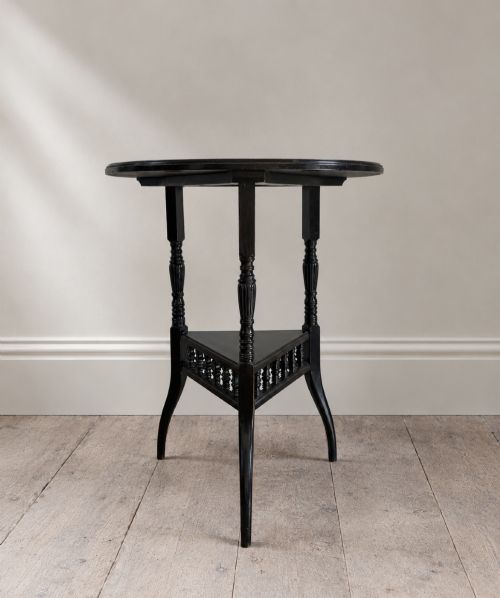
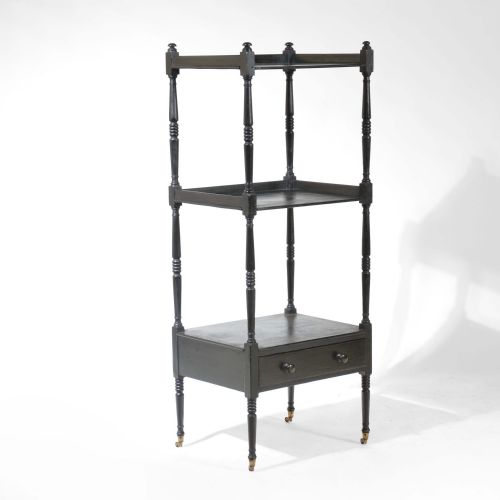
An ebonised three tier stand is fundamentally a multi-level display piece, appearing on this page as etagères, whatnots, side tables, and display shelves. These pieces provide three graduated or uniform platforms supported by uprights, designed to hold decorative objects, books, or small ornaments in a compact footprint.
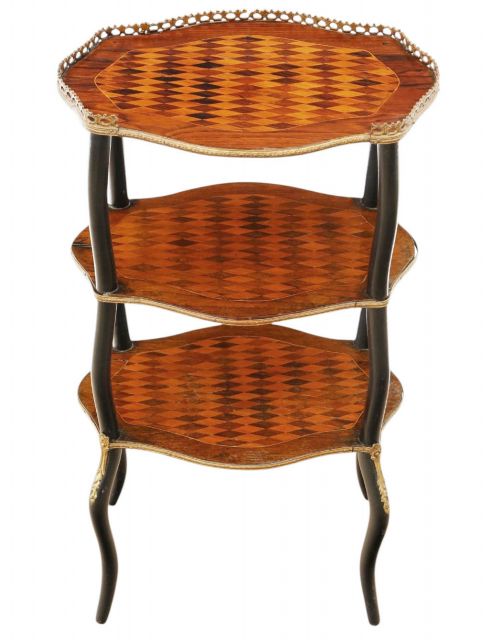
The versions most commonly met here span the Victorian era, the Edwardian period, and the late nineteenth century, alongside French Napoleon III and Louis XV style interpretations. Makers of these multi-tiered forms utilised dark ebonised finishes to mimic expensive ebony, frequently combining them with contrasting woods, marquetry inlay, or gilt mounts.
Originating across British and continental workshops, these tiered stands range from simple corner whatnots to elaborate French etagères with parquetry and ormolu. Buyers seeking an ebonised three tier stand encounter both utilitarian display shelves and highly decorative parlour furniture with rich surface decoration.
How they were made
Makers constructed these tiered stands using mixed timbers, walnut, mahogany, or hardwood as a carcase, which was then heavily stained or painted to achieve a dense ebonised finish. This dark surface frequently served as a stark backdrop for intricate marquetry inlay, parquetry patterns, and amboyna veneer.
Structural embellishments relied on cast ormolu mounts, brass details, and turned or carved supports that held the three tiers securely in place. The combination of ebonised wood with contrasting metallic accents and lighter wood veneers defined the construction methods of the period.
Ebonised Three Tier Stand Retail Price Guide 2026
Typical asking prices for ebonised three tier stand among the pieces listed under this phrase on Sellingantiques today, from the lower quarter to the upper quarter. They describe what is for sale here now, not the wider market.
Some Victorian whatnots were constructed with folding tiers, allowing a towering display shelf to collapse flat when the drawing room required sudden floor space.
What varies in quality
The standard of an ebonised three tier stand is determined by the depth and durability of the dark finish, the crispness of the turned supports, and the precision of any parquetry or marquetry inlay. Superior examples display seamless joins, stable tiered platforms, and finely cast brass or ormolu mounts that integrate harmoniously with the wood.
Lesser pieces exhibit crude surface staining that obscures the underlying timber grain, loose tiers, and careless inlay work that lacks definition. The overall architectural proportion and the choice of secondary woods such as amboyna or walnut further separate standard utility pieces from exceptional workshop output.
The Ebonised Three Tier Stand Glossary
- Ebonised
- Wood treated with stain, paint, or chemical processes to imitate costly ebony. This dark finish became particularly popular during the Victorian and aesthetic movements.
- Etagere
- A piece of furniture consisting of a set of open shelves for displaying small objects or ornaments. These tiered stands often feature three or more levels.
- Whatnot
- A nineteenth-century multi-shelved piece of furniture used for storing or displaying small articles. They appear in both corner and freestanding formats on these listings.
- Marquetry
- Decorative woodwork in which delicate pieces of wood veneer, shell, or ivory are fitted into a ground to form ornamental patterns. It frequently decorates the tiers of French-influenced pieces.
- Ormolu
- Gilt bronze mounts applied to furniture for decorative effect. These metallic highlights contrast sharply against the dark ebonised wood.
Ebonised Three Tier Stand: Frequently Asked Questions
What were three tier stands used for?
These tiered pieces were designed primarily for the display of ornaments, small clocks, porcelain, and books in drawing rooms and parlours. The multiple levels allowed owners to showcase a collection of decorative objects without cluttering mantelpieces or larger tables.
In modern interiors, they continue to serve the exact same function, fitting neatly into corners or beside seating to hold plants, lamps, and everyday items.
How do I identify a Victorian ebonised stand?
Victorian examples typically feature dense ebonised hardwood, turned supports, and sometimes carved mahogany elements. They often incorporate subtle brass details or inlaid parquetry characteristic of nineteenth-century British workshops.
Examining the construction methods underneath the shelves and the wear patterns on the ebonised surface helps confirm nineteenth-century production.
What is the difference between an etagere and a whatnot?
While both terms describe multi-tiered display furniture, etagere often implies a French influence with finer decorative elements like ormolu mounts and marquetry. Whatnot is a traditional British term that frequently covers simpler tiered stands and corner units.
Both forms provide the signature three tiers associated with these listings, varying mainly in ornamentation and regional style origin.
How do I care for ebonised wood furniture?
Ebonised surfaces require gentle dusting with a soft cloth and protection from direct sunlight and excessive moisture. Avoiding harsh chemical polishes preserves the dark finish and prevents the underlying wood or veneer from drying out.
Maintaining a stable indoor climate ensures that the joints supporting the three tiers remain secure and stable over time.