
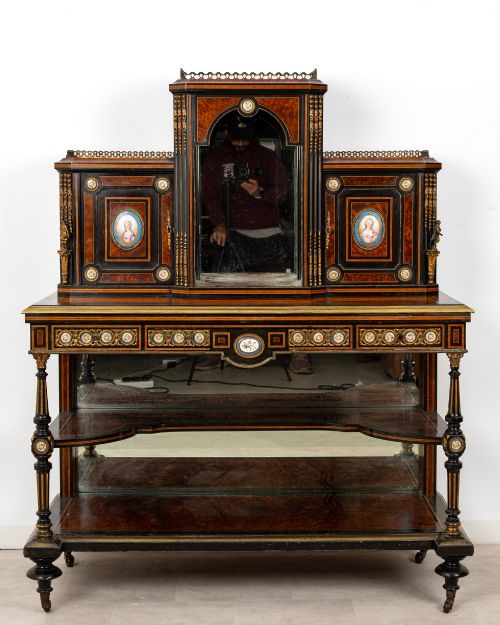
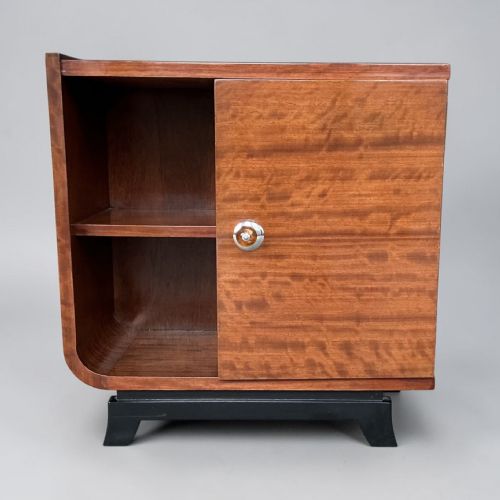
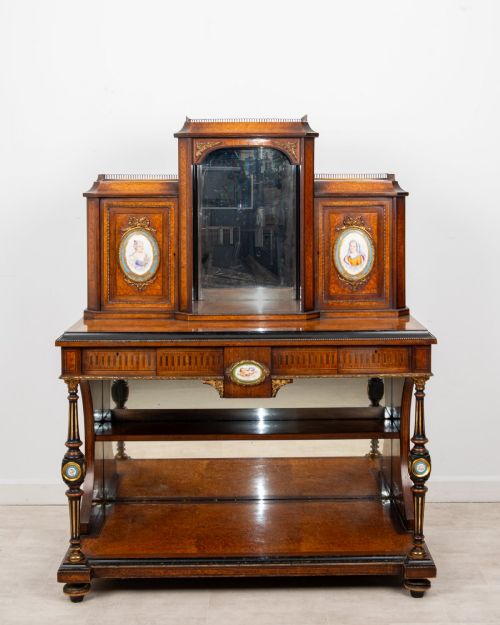
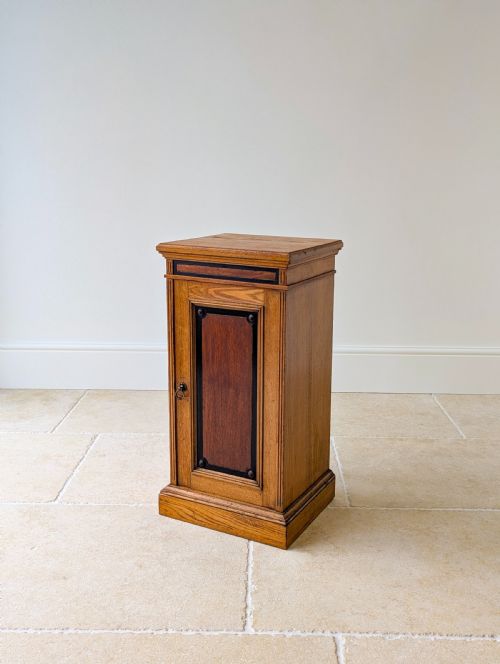





Ebonised Table Cabinet
These ebonised table cabinets are dark-finished storage pieces designed to sit upon surfaces, bringing rich contrast and compact compartmented storage into a room.
Ebonised Table Cabinet
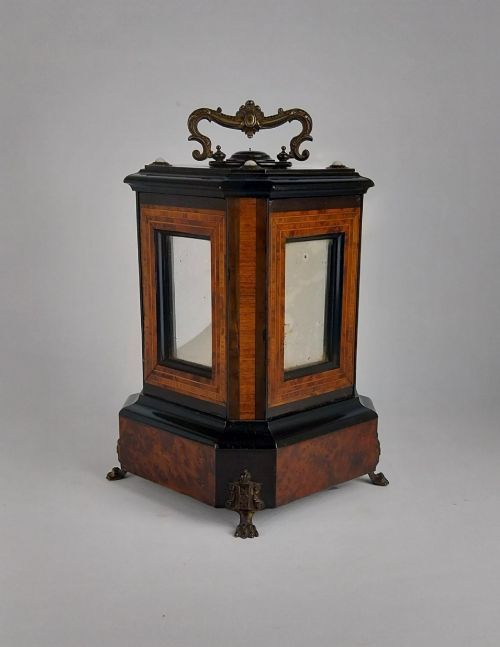
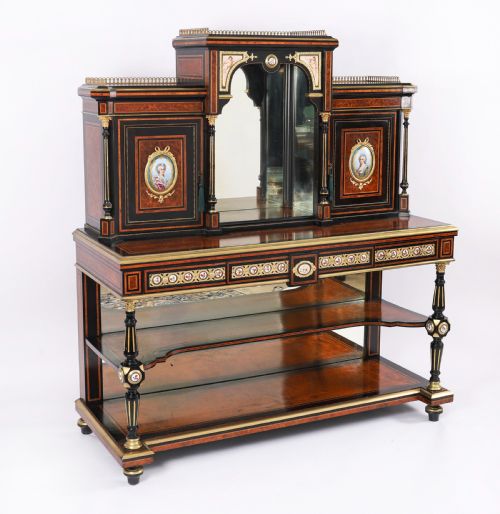
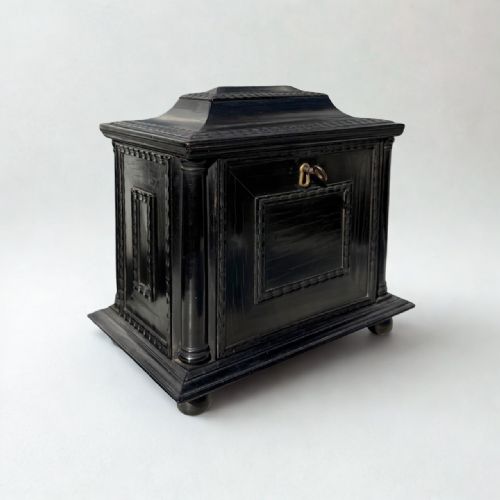
An ebonised table cabinet brings architectural presence to a desk or surface through a darkened timber finish that mimics solid ebony. The selection spans compact seventeenth-century parquetry caskets, nineteenth-century vitrines and pier cabinets, and later desk-top forms.
Makers often constructed these pieces in walnut, pearwood, or mahogany before applying the black finish, occasionally incorporating contrasting wood grains or glazed doors to showcase contents. Buyers find everything from Flemish baroque caskets to Victorian table-top display cases among the current range.
How they were made
Craftsmen achieved the signature black surface by staining or painting dense timbers such as pearwood, mahogany, or walnut, sometimes using genuine ebony on early examples. This dark ground frequently hosts delicate brass stringing, ormolu mounts, and parquetry geometric patterns.
Interior compartments often utilise secondary timbers like oak, while glazed doors on display variants require precise rebate work to seat the glass securely within the frame.
One tiny seventeenth-century Flemish casket hides secret drawers behind sliding parquetry panels designed to outsmart curious visitors.
What varies in quality
The sophistication of the timber preparation and the crispness of any applied metalwork dictate the standing of a piece. Earlier examples display meticulous parquetry and hand-cut dovetailing in the interior drawer construction.
The depth of the black finish and the integrity of the secondary woods reveal the original workshop standard, distinguishing mass-produced nineteenth-century items from seventeenth-century masterworks.
QUINCY SHOWCASE WORKS ILLINOIS·Mathieu Befort
The Ebonised Table Cabinet Glossary
- Ebonised
- Wood treated with stain, polish, or paint to simulate solid ebony. This dark finish gained immense popularity during the Victorian and Aesthetic periods.
- Parquetry
- Geometric wood inlay forming decorative patterns on cabinet surfaces. Craftsmen used contrasting timbers to create three-dimensional optical effects.
- Ormolu
- Gilded bronze mounts applied to cabinet corners and doors. The metalwork provides bright contrast against the dark ebonised wood.
- Pier cabinet
- A tall, narrow display cabinet designed to fit wall spaces between windows. These pieces often feature glass doors and adjustable shelving.
- Casket
- A small decorative box with a hinged lid, built with internal compartments for valuables. Early examples frequently employ intricate parquetry.
Ebonised Table Cabinet: Frequently Asked Questions
Where should I place a table cabinet?
These pieces sit comfortably upon sturdy sideboards, large desks, or dedicated tables where their detailed surfaces remain at eye level. Their compact footprint allows them to command attention without consuming floor area.
Ensure the supporting surface possesses sufficient depth to bear the piece safely, keeping it away from direct heat sources that might dry out the historic timber.
How do I care for ebonised wood?
Maintain the finish by dusting gently with a dry, soft cloth, avoiding modern aerosol polishes that leave silicones on the surface. Wax can be applied sparingly to nourish the underlying timber.
Keep the cabinet away from fluctuating humidity levels and strong sunlight to protect the dark stain and any delicate brass or parquetry inlay from lifting.
How can I tell a seventeenth-century piece from a nineteenth-century revival?
Early seventeenth-century examples rely on heavy timbers like pearwood or ebony with distinct hand-cut joinery and dense parquetry. Nineteenth-century revival pieces often utilise softer secondary woods beneath the ebonised finish and may employ machine-cut elements.
Examining the internal drawer construction and the formulation of the black finish reveals the manufacturing period and workshop techniques employed.