

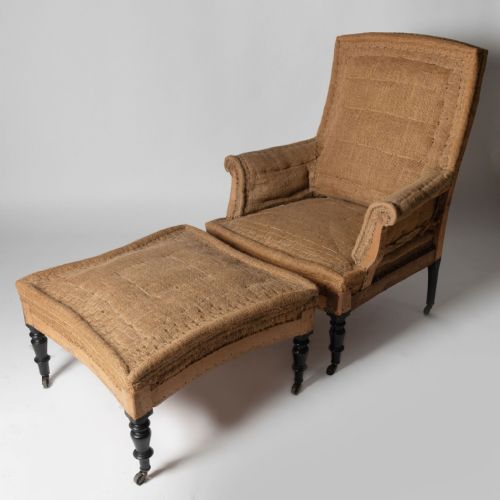
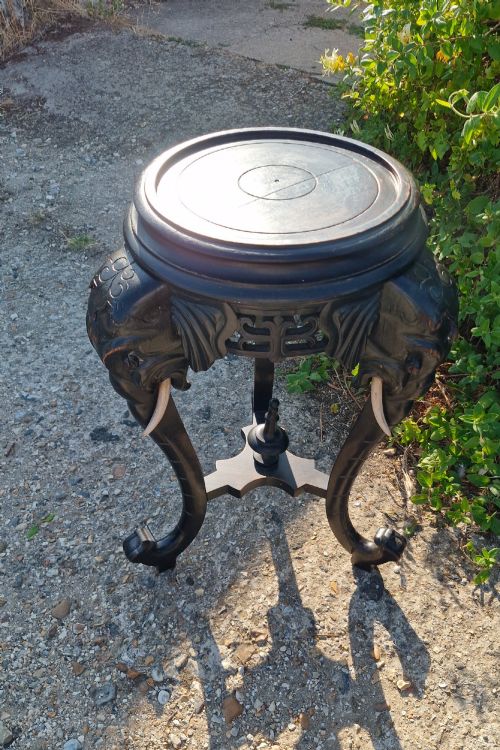
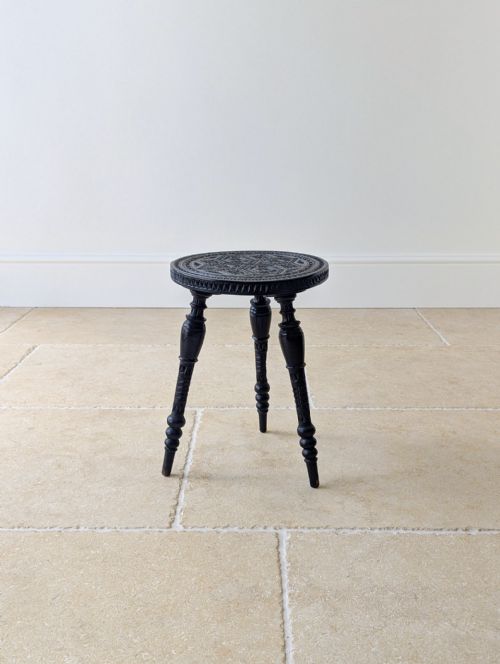
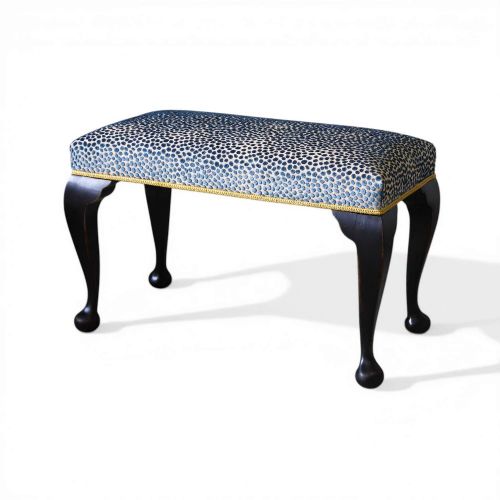
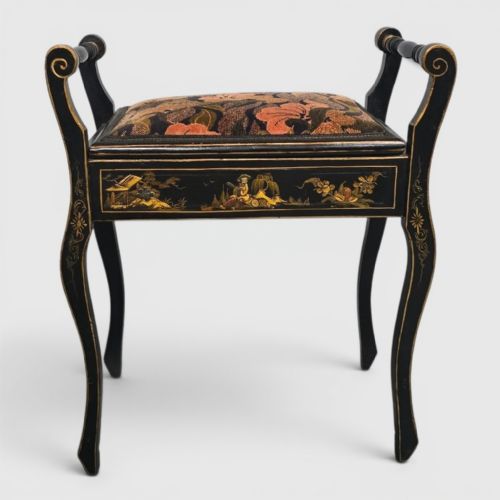


Ebonised Stool
An ebonised stool brings a dark, dramatic finish to a room, pairing dense black timber with rich upholstery or carved detail.
Ebonised Stool
When searching for an ebonised stool, you encounter pieces primarily from the nineteenth century, including Victorian and Edwardian examples. These seating forms range from piano stools and footstools to longer window seats and benches.
The Victorian era supplies many of the examples seen here, often reflecting Aesthetic Movement tastes or incorporating turned legs and upholstered seats. Alongside these, earlier nineteenth century and Edwardian interpretations appear, sometimes featuring swivel bases or adjustable heights.
How they were made
Craftsmen produced the characteristic black finish by staining or painting hardwoods such as beech, elm, or mahogany to imitate ebony. This dark surface frequently received parcel gilt highlights or chip-carved decoration, as seen in nineteenth century workshop practices.
Upholstery formed an integral part of construction, utilising textiles, velvet, and fabric fixed over padded seats. Additional detailing included brass elements and turned wooden legs.
Ebonised Stool Retail Price Guide 2026
Typical asking prices for ebonised stool among the pieces listed under this phrase on Sellingantiques today, from the lower quarter to the upper quarter. They describe what is for sale here now, not the wider market.
Materials recorded on this page include ebonised hardwood, fabric, velvet, brass, and traditional upholstery.
What varies in quality
Quality rests upon the crispness of the timber carving and the integrity of the ebonised finish, where finer pieces retain a deep, even lustre without heavy modern repainting. The joinery of the frame and the stability of turned legs or swivel mechanisms dictate durability.
Design distinction elevates certain pieces, particularly those displaying Aesthetic Movement principles, parcel gilding, or association with known makers. The preservation of original upholstery materials also separates standard production from superior examples.
Holland & Son
The Ebonised Stool Glossary
- Ebonisation
- The process of staining timber to resemble costly ebony wood. This finish became especially popular during the Victorian period for accentuating carved details.
- Aesthetic Movement
- A late nineteenth century design style emphasising visual beauty over narrative content. Pieces from this movement often utilise ebonised surfaces and gilt highlights.
- Parcel Gilt
- A technique where specific areas of an object receive a thin application of gold leaf. It creates contrast against the surrounding ebonised wood.
- Piano Stool
- A specialised seat designed for keyboard players, frequently featuring a revolving or adjustable height mechanism. Many nineteenth century versions incorporate ebonised frames.
Ebonised Stool: Frequently Asked Questions
What is an ebonised stool?
An ebonised stool is a piece of seating furniture made from timber treated with a dark finish to imitate ebony. These pieces date largely from the nineteenth century and encompass various forms including piano stools, footstools, and window seats.
They often incorporate turned legs, carved details, and upholstered tops in materials such as velvet or textile. The style ranges from plain Victorian utilitarian designs to ornate Aesthetic Movement creations.
How do I date an ebonised stool?
Dating relies upon construction methods, timber choice, and stylistic markers such as turned leg profiles and upholstery types. Nineteenth century pieces frequently display specific Victorian or Edwardian design traits.
Examining the joinery and the wear on the ebonised finish helps determine whether a piece originates from the late Victorian era or later periods. Comparative examination of related furniture forms aids confirmation.
Where were these stools used?
These stools served functional and decorative roles across different rooms in the home, from music rooms to dressing rooms. Piano stools belonged beside keyboard instruments, while window seats occupied hallways or drawing rooms.
Their compact size allowed them to function as occasional seating or small stands alongside tables. The versatility of the form made them suitable for varied domestic interiors.
How do I care for ebonised wood?
Care involves dusting with a soft, dry cloth and avoiding excessive moisture or direct sunlight that might degrade the finish. Preserving the surface requires gentle cleaning rather than abrasive polishes.
Maintaining stable environmental conditions protects both the timber substrate and any integrated upholstery or gilt highlights. Regular light maintenance keeps the dark finish intact.