


Ebonised Framed Canvas
An ebonised framed canvas brings dark, assertive contrast to a wall, framing centuries of portraiture and still life.
Ebonised Framed Canvas
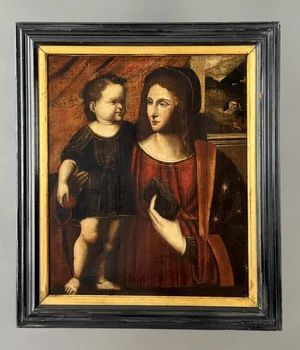
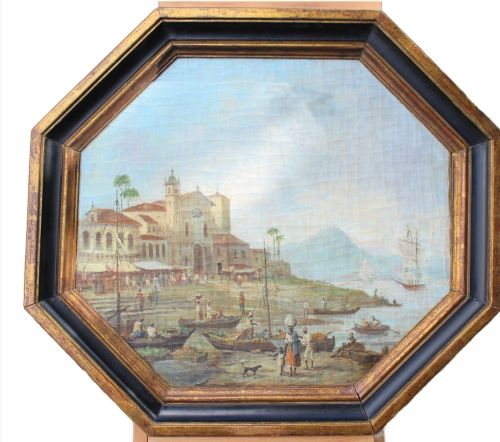
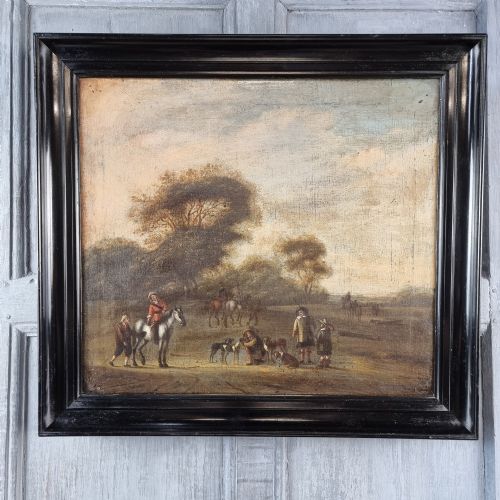
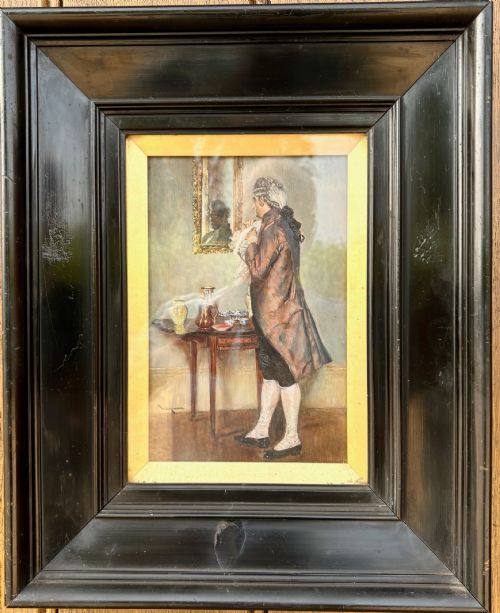
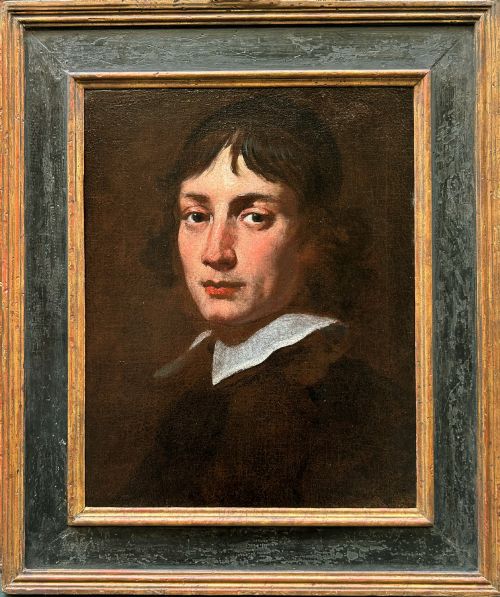
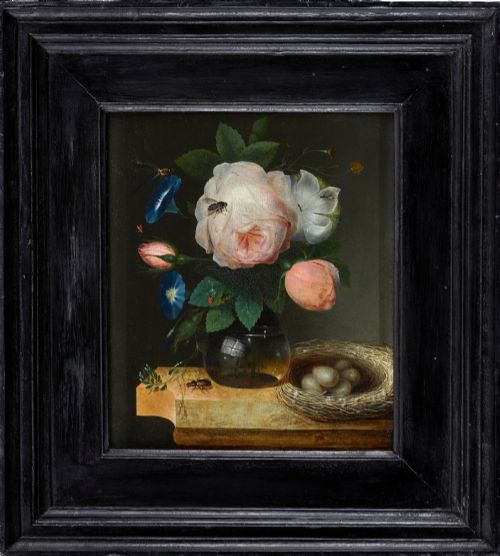
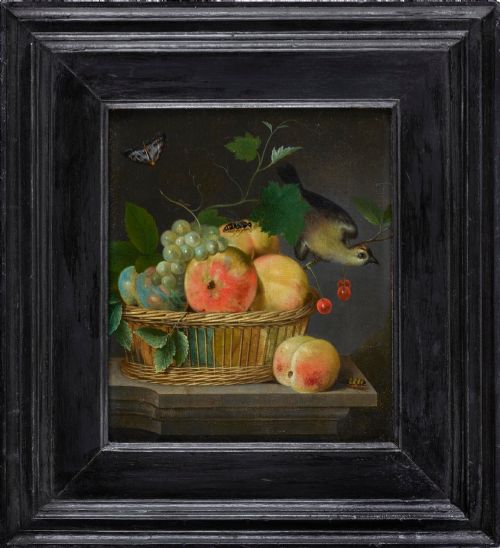
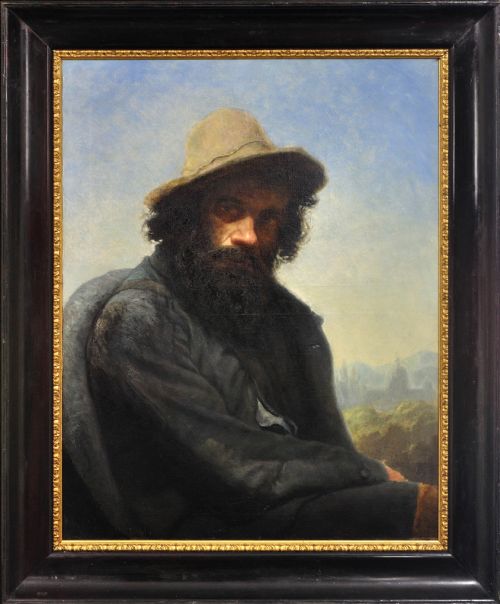
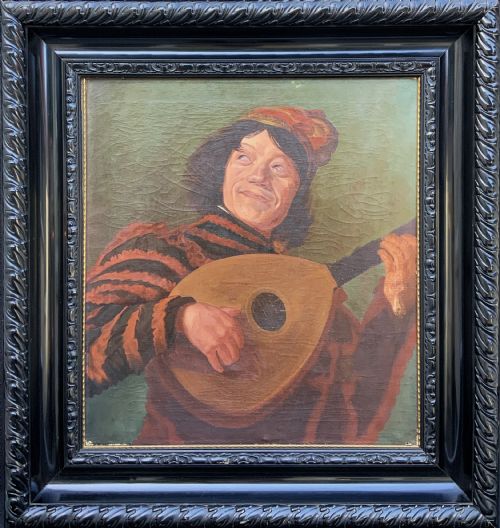
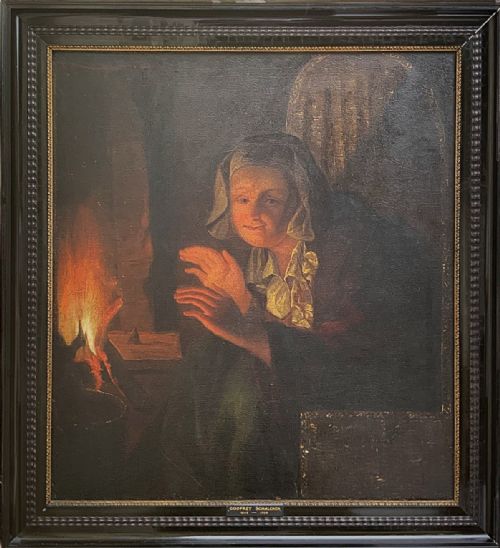
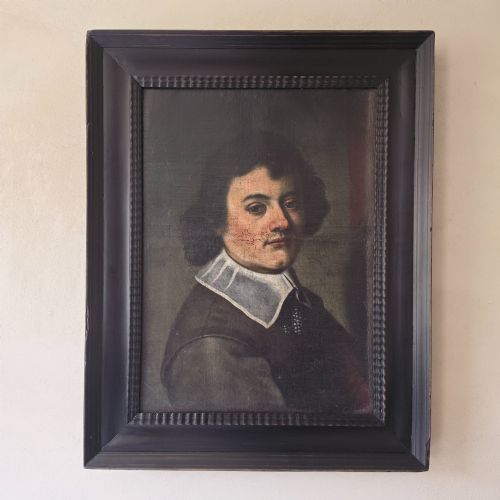
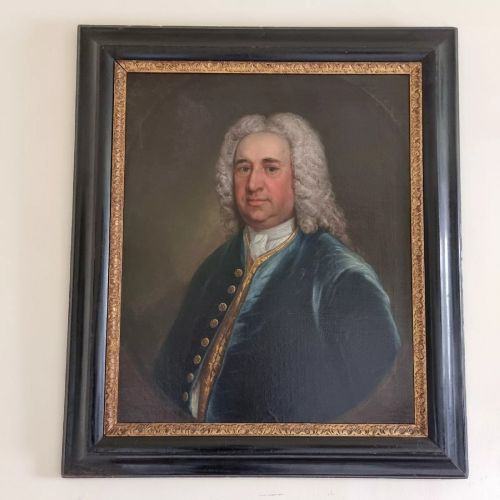
When you search for an ebonised framed canvas, you encounter oil paintings spanning the seventeenth century through to the mid-twentieth century. The selection ranges from Dutch Golden Age portraits to Victorian animal scenes and mid-century farm landscapes.
Portraits of gentlemen, children, and servants appear frequently alongside still lifes of fruit and roses. Many pieces channel Flemish Baroque or Dutch Old Master styles within their dark wood borders.
Materials and construction
Makers built these frames using timber treated to mimic ebony, pairing the dark wood with oil paint applied to canvas or board. Gilt and gold leaf occasionally accent the mouldings to catch the light.
The canvases support layers of oil paint executed by various European schools, from Italian religious compositions to nineteenth-century British genre paintings.
A Jack Russell terrier chasing a rat in a barn shares wall space with dignified seventeenth-century gentlemen and still lifes of fruit.
Factors that define quality
The strength of the painting's provenance and the skill of the brushwork dictate the standing of the piece. Works originating from known circles or specific European schools command closer attention than anonymous copies.
The crispness of the ebonisation and the proportion of the timber frame relative to the canvas dictate visual balance. Finer mouldings complement the depth of the oil pigments rather than overpowering them.
W.D. Almond·Guillaume Courtois·Gaspar Peeter Verbruggen·Albin Mattenheimer·Frans Hals·Godfried Schalcken·James de Rijk·Michael Dahl·Sir John Gilbert·Pieter Claesz·John Nost Sartorius·Nicolaes Maes
The Ebonised Framed Canvas Glossary
- Ebonised
- Wood treated with stain, dye, or paint to simulate the dark, dense appearance of ebony. This finish became popular in furniture and picture framing during various revival periods.
- Oil on Canvas
- Pigments mixed with a drying oil, typically linseed, applied to a stretched woven fabric support. This combination allowed artists to build rich textures and deep tones.
- Dutch Golden Age
- A period in Dutch history spanning the seventeenth century characterised by remarkable output in painting. Artists focused on portraits, still lifes, and domestic scenes.
- Baroque
- An ornate artistic style originating in Europe during the early seventeenth century. It employs dramatic contrast, deep shadow, and rich detail to evoke emotion.
Ebonised Framed Canvas: Frequently Asked Questions
What periods do these paintings come from?
The works span from the seventeenth century through the eighteenth and nineteenth centuries up to the mid-twentieth century.
Early pieces often reflect Dutch Golden Age or Baroque traditions, while later examples include Victorian and mid-century subjects.
Are all the frames original to the canvas?
Frames and canvases are brought together through various periods, with ebonised wood used across multiple centuries of framing tradition.
Some pairings reflect the era of the painting, while others demonstrate later framing choices that complement the dark tones of the oil work.
How do I hang a heavy framed canvas?
Secure wall anchors and appropriate fixings suited to your wall type are essential given the weight of timber frames and stretched canvas.
Ensure the hanging wire or brackets on the back of the ebonised frame match the load capacity required for older wooden mouldings.
What subjects are most common?
Portraits of individuals dominate the selection, ranging from seventeenth-century gentlemen to children and servants.
Still life studies of fruit, roses, and domestic animals like terriers also feature prominently among the landscapes.