
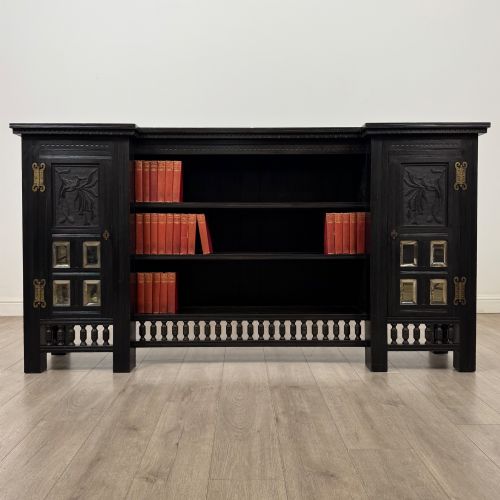
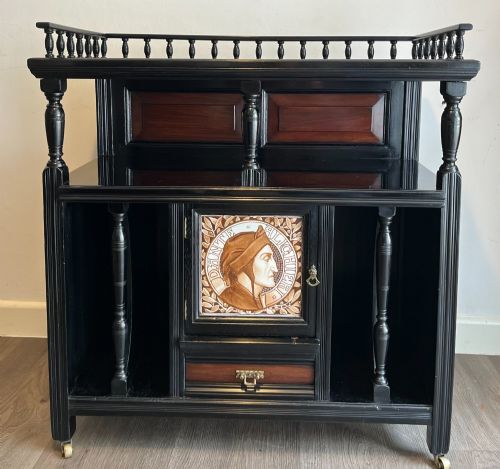
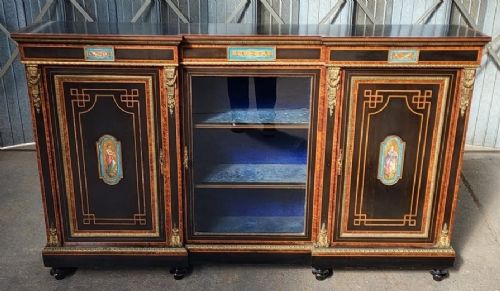

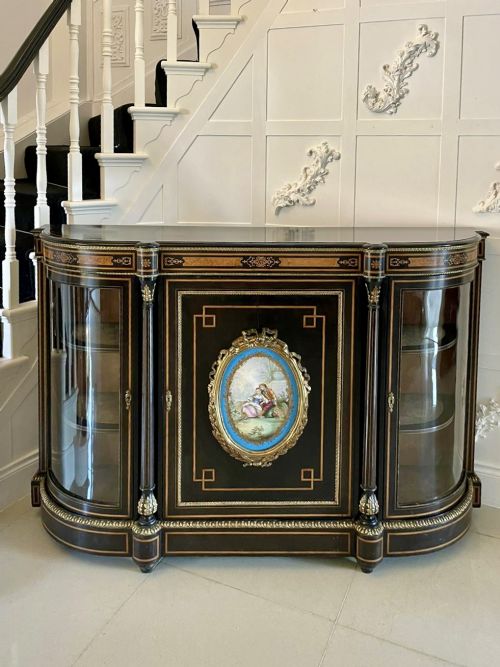
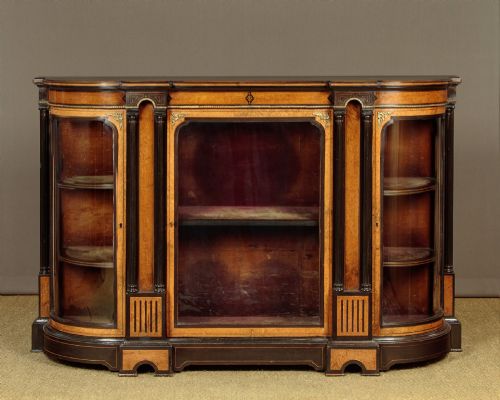


Ebonised Display Sideboard
An ebonised display sideboard brings striking dark timber and gleaming mounts to a room, offering both surface display and enclosed storage.
Ebonised Display Sideboard
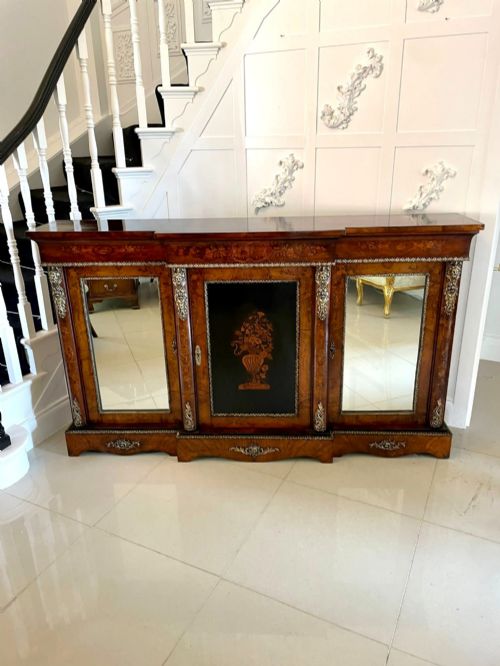
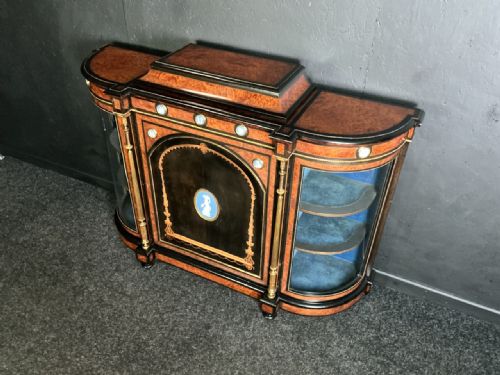
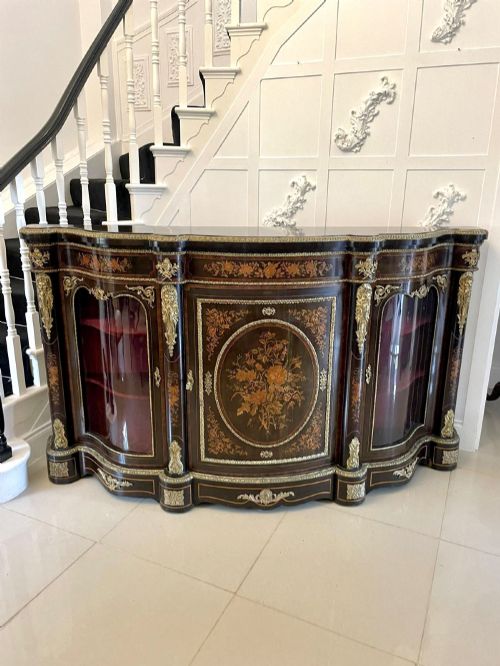
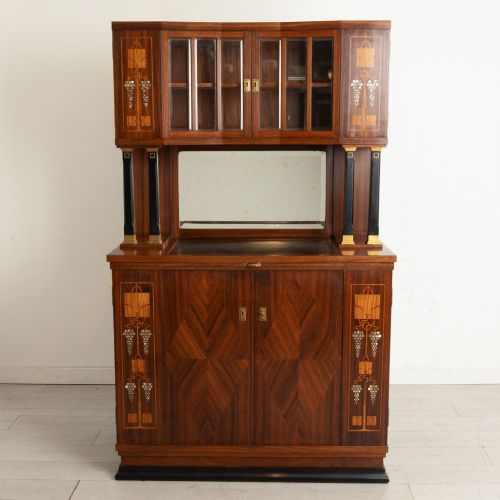
An ebonised display sideboard encompasses credenzas, side cabinets, and breakfront bookcases predominantly from the Victorian era and the nineteenth century. Buyers encounter serpentine shapes, glazed doors for exhibition, and straight-fronted timber configurations originating from English, French, and Austrian workshops.
The credenza form dominates this selection, frequently paired with glazed side compartments and central cupboard doors. These low-profile storage pieces served formal Victorian interiors as repositories for porcelain and precious objects.
Aesthetic Movement and Napoleon III styles appear alongside standard Victorian designs, introducing geometric inlay, painted highlights, and architectural symmetry. Pieces often incorporate mirror backs or tiered upper sections designed to reflect candlelight and room interiors.
Materials and construction
Cabinetmakers utilised dense hardwoods, treating timber with dark finishes to emulate costly ebony while combining contrasting veneers such as amboyna, burr walnut, and coromandel. These foundations support intricate floral marquetry and inlaid brass motifs.
Ormolu mounts, gilt bronze, and porcelain plaques punctuate the dark timber surfaces, secured with traditional brass fixings. Pietra dura panels and tortoiseshell occasionally supplement the decorative scheme on French and English examples.
Listings feature Victorian and nineteenth-century periods alongside French Revival and Aesthetic Movement styles.
Quality factors
The refinement of the marquetry and the precision of the brass or ormolu mounts separate standard production from superior examples. Master workshops invested heavily in hand-cut veneers and chased metalwork that retain crisp definition.
The choice of secondary timbers and the complexity of the carcass shape influence overall standing. Serpentine and breakfront configurations require advanced carpentry to maintain structural integrity across curved doors and moulded plinths.
August Ungethüm·Garnett And Sons·Gillow·Lamb Of Manchester
The Ebonised Display Sideboard Glossary
- Ebonised
- Wood finished with a dark stain or paint to replicate solid ebony. This technique gained popularity during the Victorian period for accentuating gilt mounts and marquetry.
- Credenza
- A low cabinet used for storage and display, often featuring glazed side sections. Originally an Italian dining room piece, it evolved into a formal drawing-room focal point in nineteenth-century Britain.
- Ormolu
- Gilded bronze mounts applied to furniture for decorative enrichment. The process involves treating bronze with a mercury and gold amalgam before firing.
- Marquetry
- Inlays of contrasting wood veneers, mother-of-pearl, or metal forming pictorial or geometric patterns. Artisans meticulously piece these elements together before gluing them to the carcass.
- Pietra dura
- Inlaid work using precision-cut polished coloured stones to create decorative pictures. Craftsmen assemble hardstones like jasper, chalcedony, and lapis lazuli into marble matrices.
Ebonised Display Sideboard: Frequently Asked Questions
What is an ebonised display sideboard?
These pieces are nineteenth-century dark-finished cabinets designed for storing and exhibiting valuables. They combine dark timber surfaces with glass panels and decorative mounts.
Cabinetmakers built them primarily for formal Victorian reception rooms. They function today as focal storage units in dining spaces or hallways.
How do I identify the period?
Examine the structural timbers, mounting styles, and inlay patterns for clues. Victorian and nineteenth-century pieces often feature walnut carcasses beneath black finishes.
Stylistic markers like Aesthetic Movement geometry or Napoleon III Boullework help narrow the decade of manufacture. Hardware construction and secondary woods provide further dating evidence.
Where were they placed originally?
Households positioned these cabinets against drawing-room walls to display ceramics and decorative objects. Their low profiles kept sightlines open across large Victorian interiors.
Mirrored backs and glazed doors amplified light from windows and lamps. They anchored room layouts while housing fine tableware and collectibles.
How do I care for ebonised wood?
Maintain the finish using dry, soft cloths to remove dust without abrasive polishes. Avoid placing timber near direct heat sources or strong sunlight.
Protect ormolu and brass mounts from moisture to prevent tarnishing. Gentle maintenance preserves both the dark timber coating and the underlying veneer.