
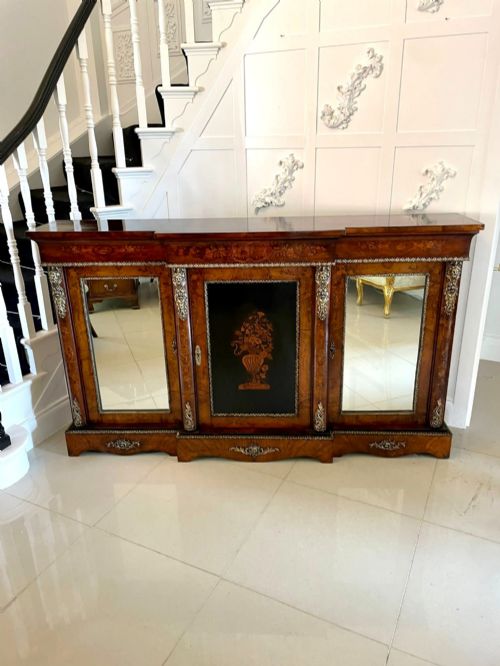


Ebonised Display Mirror
An ebonised display mirror brings dark, striking contrast and reflective depth to a room through period craftsmanship.
Ebonised Display Mirror
When you search for an ebonised display mirror, you encounter dark-finished timber frames combined with reflective glass, frequently associated with Victorian and Aesthetic Movement designs. These pieces range from overmantel mirrors to mirror-backed cabinets and wall-mounted shop display units.
The versions most commonly met on this page date from the nineteenth century, particularly the eighteen-eighties, often featuring parcel gilt highlights or painted details alongside the dark wood.
Makers and designers of these items worked within distinct historic styles such as the Victorian Aesthetic Movement, utilising dark finishes to create visual drama.
Materials and construction methods
Cabinetmakers and joiners constructed these pieces using woods like mahogany and other timbers, applying ebonisation to simulate expensive ebony. Surfaces were frequently enhanced with gold leaf, paint, and wood inlay.
Mirrors were integrated directly into cabinetry or framed as large overmantels, combining structural display space with reflective glass surfaces.
Listings feature nineteenth-century and Victorian pieces constructed from ebonised wood, glass, brass, and burr walnut.
Distinguishing quality in these mirrors
The calibre of an ebonised display mirror depends on the crispness of its gilt highlights, the finesse of any painted decoration, and the preservation of the dark ebonised finish.
Integration between the wooden frame and the mirror glass reveals the maker's hand, particularly in pieces featuring complex joinery or marquetry.
Garnett & Sons
The Ebonised Display Mirror Glossary
- Ebonised
- Wood treated to resemble ebony, typically through staining or painting. This finish became especially popular during the nineteenth century for furniture and mirror frames.
- Aesthetic Movement
- A late nineteenth-century design style emphasising visual beauty over narrative subject matter. Pieces from this movement frequently incorporate ebonised wood and gilt highlights.
- Overmantel mirror
- A large mirror designed to hang directly above a fireplace mantelpiece. These often form part of Victorian and Aesthetic scheme interiors.
- Parcel gilt
- Portions of an object highlighted with applied gold leaf. This technique creates contrast against darker surfaces like ebonised wood.
- Credenza
- A fine cabinet or sideboard, sometimes incorporating mirrored backs or display sections. Victorian examples frequently utilise dark woods and inlay.
Ebonised Display Mirror: Frequently Asked Questions
What periods do these mirrors come from?
The pieces listed span the nineteenth century, with strong representation from Victorian and Aesthetic Movement eras.
Dates range from the eighteen-fifties through to nineteen-twenty, reflecting shifting nineteenth and early twentieth-century tastes.
How were ebonised display mirrors used?
These items served functional and decorative roles in nineteenth-century interiors, combining reflective glass with shelving or cabinetry.
Overmantels hung above fireplaces, while mirror-backed cabinets and wall units displayed objects while brightening rooms through reflection.
What materials make up these frames?
Construction relies primarily on wood, finished with ebonisation to create a dark, uniform appearance. Surfaces frequently incorporate gold leaf, paint, and wood inlay.
Glass forms the reflective component, set within mahogany or other timber structures.
How do I identify an Aesthetic Movement mirror?
Aesthetic Movement pieces from the nineteenth century often feature ebonised wood paired with parcel gilt or painted highlights.
They emphasise decorative surface qualities and distinct period styling rather than heavy historic revivalism.