
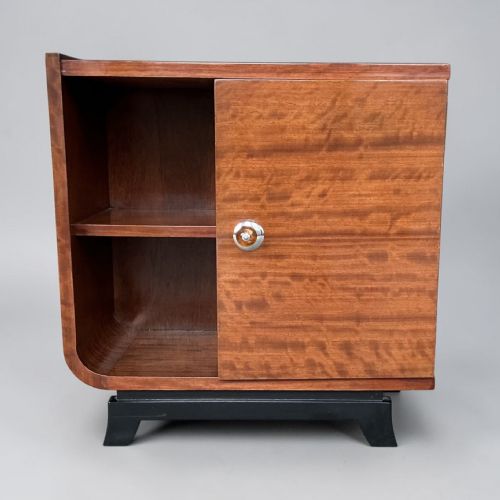


Ebonised Base Cabinet
An ebonised base cabinet brings dark, striking contrast to a room, holding everything from specimen domes to fine books.
Ebonised Base Cabinet
When you search for an ebonised base cabinet, you encounter dark-finished timber furniture alongside associated Victorian and Art Deco display pieces that share similar aesthetic traits. The selection spans robust sideboards, side cabinets, and architectural bookcases rooted in the nineteenth and early twentieth centuries.
You are most likely to meet painted architectural bookcases and French Art Deco side cabinets on this page, reflecting the heavier periods of production. These forms utilise the dramatic visual weight of dark wood or painted surfaces to anchor a room.
The objects bridge practical storage and grand display, incorporating glass domes and taxidermy cases into the broader lineage of dark-finished furnishings. Each piece relies on solid proportions and disciplined lines to command attention without overwhelming the interior space.
Materials and construction
The makers of these pieces relied primarily on substantial woods like mahogany and walnut veneer, applying dark ebonised finishes or paint to mimic costlier exotic timbers. Glass panels and blown domes were integrated securely into timber or painted bases, requiring careful joinery to support heavy specimens.
Metal components such as brass and chrome appear as structural mounts or decorative hinges, while interior linings often featured velvet to cushion delicate items. Cabinetry techniques prioritized structural stability, using mortise and tenon joints to bear the weight of thick display glass and dense timber frames.
Listings feature Victorian and Art Deco pieces alongside display domes utilising brass, chrome, velvet, and walnut veneer.
Evaluating craftsmanship
Quality reveals itself in the crispness of the architectural mouldings and the evenness of the ebonised finish across the timber surface. Finer examples maintain original glass and tight joints, whereas lesser pieces show uneven wear or heavy restoration.
The distinction lies in the fidelity of the period style, whether the restrained geometry of an Art Deco sideboard or the grand scale of a Victorian bookcase. Superior items retain their original brass fittings and undamaged velvet linings, demonstrating intact historical integrity.
A Pollard·James Gardner
The Ebonised Base Cabinet Glossary
- Ebonised
- Wood treated with stain or paint to imitate ebony. This dark finish gained immense popularity during the Victorian era for formal display furniture.
- Dome
- A blown glass cover used to protect delicate items. These glass shells typically rest upon a circular or oval wooden base.
- Veneer
- A thin layer of finer wood applied to a secondary timber base. Walnut veneer is frequently found on cabinet doors and tabletops.
- Diorama
- A three-dimensional scene enclosed within a glass display case. Victorian examples often house taxidermy birds and botanical specimens.
- Architectural
- Furniture designed with classical building elements such as columns and pediments. Painted architectural bookcases reflect this grand structural influence.
Ebonised Base Cabinet: Frequently Asked Questions
What periods do these cabinets represent?
The pieces span from the mid-nineteenth century through the Victorian era and into the Art Deco period of the nineteen-thirties. This timeline encompasses distinct shifts in design, moving from ornate architectural forms to streamlined modern cabinetry.
Each era contributes specific material choices and structural proportions that help date the furniture accurately.
How do I care for ebonised wood?
Ebonised surfaces require gentle dusting with a soft, dry cloth to prevent micro-scratching on the dark finish. Avoid harsh chemical cleaners and direct sunlight, which can fade or degrade the painted or stained wood over time.
Maintaining a stable indoor humidity protects both the timber base and any delicate interior linings like velvet.
Were glass domes made separately from bases?
Display domes and their corresponding wooden bases were typically designed as unified pairs to ensure a snug, protective fit. The heavy glass bell sits within a dedicated groove on the ebonised or painted wooden stand.
Separated domes and bases are less desirable for collectors seeking complete historical configurations.
Where were these cabinets placed originally?
Victorian and Edwardian side cabinets stood in formal drawing rooms or studies to display collector specimens and fine books. Art Deco variations served similar display and storage functions in more modern domestic interiors.
Their robust construction allowed them to anchor large rooms while showcasing precious objects at eye level.