






Eastern Scene Painting
An eastern scene painting brings distant light and ancient architecture into a room through oil, watercolour or textile.
Eastern Scene Painting
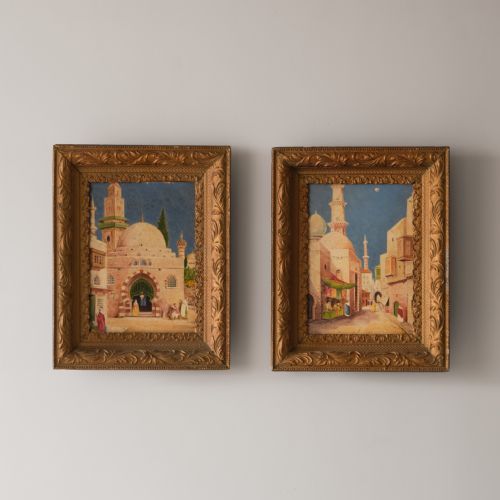
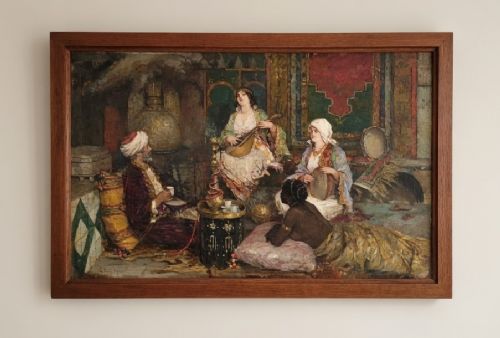
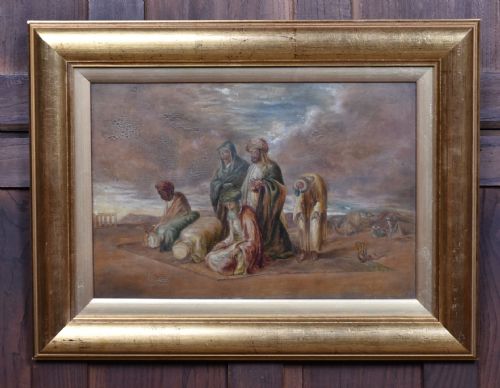
An eastern scene painting captures the architecture, landscapes and daily life of the Middle East and North Africa through various artistic traditions. When searching for eastern scene painting, a buyer encounters works ranging from naive village studies to detailed Victorian watercolours and mid-century impressionist townscapes. These pieces often depict specific locations such as Bagdad, Egypt, Persia or the Suez Canal, reflecting a fascination with distant regions.
The selections span multiple centuries, with nineteenth-century oil paintings and watercolours forming a significant portion of the available work alongside twentieth-century depictions. Framed watercolours on paper and oil paintings on canvas or board predominate, sometimes presented in pairs or within ebonised and gilded wood frames. Alongside conventional paintings, block printed and painted textiles from Persia extend the visual vocabulary of the genre.
Makers and artists represented in this field include named painters such as Edwin Lord Weeks, Gabriel Puig Roda, William James Muller, V. Zirakian and Hugo Vogel, as well as anonymous hands creating naive or traditional works. Styles shift between Orientalism, naive art, mid-century impressionism and Persian Qajar traditions. Each piece offers a distinct perspective on regional scenes, whether through precise topographical record or atmospheric impression.
Materials and Technique
Artists working in this field applied oil or watercolour mediums onto supports of paper, canvas and wood board. Pigments were brushed, layered or washed to create depth in landscapes, figures and architectural details.
Frames form an integral part of these works, constructed from wood, gilt wood, gilded wood or ebonised timber and frequently glazed with glass to protect the painted surface.
Eastern Scene Painting Retail Price Guide 2026
Typical asking prices for eastern scene painting among the pieces listed under this phrase on Sellingantiques today, from the lower quarter to the upper quarter. They describe what is for sale here now, not the wider market.
Camels and pyramids make frequent appearances in these scenes, reminding viewers of nineteenth-century desert expeditions.
Judging Quality
Quality in these works rests upon the surety of the brushwork and the handling of light and shadow within the composition. A strong painting demonstrates balanced proportions and a convincing sense of atmosphere, whether executed with the precise detail of a professional academic hand or the charming directness of naive art.
The physical condition of both the artwork and its frame contributes to the overall standing of a piece. Original mounts, stable pigments on paper or canvas, and period frames such as ebonised or gilded wood preserve the integrity of the object.
Edwin Lord Weeks·Gabriel Puig Roda·William James Muller·V. Zirakian·Hugo Vogel·Richard Wilson
The Eastern Scene Painting Glossary
- Orientalism
- Artistic and cultural interest in or depiction of Eastern cultures, particularly those of the Middle East. This style often focused on the architecture, landscapes and inhabitants of the region.
- Watercolour
- A painting method in which the paints are made of pigments suspended in a water-based solution. It is typically applied to paper supports.
- Ebonised
- Wood finished to resemble ebony through a staining and polishing process. It is frequently seen on nineteenth-century frames.
- Gouache
- An opaque water-based paint that provides solid areas of colour and sharp detail. It frequently appears alongside watercolour in works on paper.
Eastern Scene Painting: Frequently Asked Questions
What periods do these paintings cover?
The works span from the eighteenth century through the nineteenth and twentieth centuries, capturing evolving artistic interpretations of Eastern subjects.
Nineteenth-century examples are particularly common, reflecting peak periods of European travel and Orientalist art production.
How should I care for a watercolour painting?
Watercolours on paper require protection from direct sunlight to prevent the pigments and paper support from fading over time.
Keeping them behind glass in a stable environment away from excess moisture ensures the paper and any accompanying gouache remain preserved.
What is the difference between oil and watercolour works?
Oil paintings use pigment suspended in drying oils applied to canvas or board, offering rich colour depth and a textured surface.
Watercolours use water-soluble pigments on paper, creating a lighter, more translucent effect that is typically framed under glass.
Are these paintings signed by artists?
Some works bear signatures or inscriptions from identified artists such as Hugo Vogel or regional painters like V. Zirakian.
Others remain unattributed or fall into naive traditions, where the maker's identity is secondary to the regional subject matter.