




Earthy Watercolour Painting
An earthy watercolour painting brings quiet landscapes, country villages and domestic scenes into a room through muted washes and delicate brushwork.
Earthy Watercolour Painting
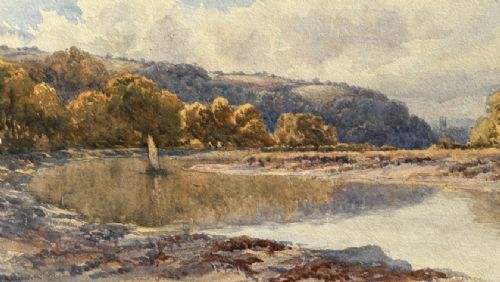
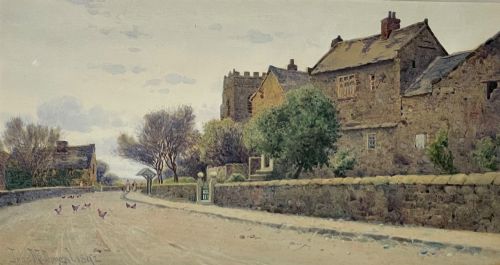
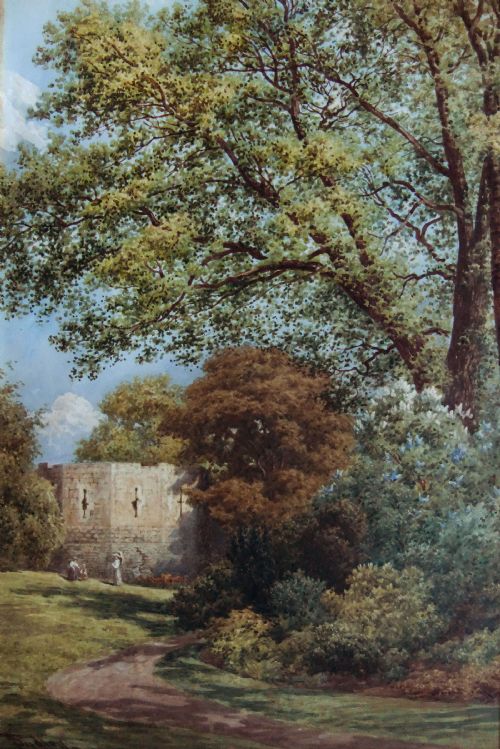
An earthy watercolour painting captures landscapes, town views and rural scenes across the nineteenth and twentieth centuries. These works record river valleys, village streets and coastal settings through pigment applied to paper.
The selections available here range from Victorian depictions of British and Irish countryside to early twentieth-century views by regional artists. Landscapes and architectural studies predominate, often framed behind glass in wood mouldings.
Buyers encounter works dated from the nineteenth century through to the nineteen-forties, reflecting styles from British Impressionism to the Camden group. Each piece relies on water-soluble pigment to build tone and atmosphere on a paper support.
Materials and construction
Watercolour pigment mixes with water and binds to paper surfaces using gum arabic, allowing artists to layer translucent washes. Ink lines occasionally define architectural elements or figures before colour fills the composition.
Finished works sit beneath glass within wooden frames, sometimes accented with gilt to separate the image from the room. The paper ground often shows its age through natural toning that complements the earthy palette.
One landscape records a windmill in Leicestershire where local winds once turned heavy oak sails.
Factors of quality
Quality rests upon the artist's handling of tone and light, separating swiftly executed sketches from fully resolved compositions with deep tonal range. The strength of the perspective and the clarity of the brushwork dictate the success of the scene.
Preservation of the paper support and the vibrancy of the pigment determine the long-term integrity of the work. Examples that retain their original framing and remain free from heavy damp staining command greater attention.
David Law·John McDougal·Henry Silkstone Hopwood·James Hayllar·James Tower·James Orrock·John Atkinson·G Villiers Stuart·Alfred Grey RHA·R P Noble·Charles H Poingdestre·Rowland Henry Hill·Tom Dudley·Eugene Boudin·Francis William Topham·Charles Branwhite·Maurice Asselin·Fred C Jones·John D Walker·Fred Lawson·William Kay Blacklock·Willie Stephenson·George Graham·George Soper·George Jackson
The Earthy Watercolour Painting Glossary
- Watercolour paint
- A medium consisting of colour pigments suspended in a water-soluble vehicle, applied in thin washes to paper. It allows light to reflect through the pigment layers from the white paper beneath.
- Gilt wood
- Wood framing finished with a thin layer of gold leaf or metallic paint. This treatment provides a traditional boundary for works on paper.
- British Impressionism
- An art movement focusing on everyday subjects captured with loose brushwork and natural light. Practitioners recorded outdoor scenes with an emphasis on atmospheric effect.
- Paper support
- The fibrous sheet upon which the watercolour pigment rests. Rag paper from earlier centuries offers durability and texture.
- Wash
- A layer of diluted watercolour paint spread evenly across an area of the paper. Artists use multiple washes to build depth in skies and shadows.
Earthy Watercolour Painting: Frequently Asked Questions
How do I hang a watercolour painting safely?
Keep watercolour works away from direct sunlight to prevent the pigments from fading over time. Position them on interior walls where humidity and temperature remain stable.
Ensure the frame hangs securely from appropriate fixings rather than relying on simple picture wire alone. The glass should not touch the surface of the painting directly.
What periods do these watercolours cover?
The works span from the nineteenth century through the Victorian and Edwardian eras into the mid-twentieth century. Dates range from the eighteen-seventies up to nineteen-fifty.
Each period brings distinct framing choices and paper characteristics. Victorian examples often feature detailed pastoral scenes, while later twentieth-century pieces show looser modernist tendencies.
Are these paintings original works?
Every piece presented is a unique original painting created by hand rather than a modern reproduction or print. Artists applied pigment directly to paper during the date attributed to each work.
Signatures or inscriptions appear on many of the sheets, confirming individual authorship. The brush marks and paper textures verify their hand-painted origin.
How do I identify the subject of a landscape?
Titles often record specific locations such as river valleys, named towns or historical ruins. Researching regional topography helps confirm the exact setting depicted by the artist.
Inscriptions on the reverse of the frame or mount frequently provide additional clues regarding the view. Architectural landmarks within the painting offer further reference points for identification.