
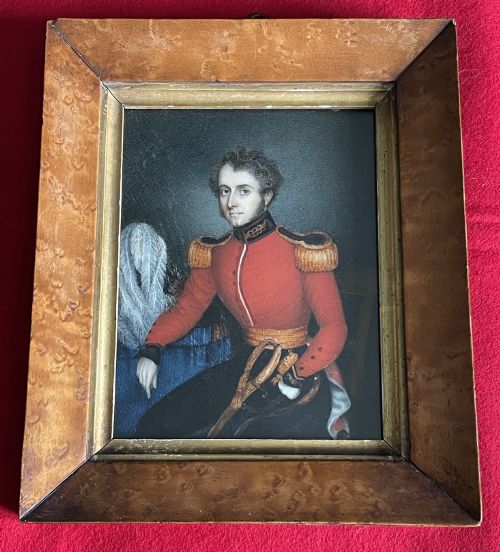


Early Victorian Watercolour
An early victorian watercolour brings intimate nineteenth-century portraiture and landscape directly to your walls on paper.
Early Victorian Watercolour
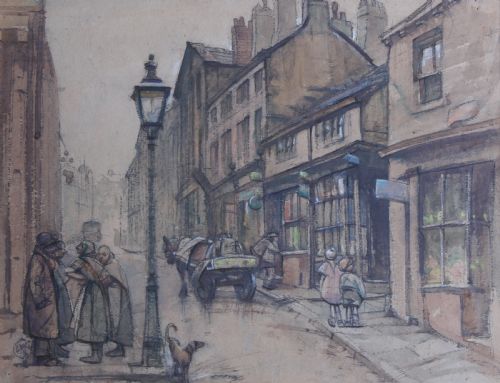
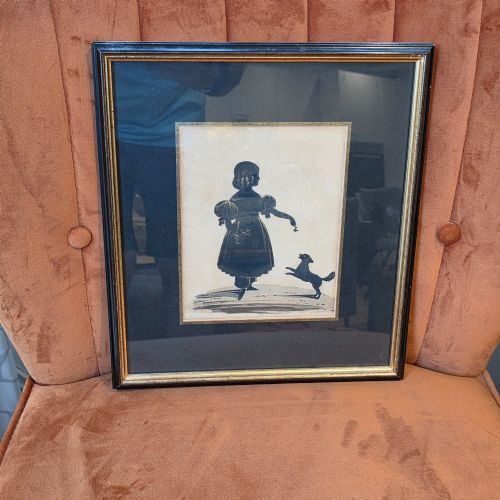
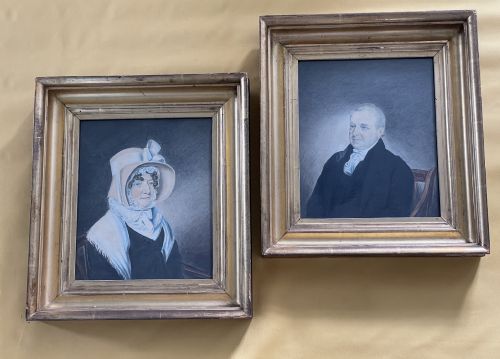
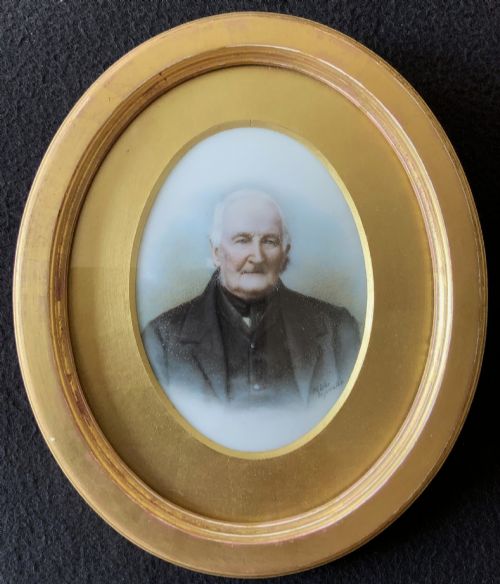
An early victorian watercolour focuses heavily on portraiture, capturing individual likenesses of gentlemen, military officers, children, and ladies in profile or half-length. These works often appear as small miniature paintings or framed artwork intended for domestic display.
Beyond portraits, subjects include serene river landscapes, architectural studies, and character pieces. The examples met on this page span the nineteenth century, including Georgian transitions and mid-century Victorian pieces.
Makers and regional artists range from identified figures like William James Hubard and J Bizo to the English School and international scenes such as Indian temple views.
Materials and technique
The foundation rests on paper or card, sometimes applied directly to glass for miniature portraiture. Pigments utilise traditional watercolours, occasionally combined with cut paper silhouette work.
Framing forms an integral part of the physical object, utilising ebonised wood, maple, gold leaf, and gilt wood. Brass hardware and protective glass frequently secure the miniature and larger paintings alike.
Several ladies gaze steadfastly from their frames accompanied only by a faithful dog.
Judging quality in early works
Quality rests upon the precision of the brushwork and the psychological depth of the portrait subject. Masterful washes and fine detail separate accomplished works from simpler sketches.
The preservation of the paper support and the integrity of the original frame heavily influence the standing of each piece.
William James Hubard·J Bizo·William Egley·Augustus George Guy·William Mark Fisher·Karl Feiertag
The Early Victorian Watercolour Glossary
- Watercolour
- A painting method in which the paints are made of pigments suspended in a water-based solution. This technique creates transparent washes of colour on paper.
- Miniature painting
- A detailed artwork executed on a small scale, often depicting portrait subjects. These frequently sit inside protective frames under glass.
- Ebonised wood
- Timber treated to resemble ebony, providing a dark, polished finish. This material appears frequently on nineteenth-century frames.
- Profile
- A side-view representation of a subject's head or figure. Many early portrait miniatures adopt this format.
Early Victorian Watercolour: Frequently Asked Questions
How do I date an early watercolour?
Dating relies on costume details, framing styles, and inscriptions noted verso by past owners or artists. Paper types and pigment analysis also offer chronological clues.
Comparison with documented works from the same decade helps narrow down the exact period of execution.
Were these paintings meant to be framed?
Most works were framed immediately upon completion to protect the delicate paper surface from dust and moisture. Original frames often feature ebonised wood or maple.
Retaining the period frame preserves the historical context of the artwork.
What subjects are most common?
Portraiture dominates the selection, featuring single figures, military officers, and family groups. Landscapes and architectural studies appear alongside these.
Individual character studies and regional views provide variety within the genre.
How should I care for paper art?
Keep watercolours away from direct sunlight to prevent the pigments from fading over time. Stable humidity levels protect both the paper and the wooden frames.
Displaying them behind conservation-grade glass offers further protection against environmental damage.