





Early Victorian Mahogany Chairs
Early victorian mahogany chairs combine solid timber frames with practical seating forms suited for both dining rooms and libraries.
Early Victorian Mahogany Chairs
When searching for early victorian mahogany chairs, buyers encounter a diverse selection spanning formal dining sets, library armchairs, and hall seating. These pieces originate predominantly from the nineteenth century, reflecting the cabinet-making standards of the period.
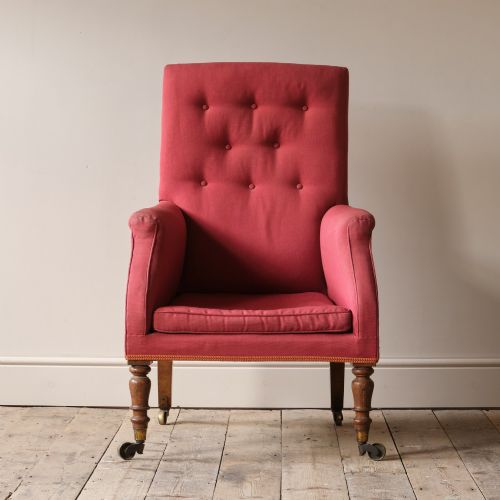
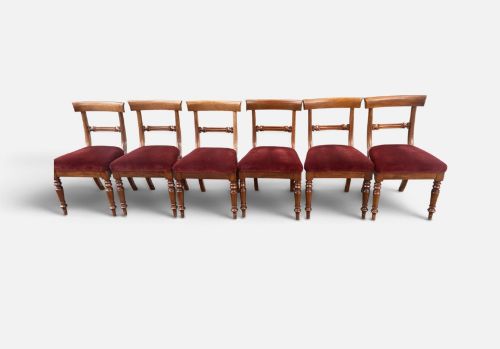
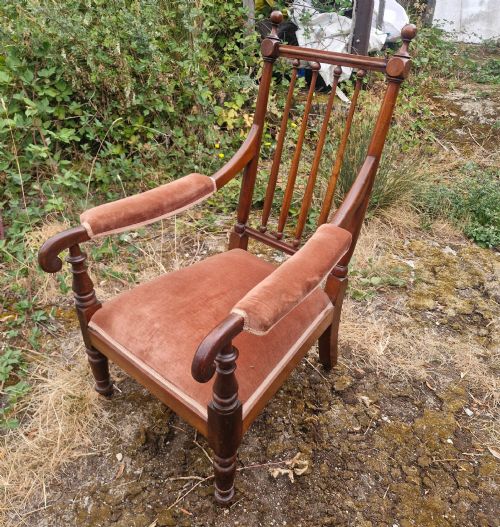
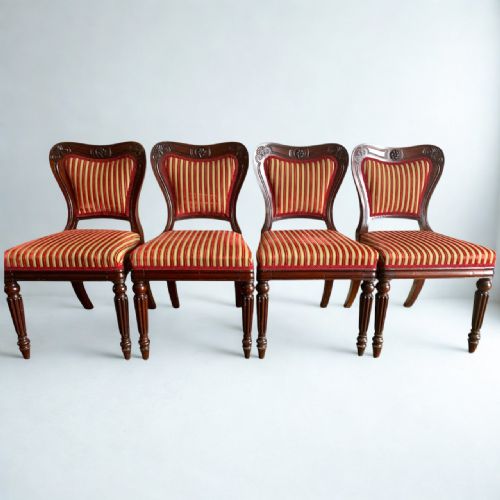
Dining chairs appear most frequently on this page, often in sets ranging from four to eight pieces. Alongside these, individual armchairs, library seats, and carved hall chairs demonstrate the wide domestic utility of mahogany during the early Victorian era.
Makers and designers from the period utilised robust mahogany to construct forms ranging from simple spindle backs to elaborate balloon backs and scroll designs. The survival of these seats in various configurations shows their enduring place in traditional interiors.
How they were made
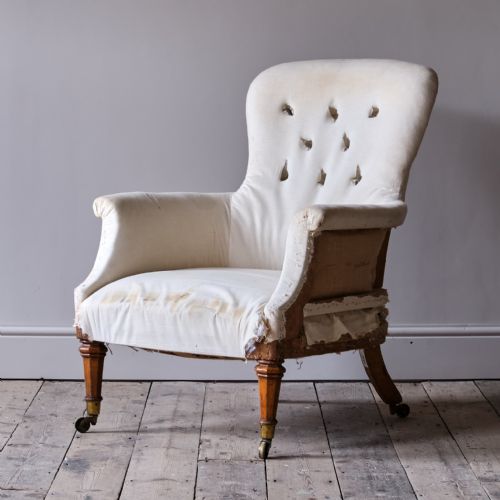
The primary material across these listings is mahogany, selected for its dense grain and structural stability. Workshops paired this timber with supportive brass castors on certain armchairs and side chairs.
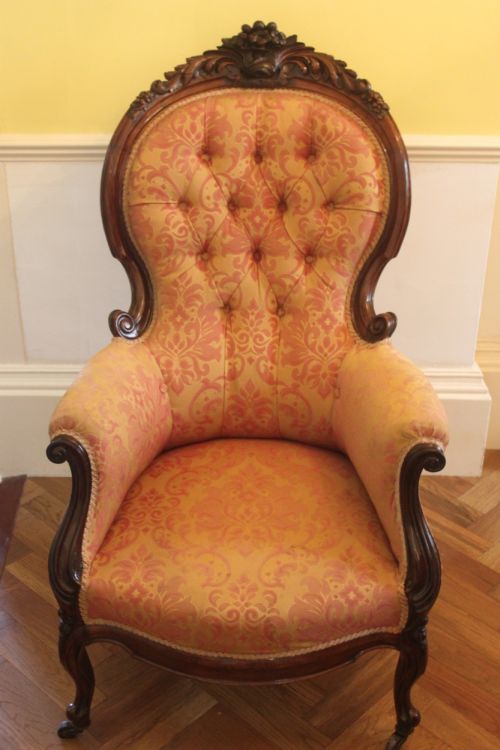
Upholstered items incorporate materials such as velvet, fabric, calico, and hessian beneath the outer covering. Button back detailing and leather panels appear on library armchairs and specific dining variations.
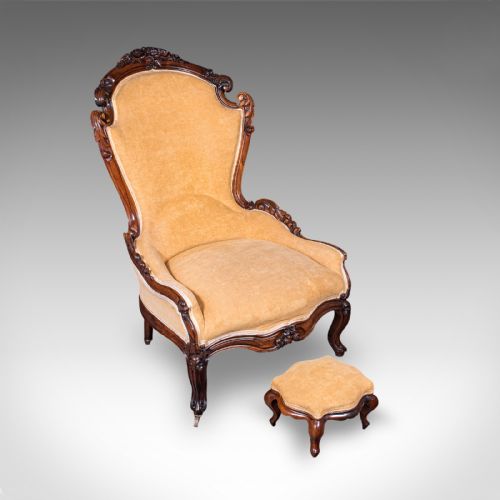
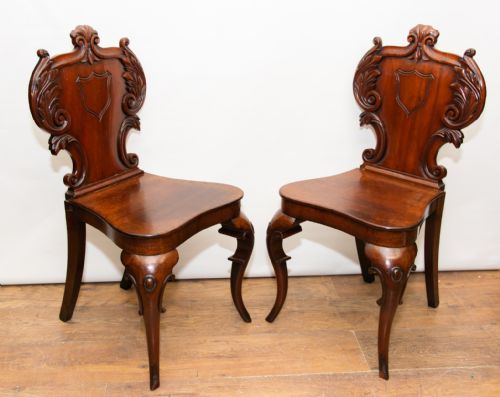
Carved details on the wood frames, including crown motifs and scrollwork, display the hand methods employed by period cabinet-makers. Showwood frames provide structural framing for upholstered sections.
Early Victorian Mahogany Chairs Retail Price Guide 2026
Typical asking prices for early victorian mahogany chairs among the pieces listed under this phrase on Sellingantiques today, from the lower quarter to the upper quarter. They describe what is for sale here now, not the wider market.
Some hall chairs feature solid carved wooden seats designed to discourage guests from lingering too long in the entrance.
What varies in quality
The definition of quality in early victorian mahogany chairs rests upon the crispness of the timber carving and the integrity of the frame construction. Better examples maintain tight joinery and substantial timber scantlings without excessive wear.
Matching sets demonstrate greater cohesion when all individual chairs share identical turning, leg profiles, and back splat proportions. Single armchairs achieve distinction through notable carving detail, such as lion motifs or distinctive maker attribution.
The standard of upholstery materials and internal webbing affects the finish of cushioned armchairs and library seats. Original leather or period fabric choices add distinction compared to later re-coverings.
Howard and Sons·C Hindley and Sons·Richard Bridgens·Gillows
The Early Victorian Mahogany Chairs Glossary
- Balloon-back
- A dining chair backrest shape formed of a continuous curved wooden loop resembling a balloon. This silhouette became widely popular during the nineteenth century.
- Showwood
- Exposed wooden framing on an upholstered armchair or sofa where the polished timber forms part of the visual design. It surrounds the padded sections rather than being entirely covered.
- Library armchair
- A substantial, comfortable seat designed for reading rooms, often featuring upholstered arms and sometimes mounted on castors. These pieces frequently utilise leather or heavy fabric.
- Hall chair
- A rigid wooden seat, usually without arms, intended for entrance hallways and often featuring carved solid timber seats and decorated back panels.
- Scroll back
- A chair back featuring curved wooden terminals that roll inward or outward at the top rail or arms. This design echoes earlier Regency tastes.
Early Victorian Mahogany Chairs: Frequently Asked Questions
How do I care for mahogany chair frames?
Keep wooden surfaces clean using a dry cloth and apply occasional specialist wax to maintain the timber finish. Avoid placing furniture in direct sunlight or near heat sources to prevent wood splitting.
Check joint stability periodically and avoid dragging heavy armchairs across uncarpeted floors to protect the lower legs and castors.
Were these chairs used for dining?
Many of the listed pieces form matching sets intended specifically for formal dining rooms around the middle of the nineteenth century. Their sturdy mahogany frames handled daily household use.
Other variations served as library seating, hall furniture, or desk chairs, matching the specific domestic requirements of the Victorian home.
How do I distinguish early Victorian from Regency styles?
Regency designs often display sharper classical influences, such as bolder brass inlay and more restrained rectilinear lines. Early Victorian pieces frequently introduce heavier scrolling, carved balloon backs, and more exuberant floral motifs.
Overlaps occur because cabinet-makers carried forward established workshop patterns during transitional decades.
Can I mix different chair sets around a table?
Combining single side chairs or mismatched sets is common for creating a relaxed interior arrangement. Ensure the seat heights align comfortably with standard dining table clearances.
Matching timber tones, such as the warm reddish-brown hues of nineteenth-century mahogany, helps unify diverse seating groups.