

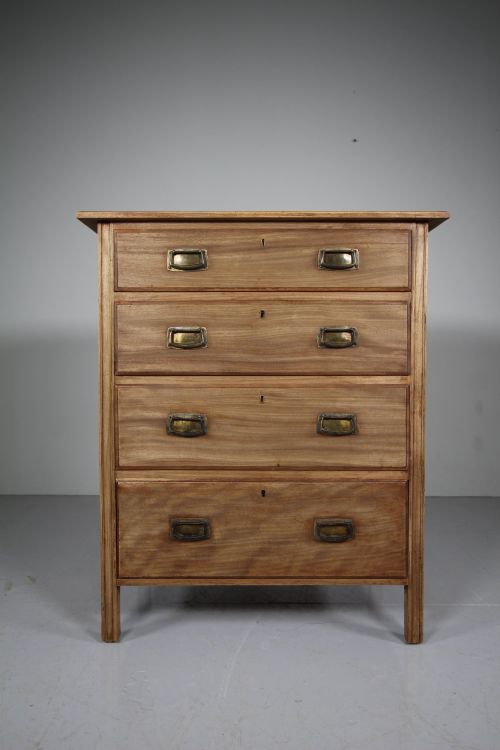
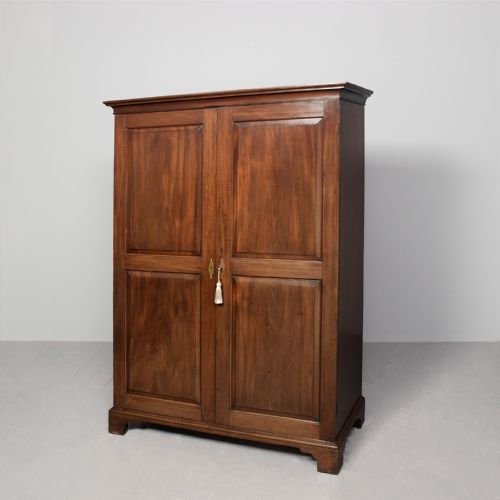


Early Timber Cabinet
An early timber cabinet brings architectural presence and honest grain to a room, offering practical storage grounded in centuries of joinery traditions.
Early Timber Cabinet
When buyers search for an early timber cabinet, they encounter a diverse selection of storage forms spanning multiple centuries and global workshops. These pieces range from substantial 17th Century oak cupboards to refined Regency mahogany cellarettes and early 20th century side cabinets.
The most common examples on this page date from the 17th Century to the early 19th Century, utilising hardwoods like oak, mahogany, and cedarwood. Buyers frequently discover specialised forms such as press wardrobes, spice cupboards, dresser bases, and display cabinets.
Geographic origins vary widely across the inventory, encompassing French provincial cellars, English country houses, Anglo-Indian colonial workshops, and Japanese Taisho era studios. Each piece reflects the regional utility and aesthetic preferences of its specific period and maker.
Construction and materials
Makers relied primarily on solid oak, mahogany, and cedarwood, often enhanced with secondary timbers and decorative elements like brass hardware, iron hinges, and painted surfaces. Construction techniques involved sturdy panel framing, dovetail joints, and hand-carved detailing tailored to the specific timber's density.
Surface treatments range from natural wax finishes on deeply grained oak to flame mahogany veneers and ebonised detailing. Regional variations introduce specialised techniques, such as the carved motifs found on Japanese Taisho era shodana or the inlaid veneers of George III bowfronts.
Early Timber Cabinet Retail Price Guide 2026
Typical asking prices for early timber cabinet among the pieces listed under this phrase on Sellingantiques today, from the lower quarter to the upper quarter. They describe what is for sale here now, not the wider market.
The inventory includes diverse global origins, ranging from French provincial manoirs and English country houses to Japanese Taisho era workshops.
Evaluating craftsmanship and condition
Quality in these pieces rests upon the integrity of the timber selection, the precision of the joinery, and the preservation of original surface finishes. Superior examples display thoughtful grain matching, particularly in flame mahogany veneers, and robust internal framing that withstands centuries of use.
The refinement of hand-carved details and the originality of brass or iron hardware significantly elevate a piece. Lesser examples often suffer from mismatched timber replacements, degraded structural joints, or the loss of period-correct mounts and keys.
Gillows of Lancaster and London
The Early Timber Cabinet Glossary
- Press/Wardrobe
- A tall piece of furniture designed for storing clothing, typically featuring sliding trays or hanging space enclosed by doors. Early versions often combined a linen press upper section with a chest of drawers base.
- Cellarette
- A specialised container used for storing and cooling bottles of wine before or during meals. These are frequently lined with lead or zinc and supported on sturdy legs or stands.
- Ebonised
- Wood that has been treated chemically or finished with dark pigment to imitate the appearance of ebony. This technique was popular in various periods for highlighting carved details.
- Bowfront
- A curved furniture front where the central portion swells outward in a convex arc. This design became particularly popular during the late Georgian and Regency periods.
- Shodana
- A traditional Japanese display shelf or cabinet featuring asymmetrical arrangement of shelves, compartments, and sliding doors. These pieces showcase intricate woodwork and joinery.
Early Timber Cabinet: Frequently Asked Questions
How do I date an early timber cabinet?
Dating relies on examining the construction methods, tool marks, and hardware types used in the piece. Hand-cut dovetails, handmade screws, and regional timber choices often point to specific centuries.
Style indicators such as bracket feet, cornice mouldings, and decorative carving styles help narrow down the decade of manufacture, aligning the piece with periods like the Georgian era or the 17th century.
Can I use an antique cupboard in a modern kitchen?
These cabinets adapt well to contemporary interiors, offering generous storage for dinnerware, glassware, or dry goods. Their robust timber construction handles daily interaction with ease.
Placing them in a modern room adds textural contrast and warmth, breaking up minimalist lines with centuries of craftsmanship and honest joinery.
What is the difference between a cellarette and a side cabinet?
A cellarette is specifically built to hold and sometimes cool wine bottles, often featuring internal dividers and lead linings. They sit low to the ground and were traditionally kept near the dining table.
A side cabinet serves a broader general storage purpose, featuring shelves or drawers suitable for linens, documents, or household items across various rooms in the home.
How do I care for cedarwood and mahogany surfaces?
Maintain these timbers by applying high-quality beeswax periodically to nourish the grain and protect against dryness. Avoid placing them near direct heat sources or strong sunlight.
Dust regularly with a soft, dry cloth and clean spills immediately to preserve the original polish and prevent water marks from setting into the wood.