








Early Silver Tableware
Early silver tableware comprises historic dining items in sterling, Britannia standard, and plate spanning the seventeenth to the early twentieth century.
Early Silver Tableware
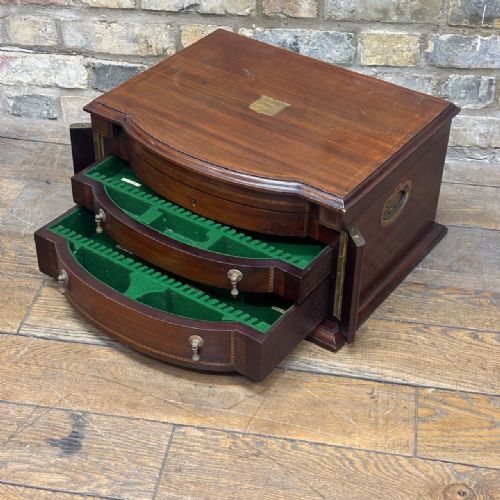
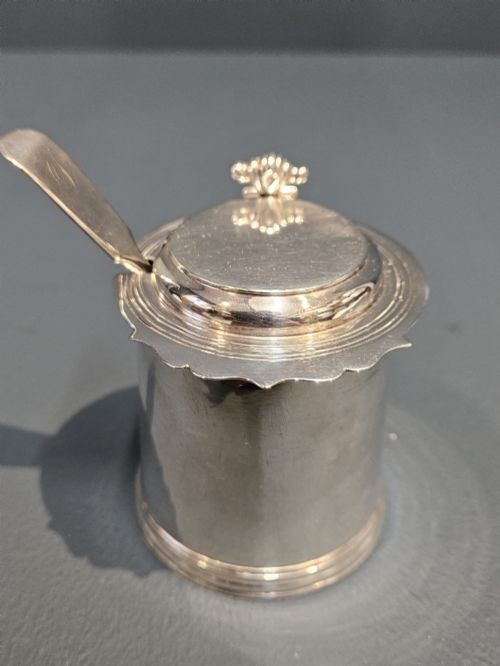
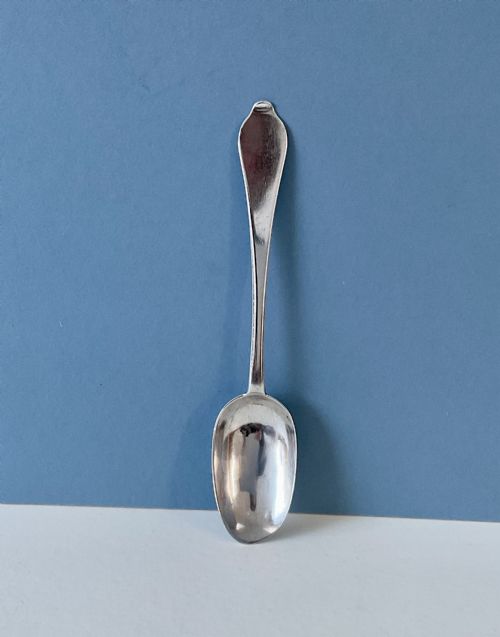
Early silver tableware encompasses a diverse range of dining and serving implements, spanning from the late seventeenth century through the Georgian and Victorian eras into the early twentieth century. When buyers search for early silver tableware, they encounter functional pieces such as spoons, mustard pots, sugar tongs, castors, and marrow scoops, alongside decorative serving dishes and napkin rings.
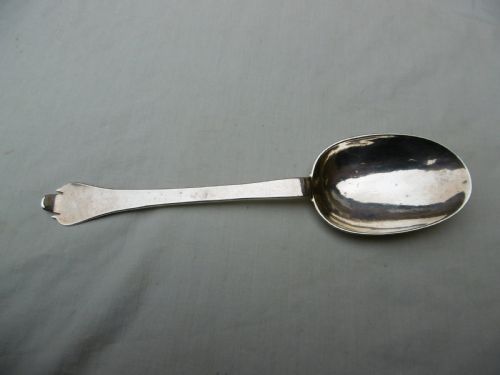
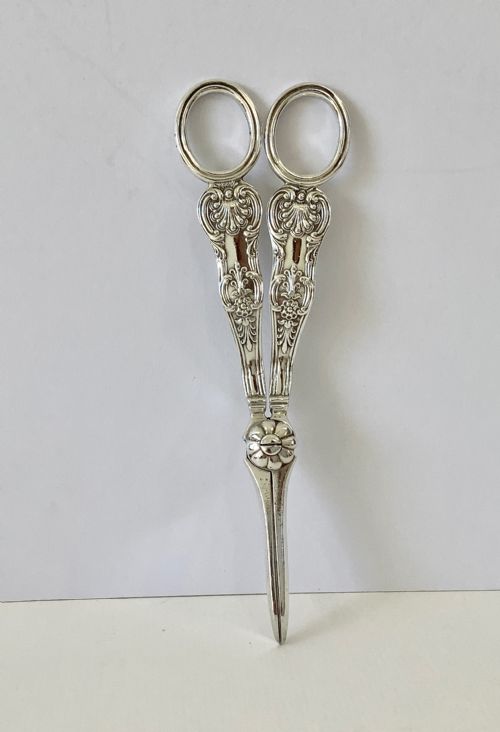
The selection on this page leans heavily toward eighteenth-century and nineteenth-century examples, with distinct representation from the seventeenth century and the Art Deco period. Common forms include trefid and trifid spoons from the late sixteen-hundreds, George I casters, and mid-nineteenth-century mustard pots and grape scissors.
Origins stretch across London, regional British assay offices like Exeter and Newcastle, and Scandinavian workshops. Buyers find both utilitarian flatware and specialised serving pieces, each reflecting the dining customs of its specific period.
Materials and Construction Techniques
The pieces on this page are fashioned primarily from sterling silver and Britannia silver, with occasional examples in silver plate, silver gilt, and mixed media such as faceted glass paired with plated metal. Makers utilised traditional silversmithing techniques including piercing, casting, and hand-raising, often finishing surfaces with engraved details or intricate enamel work.
Early Silver Tableware Retail Price Guide 2026
Typical asking prices for early silver tableware among the pieces listed under this phrase on Sellingantiques today, from the lower quarter to the upper quarter. They describe what is for sale here now, not the wider market.
The listings span from the seventeenth-century reign of Charles II through the Georgian and Victorian eras into the Art Deco period.
Markers of Quality and Craftsmanship
Quality in early silver tableware rests upon the crispness of the original chasing, the integrity of structural joins, and the legibility of the maker marks and hallmarks. Superior examples retain their original gauge of metal without excessive thinning from centuries of polishing.
The finesse of hand-engraving and the precision of pierced work distinguish finer workshop output from standard production. Preservation of original form, such as unblemished glass inserts in plated biscuit boxes or intact guilloche enamel on napkin rings, defines the upper tier of surviving items.
Simon Pantin·Benjamin Prosser·Stephen Coleman·John Walton·Reilly and Storer·David Andersen
The Early Silver Tableware Glossary
- Britannia standard
- A higher purity standard of silver introduced by statute in England, containing 95.84 percent pure silver. Pieces from this standard often carry distinctive marks.
- Trefid spoon
- An early form of dining spoon featuring a flat, three-lobed terminal handle. This style was popular in the late seventeenth century.
- Sifter spoon
- A ladle or spoon with a pierced bowl designed for dusting sugar over food. These often feature decorative scalloped edges.
- Marrow scoop
- A narrow, trough-like utensil used for extracting marrow from bones during formal dining. These date predominantly from the eighteenth century.
- Guilloche enamel
- A decorative technique where a precise pattern is mechanically engraved beneath a translucent enamel layer. This finish appears on twentieth-century pieces.
Early Silver Tableware: Frequently Asked Questions
What is Britannia silver?
Britannia silver is a specific alloy containing ninety-five point eight percent pure silver, which is slightly higher than standard sterling silver. Parliament mandated this higher purity for a period starting in the late seventeenth century to discourage the melting of coinage.
Items bearing this standard often feel slightly softer and display distinct hallmarks such as the figure of Britannia. This metal purity is a key indicator for dating early pieces accurately.
How do I identify a trefid spoon?
A trefid spoon is easily recognised by its distinctive flat handle terminal that splits into three distinct lobes. This design was prevalent during the late seventeenth century.
These spoons also feature a rat-tail attachment on the reverse of the bowl for structural reinforcement. Their presence indicates an early manufacturing date in British silver history.
What was a marrow scoop used for?
A marrow scoop is a long, narrow utensil with small troughs at each end designed for extracting marrow from animal bones. Wealthy households utilised them during formal eighteenth-century dining.
They display a double-ended design, often with one narrow scoop and one wider scoop. Their slender form makes them distinct among antique flatware.
How are early silver dates verified?
Early silver dates are verified through official hallmarks stamped directly onto the metal by assay offices. These marks typically include a date letter, a maker mark, and a standard mark.
Comparing these stamped symbols against historical assay records reveals the exact year and location of manufacture. This system provides reliable provenance for collectors.