



Early Oak Dresser Base
An early oak dresser base provides a heavy, working surface and generous drawers built to last centuries in a busy kitchen.
Early Oak Dresser Base
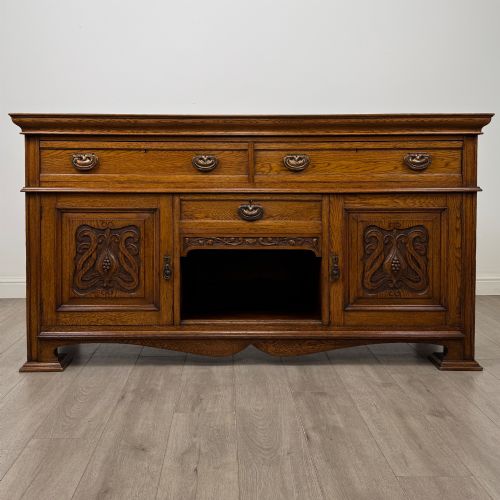
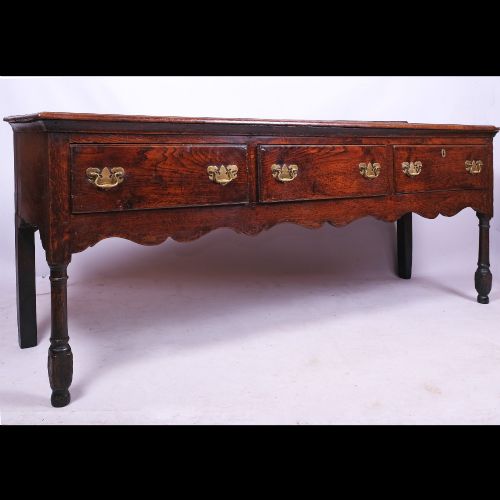
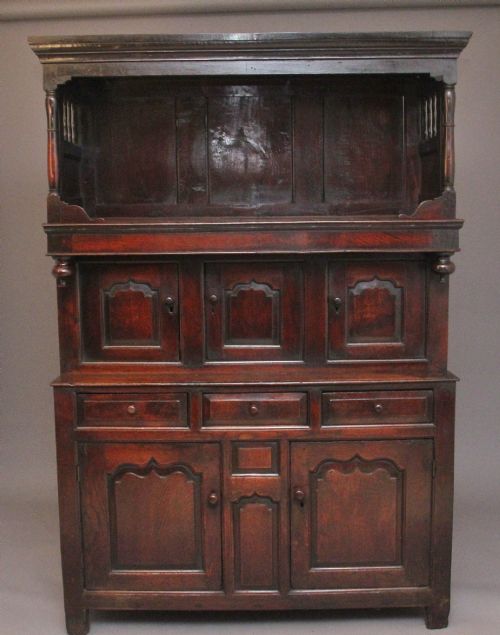
An early oak dresser base is a low wooden storage unit originally designed for utilitarian use in domestic kitchens and dining rooms. The pieces recorded here span centuries from the seventeenth through to the twentieth, reflecting long traditions of regional cabinet-making.
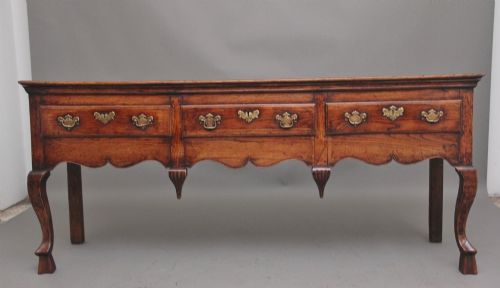
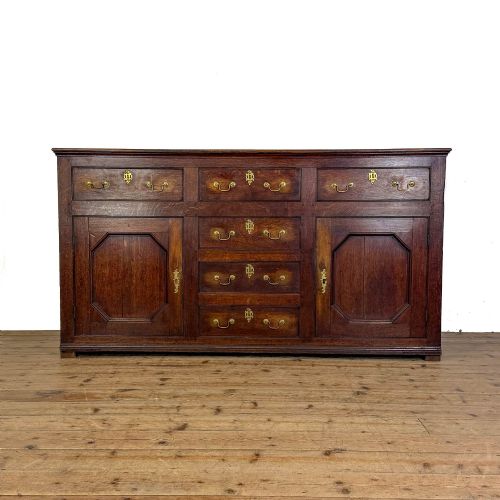
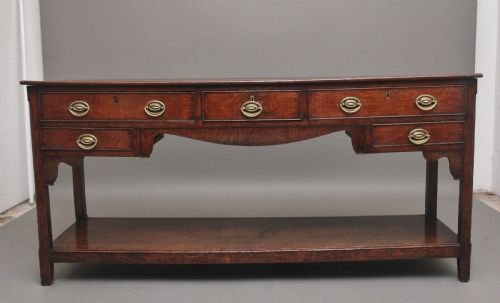
The versions most commonly met on this page belong to the eighteenth and nineteenth centuries, often showing Georgian, Welsh Vernacular, or English Country characteristics. They typically combine long board tops with banks of drawers and lower potboards or cupboards.
These items function equally well today as sideboards in modern dining spaces or living rooms, offering deep storage capacity combined with robust proportions.
What varies in quality
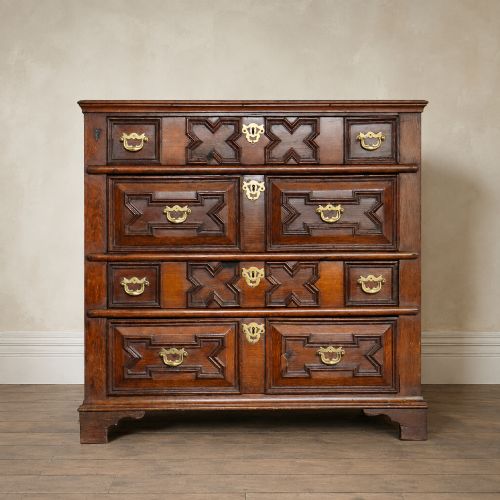
The distinction between standard examples and the finest pieces lies in the crispness of the moulding work, the selection of figured timber grain, and the retention of original brass hardware. Regional variations also influence desirability, particularly pieces displaying distinct Welsh vernacular traits or geometric panelling.
Proportion and scale dictate the visual weight of the furniture, with smaller or particularly elongated forms commanding greater attention from collectors seeking specific room dimensions.
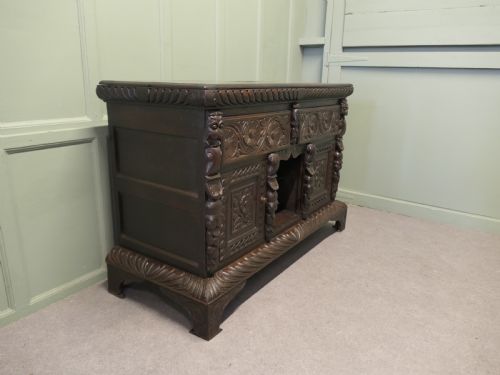
A green man carving peers out from beneath the timber top on one listed piece, watching over the room.
The Early Oak Dresser Base Glossary
- Potboard
- An open lower shelf fitted beneath a dresser base designed to hold pewter plates and ceramic dishes. It sits close to the floor between the supporting legs.
- Padfoot
- A rounded foot carved at the bottom of a cabriole leg, commonly found on eighteenth-century furniture. It rests directly on the floor without a separate shoe.
- Tridarn
- A large Welsh three-tier piece of vernacular storage furniture combining cupboards and display sections. They represent an elaborate development of standard dresser forms.
- Geometric moulded
- A style of surface decoration featuring raised mouldings arranged in repeating geometric patterns across drawer fronts or cupboard doors. This technique was popular during the seventeenth and early eighteenth centuries.
Early Oak Dresser Base: Frequently Asked Questions
How were early oak dresser bases used originally?
These units served as the primary work surface for food preparation in large country houses and farmhouses. Beneath the main board, drawers and open shelves stored heavy kitchen utensils and serving platters.
Over time, they moved from working pantries into dining spaces as households displayed their better ceramics on top.
What is a potboard dresser base?
A potboard base includes a low slatted shelf positioned just above the floor between the legs. Makers originally designed this shelf to hold wet pots and heavy earthenware away from damp flagstone floors.
Today, this lower surface provides an ideal space for stacking large books or decorative baskets.
How do I care for antique oak furniture?
Protect the timber by keeping the piece away from direct heat sources and sudden temperature swings that cause wood to split. Regular dusting with a dry cloth maintains the surface without building up heavy wax residues.
Occasional application of natural beeswax preserves the historic sheen of the wood grain.
How do I distinguish eighteenth-century pieces from later revivals?
Early pieces show construction methods appropriate to their period, such as hand-cut dovetails, pegged joints, and timber shrinkage consistent with age. Tool marks left by pit saws and hand planes remain visible on unexposed interior surfaces.
Revival pieces from later periods often feature machine-cut elements and standardised hardware fixings.