



Early Oak Credenza
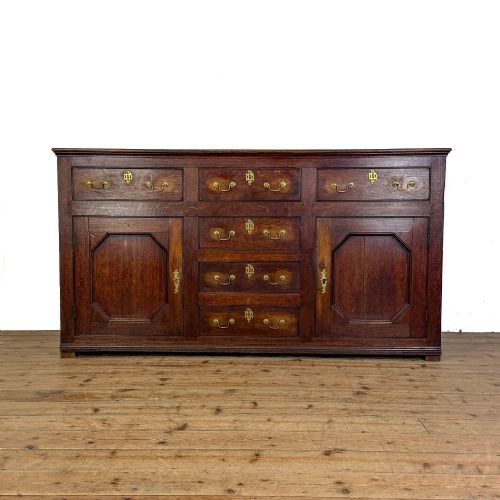
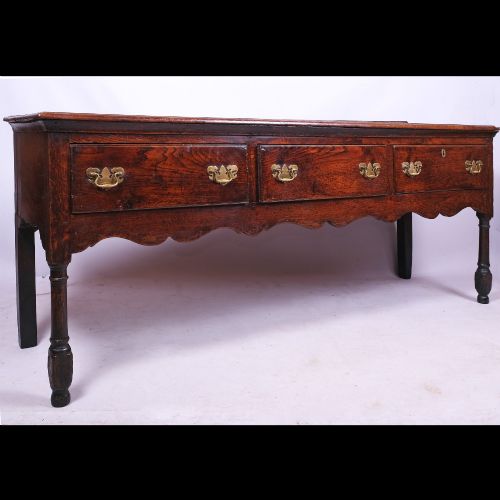
An early oak credenza brings substantial timber and centuries of craftsmanship directly into a room, offering both history and utility.
Early Oak Credenza
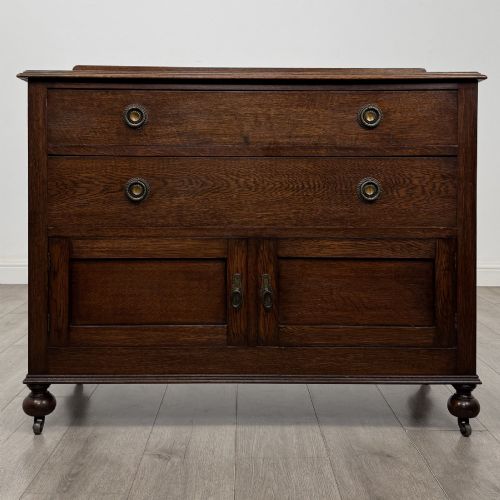
The versions most frequently encountered here display the rich grain of oak alongside revival influences such as Jacobean, Renaissance, and Arts and Crafts styles. They serve practical domestic storage while anchoring a room with traditional British cabinet-making traditions.
Materials and construction
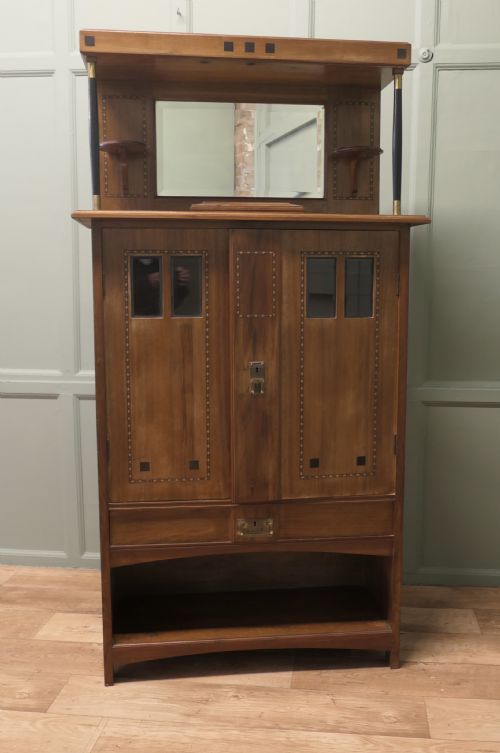
Makers relied primarily on solid oak, frequently enhanced with burr elm, pollard oak, and contrasting metals such as brass, copper, and iron for handles and hinges. Glass and mirror glass also appear in later display cabinets and cocktail units.
Joinery techniques focus on sturdy framing and panel construction, often featuring decorative carved elements, applied mouldings, and marquetry detailing rather than simple veneering.
Early Oak Credenza Retail Price Guide 2026
Typical asking prices for early oak credenza among the pieces listed under this phrase on Sellingantiques today, from the lower quarter to the upper quarter. They describe what is for sale here now, not the wider market.
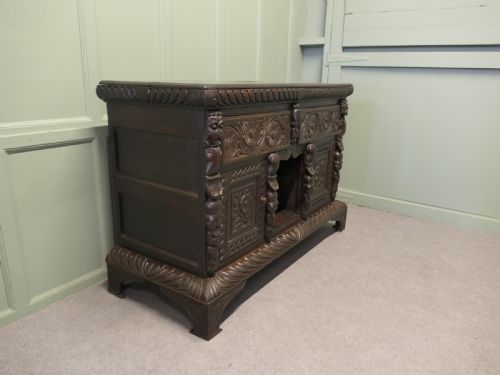
Keep an eye out for hidden Green Man carvings lurking among the oak foliage to watch over your cutlery.
Evaluating craftsmanship
Quality separates ordinary utility pieces from exceptional examples through the depth of timber selection, such as the use of burr elm or pollard oak alongside standard oak. Finer pieces demonstrate superior integration of carved ornamentation, such as Green Man motifs or crisp geometric mouldings.
The integrity of the original construction and the proportion of secondary woods also define the upper tier of these items. Refined hardware in brass and copper further elevates the execution of the piece.
The Early Oak Credenza Glossary
- Dresser base
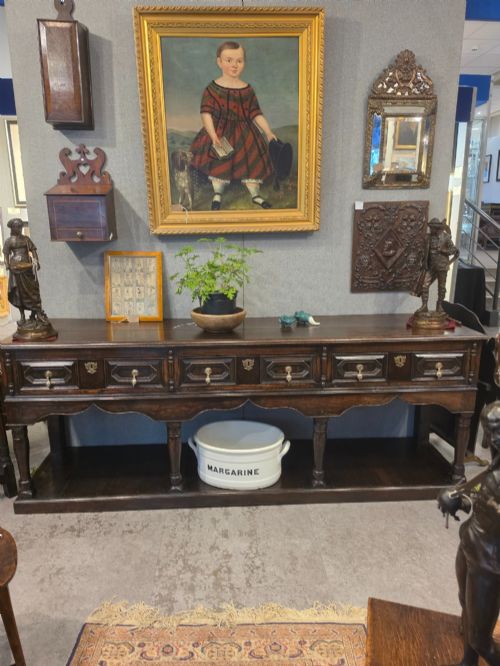
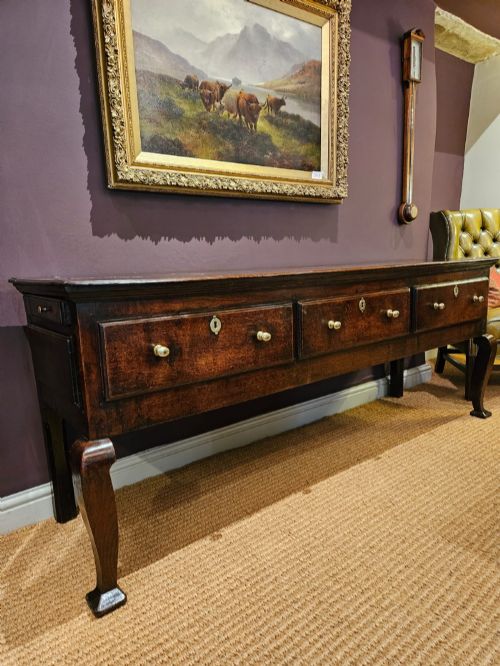
- A low wooden sideboard featuring drawers and cupboards, traditionally used for food preparation and serving in large kitchens.
- Marquetry
- The art of applying decorative pieces of veneer to a structure to form intricate patterns and pictures. It often incorporates exotic timbers like burr elm.
- Cabriole leg
- A furniture leg that curves out and then in, resembling the leg of an animal. This form became prominent during the Queen Anne period.
- Secessionist
- A modernist design style emerging around 1900 that rejected historicism in favour of clean lines and geometric ornament. It influenced contemporary cabinet makers.
- Revival
- A style that consciously copies the motifs and construction methods of an earlier historical era, such as the Jacobean or Renaissance periods.
Early Oak Credenza: Frequently Asked Questions
How were these pieces used historically?
Historically, these wooden units served primarily in dining rooms and kitchens for storing crockery, serving food, and displaying household silver.
Over time, their roles evolved to include general storage and display in domestic living spaces, adapting to changing household needs.
How do I care for an oak surface?
Maintaining an antique oak surface requires simple dusting with a soft cloth and occasional applications of traditional beeswax to nourish the timber.
Avoid placing these items in direct sunlight or near sudden heat sources to prevent the solid wood and any decorative veneers from drying out.
How can I tell different periods apart?
Distinguishing between periods involves examining the construction methods, hardware, and decorative motifs characteristic of eras like the eighteenth century or the Edwardian period.
Earlier pieces often feature hand-cut joints and simpler plank construction, whereas later revival styles incorporate eclectic decorative elements like Green Man carvings or Secessionist lines.