





Early English Trunk
An early english trunk brings centuries of robust joinery into a modern interior, offering serious storage with centuries of character.
Early English Trunk
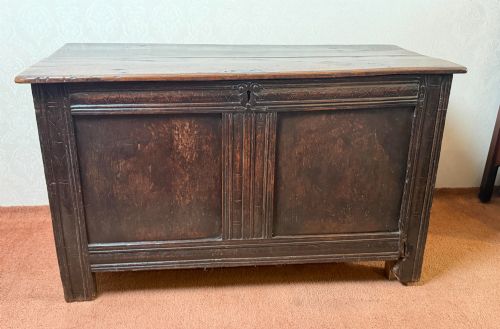
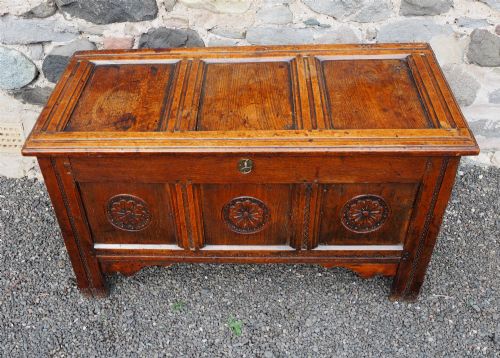
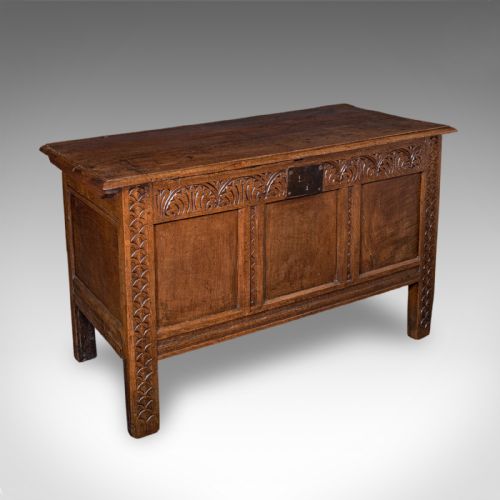
An early english trunk typically takes the form of a coffer, blanket box, or storage chest, built for utilitarian domestic use in past centuries. These pieces span from the sixteenth century through the Georgian era, encompassing periods such as Tudor, Jacobean, and Early Georgian.
The most common survival on this page is the oak coffer, often constructed with panelled sides or as a simpler planked box. Alongside chests, the selection occasionally includes related forms like longcase clocks, reflecting the broader domestic woodwork of the seventeenth century.
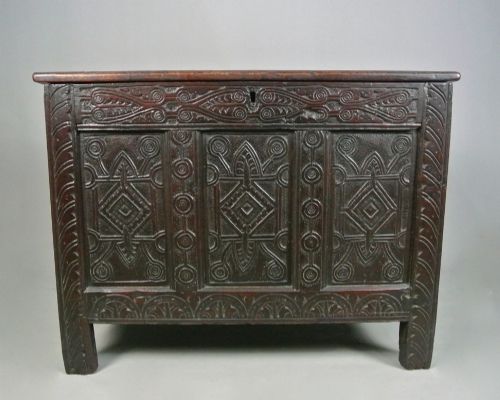
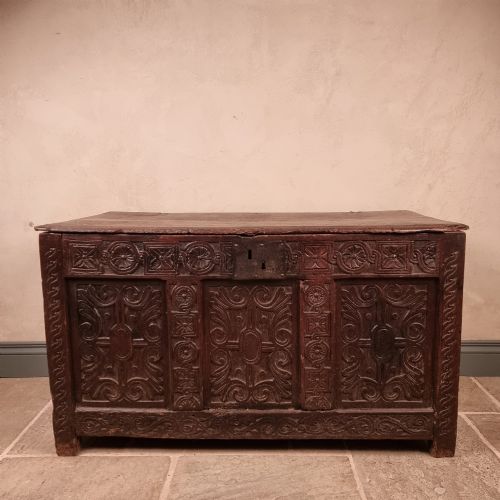
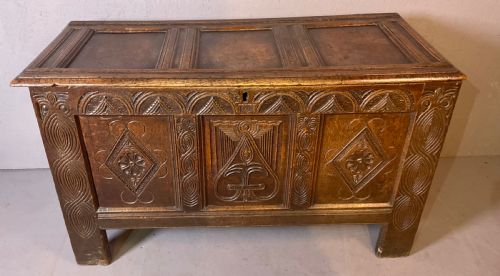
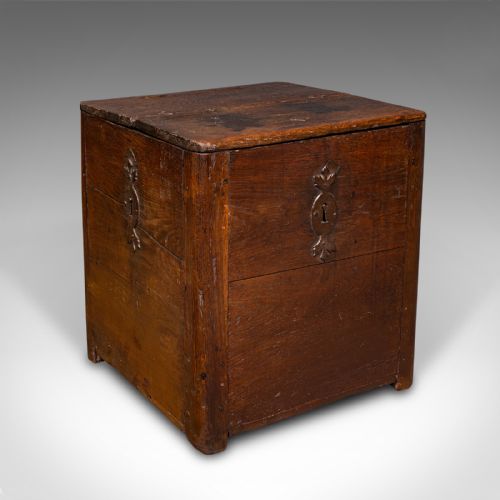
Origins are distinctly English, grounded in vernacular woodworking traditions of the countryside and provincial workshops. Buyers encounter everything from austere five-plank constructions to richly carved panels bearing the marks of early craftsmanship.
Materials and construction
Oak serves as the primary structural timber across these pieces, selected for its local abundance and durability in early English joinery. Workshops also utilised ebonised wood and ebony for distinct decorative contrast on specific forms.
Metalwork played a crucial structural and security role, with iron, wrought iron, and brass appearing in hinges, straps, and strong box mountings. Glass is additionally present in related horological pieces from the seventeenth century.
Construction methods rely on traditional jointing, ranging from straightforward board assembly in planked chests to sophisticated frame-and-panel techniques in carved coffers. Surfaces often display hand-carved detailing or linenfold motifs executed directly into the solid timber.
Early English Trunk Retail Price Guide 2026
Typical asking prices for early english trunk among the pieces listed under this phrase on Sellingantiques today, from the lower quarter to the upper quarter. They describe what is for sale here now, not the wider market.
Listings span from the sixteenth century through the Georgian period, dominated primarily by seventeenth-century oak coffers.
Assessing quality in early pieces
The degree of original hand-carved ornamentation distinguishes standard utility boxes from superior pieces commissioned for prosperous households. Crisp execution of motifs like arcading or linenfold carving demonstrates the skill of the early maker.
Integrity of construction and the retention of original timber elements dictate the standing of a trunk or coffer. Pieces that maintain their primary boards, authentic ironwork, and period hinges carry greater historical weight than heavily restored examples.
John Drew
The Early English Trunk Glossary
- Coffer
- A heavy wooden chest traditionally used for storing valuables, linen, or documents. These sturdy boxes frequently double as seating or window seats in historic interiors.
- Linenfold
- A style of wood carving popular in the Tudor period that mimics the appearance of folded linen fabric. It gives flat panels a rich, textured depth.
- Arcading
- A decorative row of arches carved into woodwork, commonly seen on seventeenth-century pieces in the Jacobean style. This architectural motif reflects contemporary stone carving translated into timber.
- Plank coffer
- A simple chest constructed directly from thick planks joined at the edges rather than fitted into a frame. These represent some of the earliest and most utilitarian storage forms.
- Jacobean
- The style of English art and architecture prevailing during the early seventeenth century, during the reign of James I. It is characterised by solid proportions and robust carved ornamentation.
Early English Trunk: Frequently Asked Questions
What were early english trunks used for?
These pieces served as secure storage for household valuables, silver, documents, and textiles in domestic settings. Because heavy furniture was scarce, they also functioned as seating, tables, or luggage for travel.
Over time, their role shifted as specialised furniture developed, leaving them prized today as decorative blanket chests and statement storage pieces.
How do I date an antique oak coffer?
Dating relies on examining construction techniques, joinery methods, and the style of any carved ornamentation. Sixteenth-century pieces often feature linenfold panels, while seventeenth-century examples frequently display arcading or geometric mouldings.
Tool marks and the type of hinges or ironwork also provide clues to the period of manufacture, distinguishing Elizabethan and Jacobean work from later Georgian items.
Are these trunks suitable for daily use?
Solid oak construction and robust iron hardware make these chests exceptionally durable for modern storage needs. They easily accommodate blankets, winter wear, or household linens while withstanding regular interaction.
Care should be taken to place them away from direct heat sources and drastic humidity changes to protect the centuries-old timber.
What is the difference between a coffer and a chest?
While the terms are often used interchangeably, a coffer traditionally implies a more secure box with a flat lid used for valuables, sometimes fitted with an internal till. A chest might encompass simpler planked blanket boxes or general storage receptacles.
Both forms share the fundamental characteristic of top-opening lids and heavy wooden construction.