



Early English Stool
An early English stool brings solid timber and centuries of domestic history straight into a room.
Early English Stool
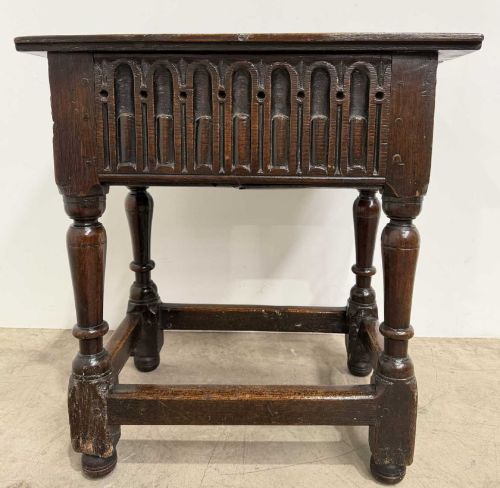
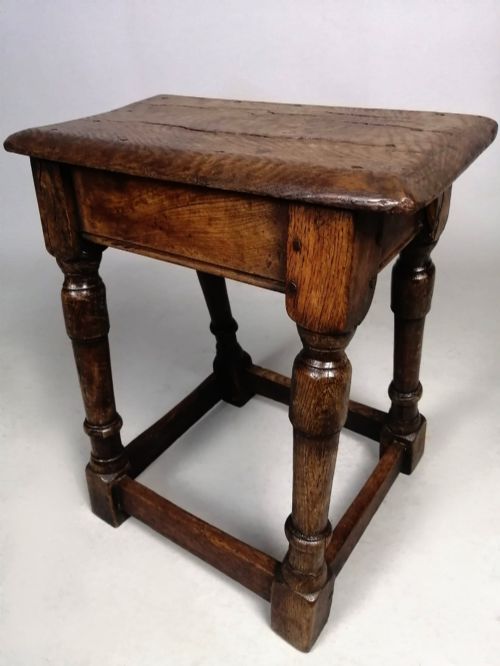
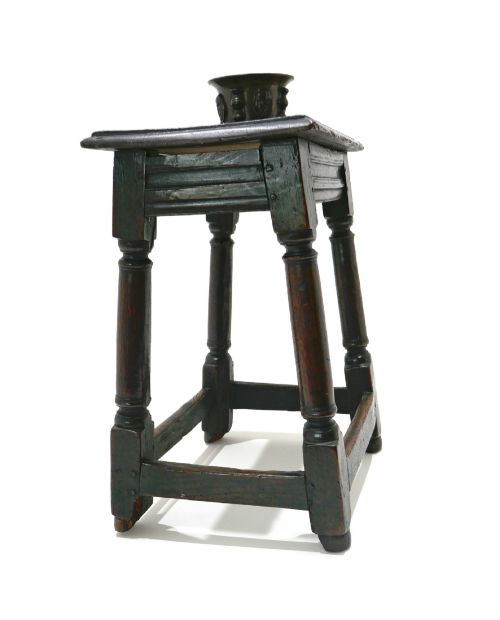
An early English stool represents a remarkably sturdy form of seating, with joint stools dominating the earliest examples from the seventeenth century. These sturdy wooden pieces were built to last, utilising pegged mortise and tenon construction rather than simple nails.
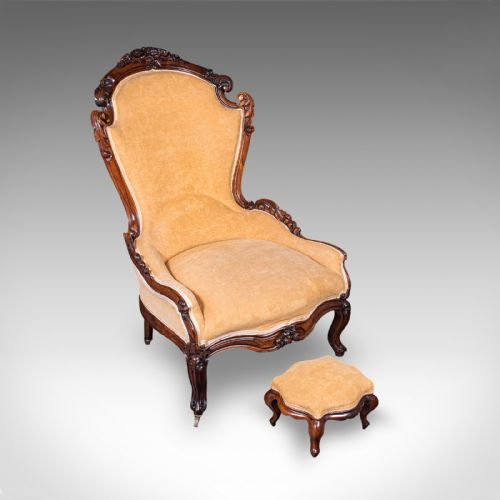
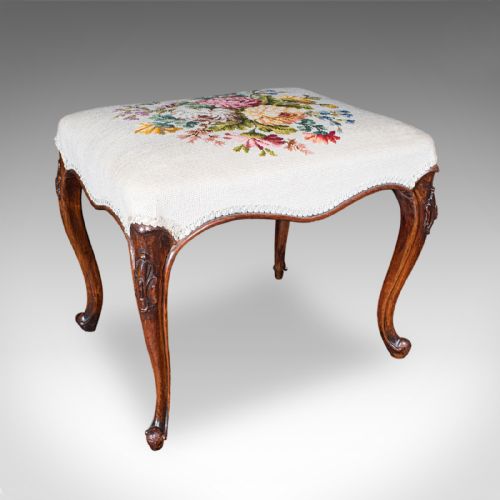
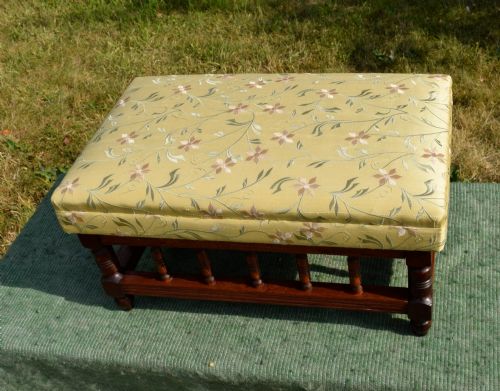
Buyers will also encounter later nineteenth-century and early twentieth-century variations on this page, including footstools and parlour seats upholstered in leather, textile, or velvet. Oak remains the definitive timber for the older iterations, while mahogany and walnut appear in subsequent Victorian and Edwardian interpretations.
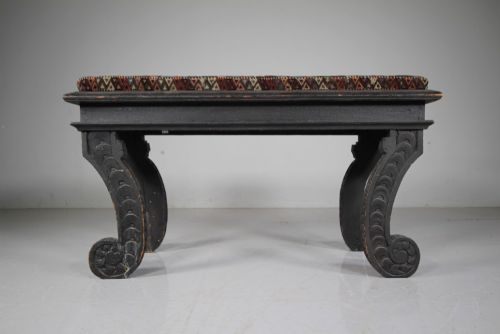
The assortment on this page ranges from stark Commonwealth joined oak pieces to polished Queen Anne designs and comfortable fireside seating. Each version reflects the domestic requirements of its specific period, moving from utilitarian seating to decorative parlour comfort.
Materials and construction
Solid oak provides the structural backbone for the seventeenth-century joint stools, joined together with pegged wooden framing designed to withstand heavy daily use. Elm frequently appears alongside oak in tabletops and seats, chosen for its toughness and resistance to splitting.
Later nineteenth-century and early twentieth-century pieces introduce softer timbers such as mahogany and walnut, often paired with luxury upholstery materials like silk, needlepoint, velvet, and leather. Brass details and hand-painted finishes appear on specific window seats and salon chairs from the Victorian era onwards.
Early English Stool Retail Price Guide 2026
Typical asking prices for early english stool among the pieces listed under this phrase on Sellingantiques today, from the lower quarter to the upper quarter. They describe what is for sale here now, not the wider market.
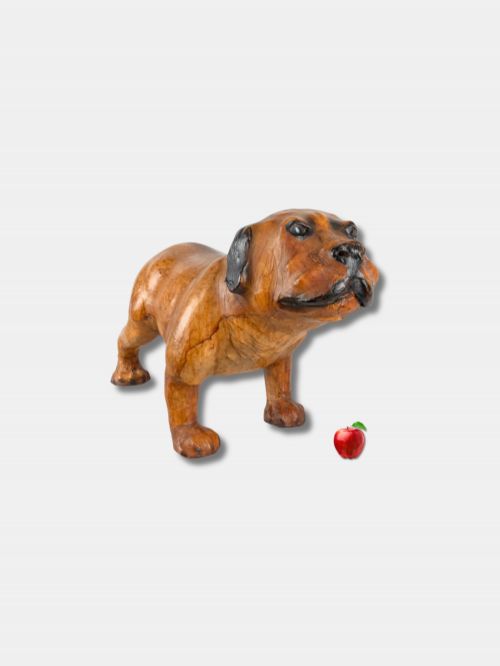
One exceptional listing includes a leather dog footstool made by Omersa for Liberty, proving that early seating took playful animal shapes.
Judging quality and craftsmanship
The distinction between a standard piece and a superior example lies in the integrity of the timber and the retention of original pegged joints. Untouched surfaces retain the deep patination and tool marks left by early carpenters, whereas excessive restoration diminishes historical character.
Upholstered footstools and parlour seats depend heavily on the quality of the textile work and the preservation of original stuffing materials. Pieces that maintain their structural tightness without modern timber replacements command greater respect among collectors.
The Early English Stool Glossary
- Joint stool
- A sturdy wooden seat constructed with pegged joints by joiners rather than turned by cabinet makers. These pieces were common in sixteenth and seventeenth-century households.
- Commonwealth
- A period in English history spanning the mid-seventeenth century, known in furniture for austere, unadorned designs and solid oak construction.
- Needlepoint
- A type of canvas work embroidery frequently used for covering nineteenth-century footstool tops. It provides both decorative pattern and a durable surface.
- Commode chair
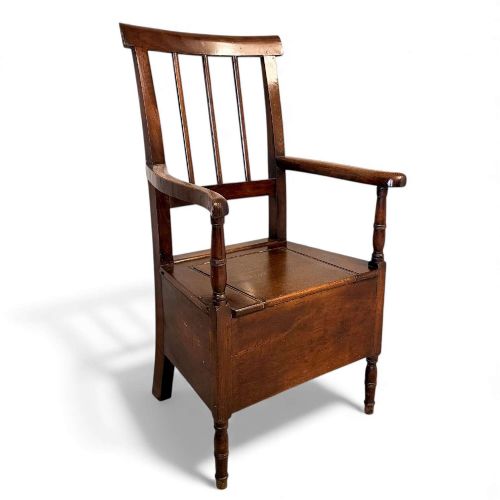
- An enclosed chair or stool containing a chamber pot, dating from the seventeenth or eighteenth centuries. They combined practical domestic utility with polished timber cabinetry.
- Patina
- The surface sheen and colour developed by wood over centuries of handling, exposure, and polishing. A rich patina indicates age and natural wear.
Early English Stool: Frequently Asked Questions
What is an early English joint stool?
A joint stool is a heavily framed wooden seat pegged together by joiners, built primarily in the seventeenth century for household dining and domestic tasks.
Unlike chairs, which were scarce and reserved for heads of households, these sturdy stools could be stacked or tucked away when not in use.
How do I date an antique wooden stool?
Dating relies on examining the timber species, tool marks, and construction methods, such as the use of handmade pegs instead of modern screws.
Seventeenth-century pieces typically feature oak and elm with pegged mortise and tenon joints, whereas later Victorian examples utilise mahogany and walnut.
Where were these stools used in the home?
Early joint stools served primarily around the dining table or hearth in seventeenth-century homes, functioning as flexible seating for family members and guests.
Later Victorian and Edwardian footstools were designed specifically for placement beside parlour firesides and armchairs to support the feet.
Are upholstered footstools difficult to maintain?
Upholstered footstools require gentle care, particularly those featuring delicate textiles, silk, needlepoint, or antique leather surfaces.
Keeping them away from direct sunlight and dry-cleaning fabric components periodically helps preserve the original materials and padding.