




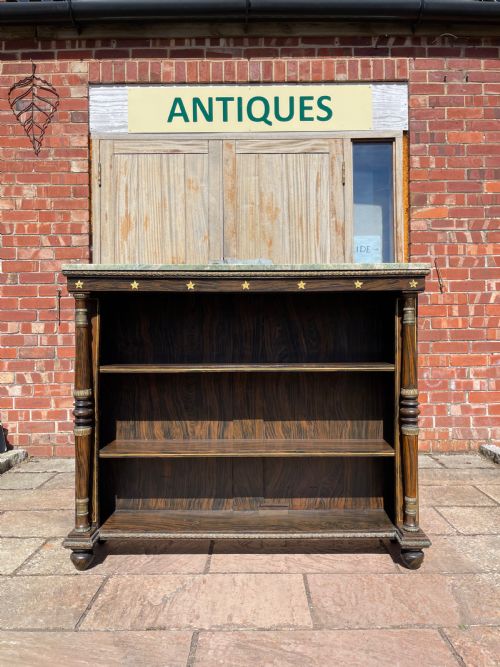


Early 19th Century Shelving
These early 19th century shelving pieces offer timber craftsmanship and practical display space for books and precious objects alike.
Early 19th Century Shelving
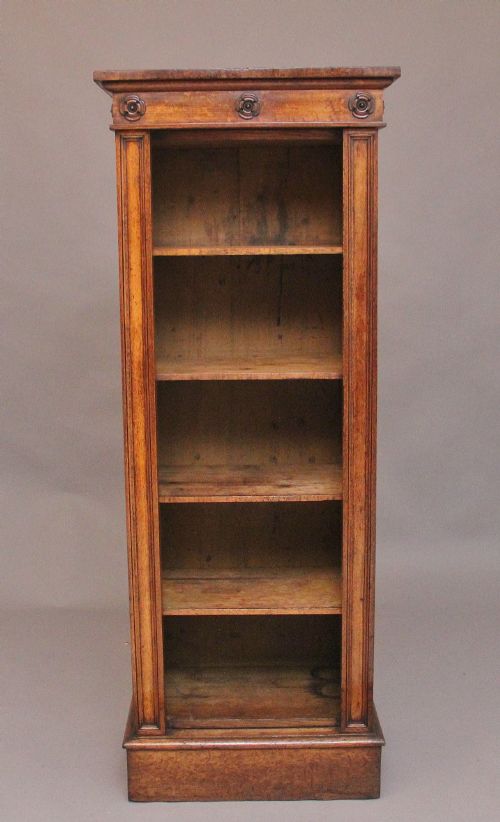
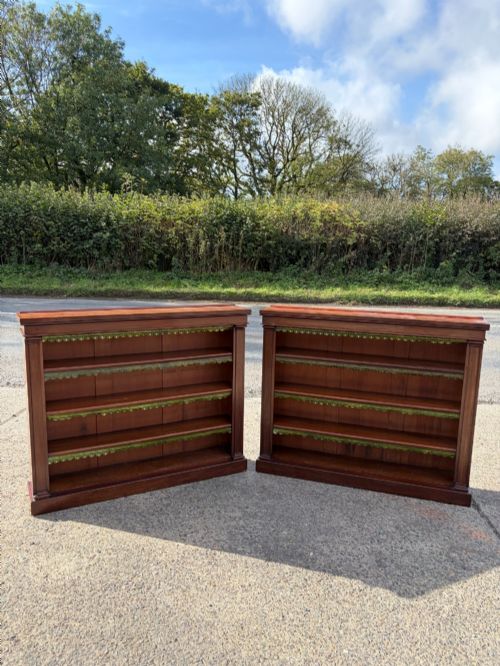
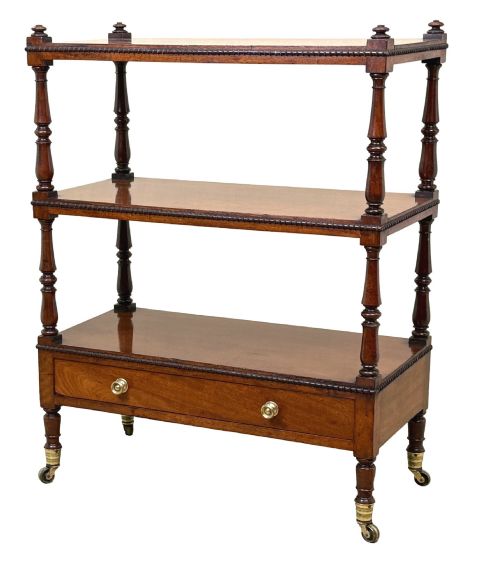
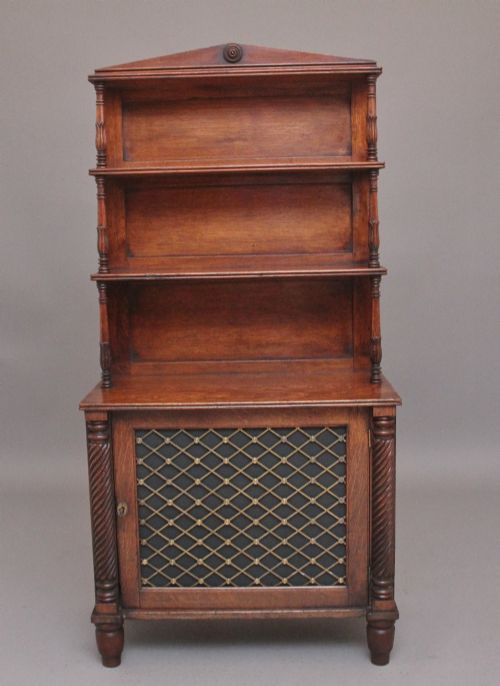
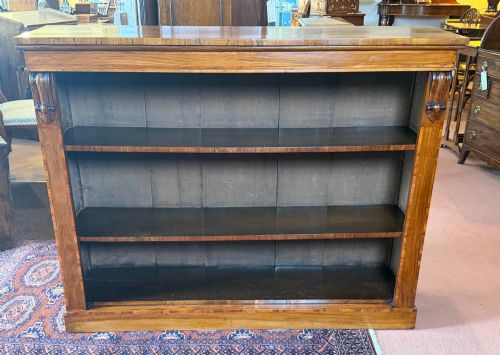
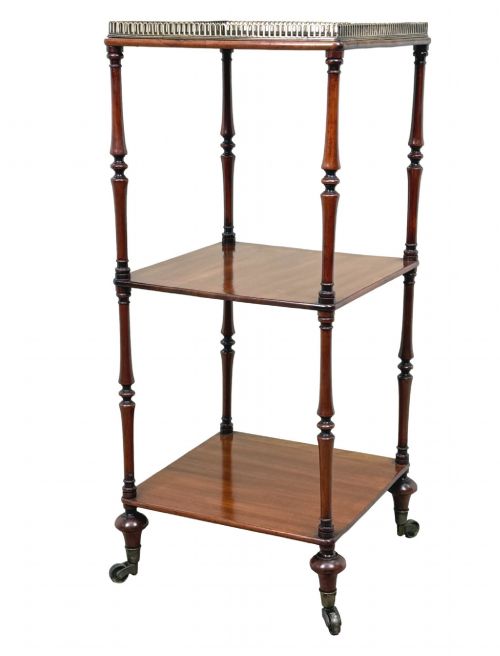
Early 19th century shelving encompasses a variety of timber furniture designed for storage and display, spanning bookcase cabinets, open bookcases, and tiered etageres. You will most frequently encounter multi-tiered mahogany whatnots and open bookcases among these listings.
The periods represented stretch across the Georgian, Regency, George IV, William IV, and early Victorian eras, alongside regional pieces like French pine alcove cupboards and oak Welsh dressers. These diverse forms reflect the shifting domestic interior fashions of the period.
What varies in quality
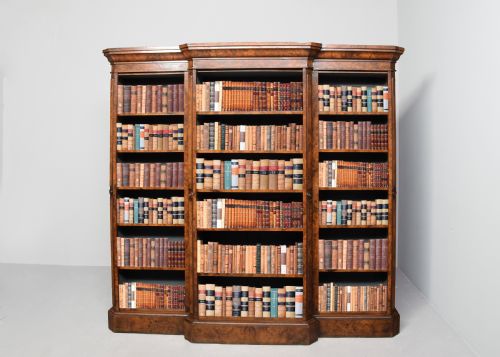
Quality in these pieces is dictated by the selection of timber figures, such as burr walnut or birdseye maple, and the precision of decorative inlay like boxwood stringing. Finer examples display harmonious proportions and careful attention to structural detail across multi-tier etageres and breakfront cabinets.
The integrity of the timber joints and the preservation of original surfaces also separate standard utility items from superior cabinet work. Pieces retaining their original configuration, whether an open bookcase or a two-part Welsh dresser, demonstrate greater material authenticity.
Early 19th Century Shelving Retail Price Guide 2026
Typical asking prices for early 19th century shelving among the pieces listed under this phrase on Sellingantiques today, from the lower quarter to the upper quarter. They describe what is for sale here now, not the wider market.
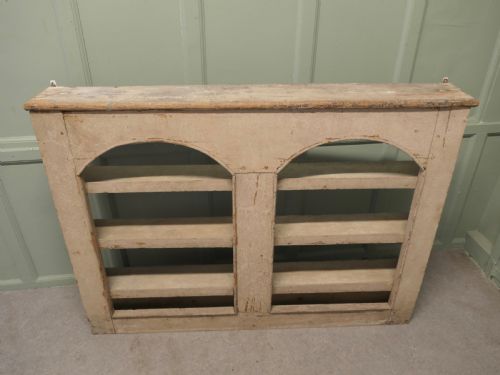
Among the timber stands, one imaginative maker finished an early bookcase in simulated paint.
The Early 19th Century Shelving Glossary
- Whatnot
- A multi-shelved stand originating in the early 19th century used for holding ornaments, books, or writing materials. It appears frequently in mahogany, rosewood, and Indian hardwood.
- Breakfront
- A piece of furniture whose central section projects forward from the flanking wings. This architectural arrangement creates depth and visual interest on large cabinets and bookcases.
- Cross-banding
- A decorative border technique where thin strips of veneer are laid across the grain of the primary wood. It frames drawer fronts, shelves, and cabinet tops.
- Stringing
- Inlay work consisting of narrow lines of contrasting wood or light-coloured material. Makers used it to outline panels and structural edges.
Early 19th Century Shelving: Frequently Asked Questions
What is the difference between an etagere and a whatnot?
An etagere generally describes a tiered display piece influenced by French furniture styles, often featuring multiple open shelves for decorative items.
A whatnot is a closely related English term for a multi-tiered stand used interchangeably for books and ornaments during the Regency and Victorian periods.
How do I identify a Regency period bookcase?
Regency bookcases typically feature classical proportions, dense timbers like mahogany or rosewood, and restrained decorative elements such as brass mounts.
They often incorporate clean architectural lines influenced by Greek and Roman design revivals.
Were these shelves used primarily for books?
While many open bookcases and cabinet designs held libraries, multi-tier whatnots and display stands served diverse domestic purposes.
They accommodated everything from ceramic ornaments and writing equipment to serving items in dining spaces.
How should I care for rosewood and mahogany shelves?
These timber surfaces require stable indoor humidity levels away from direct sunlight to prevent timber splitting and fading.
Periodic application of appropriate wax polish maintains the natural sheen of the hardwood grain without buildup.