




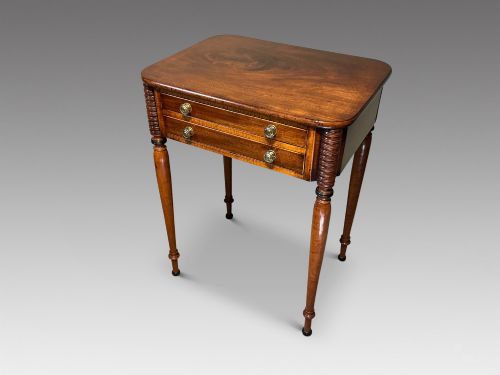


Early 19th Century Nightstand
These early 19th century nightstand pieces are compact companions for the bedroom, offering practical enclosed storage or surface space with period character.
Early 19th Century Nightstand
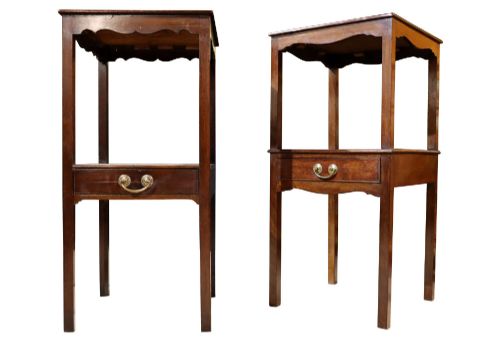
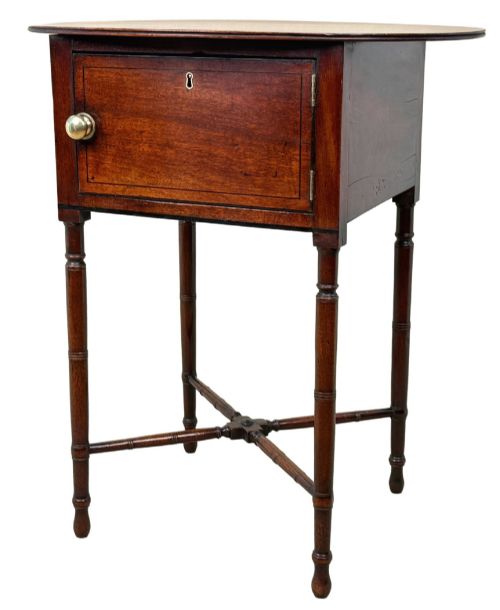
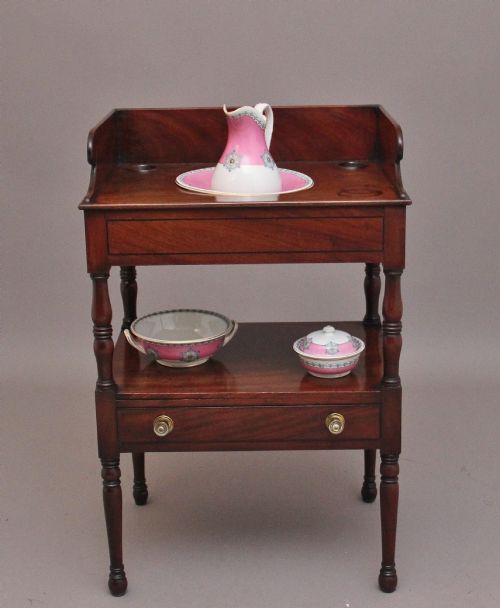
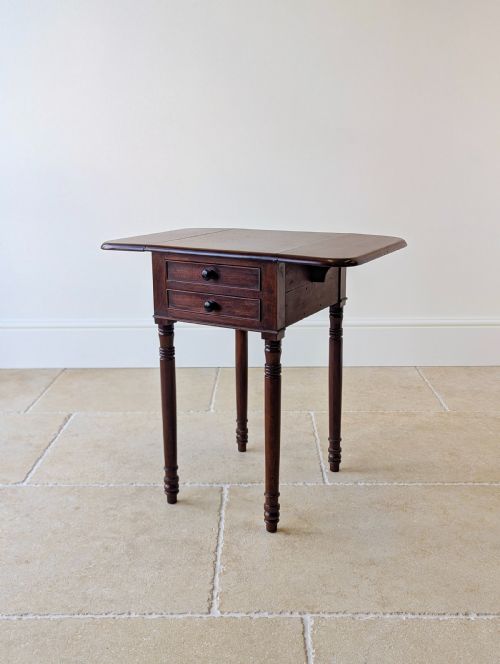
An early 19th century nightstand encompasses various forms designed to sit beside a bed or serve functional roles in chambers and private quarters. The selection here spans bedside cabinets, pedestal cupboards, washstands, and small side tables originating from the Georgian, Regency, and Victorian eras.
Buyers frequently encounter mahogany pedestal cupboards and single-door bedside cabinets alongside occasional tables and washstands. These utilitarian yet refined items reflect the domestic arrangements of the 19th century, serving both practical and decorative purposes in period interiors.
How they were made
Cabinet makers utilised dense native and exotic timbers, predominantly mahogany, oak, and flame mahogany, often augmented by decorative veneers like rosewood, satinwood, and kingwood. Construction methods relied on traditional joinery techniques suitable for supporting daily use in domestic settings.
Brass fittings and hardware frequently supplemented the woodwork on doors and drawers, while marquetry inlay appeared on continental examples. Surfaces were finished to highlight the natural grain and depth of the wood, particularly on figured mahogany and flame veneers.
Early 19th Century Nightstand Retail Price Guide 2026
Typical asking prices for early 19th century nightstand among the pieces listed under this phrase on Sellingantiques today, from the lower quarter to the upper quarter. They describe what is for sale here now, not the wider market.
Listings feature mahogany, oak, rosewood, satinwood, kingwood, and maple across the 19th Century, Regency, Georgian, and Victorian periods.
What varies in quality
The degree of refinement in timber selection and cabinet work dictates the standing of an individual piece. Finer examples display carefully matched flame mahogany or intricate marquetry patterns that require advanced carpentry skill.
Proportion and structural integrity also separate standard utilitarian items from more distinguished pieces. Well-drawn proportions and intact original brass furniture demonstrate the level of craftsmanship invested during manufacture.
The Early 19th Century Nightstand Glossary
- Pedestal cupboard
- A freestanding enclosed cabinet, usually cylindrical or rectangular, designed to stand beside a bed for concealed storage. These single-door units are characteristic of Regency and Victorian bedroom furniture.
- Washstand
- A dedicated piece of furniture designed to hold a basin and jug for morning ablutions. They frequently feature tiered surfaces or splashbacks.
- Tray top
- A raised rim around the top surface of a table or bedside cabinet to prevent items from rolling off. This practical feature appears on Georgian and Regency pieces.
- Flame mahogany
- A distinct wood grain pattern resembling flickering flames, achieved by cutting across the bough of the mahogany tree. It was favoured by cabinet makers for prominent drawer fronts and cupboard doors.
- Marquetry
- Decorative veneer work forming intricate patterns or pictures using various coloured woods. It is commonly found on continental European tables.
Early 19th Century Nightstand: Frequently Asked Questions
How do I use one in a modern home?
These compact pieces function well as traditional bedside tables or as small accent tables in living rooms and hallways. Their enclosed cupboards or drawers provide discreet storage for books and small items.
Their varied forms, from cylindrical pedestals to rectangular cabinets, allow them to fit easily beside contemporary low beds or alongside seating.
How do I tell Regency from Victorian pieces?
Regency pieces often display cleaner architectural lines, classical restraint, and understated brass mounts influenced by French Empire and ancient styles. Mahogany and rosewood were typical choices during this period.
Victorian pieces tend to be heavier in proportion, sometimes utilising denser flame mahogany or more ornate detailing. Construction methods also shift slightly as industrial techniques gradually influenced workshop production.
What woods were commonly used?
Mahogany is the predominant timber found in these listings, appearing in standard, flame, and figured varieties. Oak is also common, particularly in simpler or provincial items such as primitive scullery chests and side tables.
More decorative examples incorporate exotic timbers like rosewood, satinwood, kingwood, and maple, frequently used for contrasting veneers and marquetry work.