




Dutch Wardrobe
A dutch wardrobe provides profound storage capacity while anchoring a room with centuries of European craftsmanship and rich timber grain.
Dutch Wardrobe
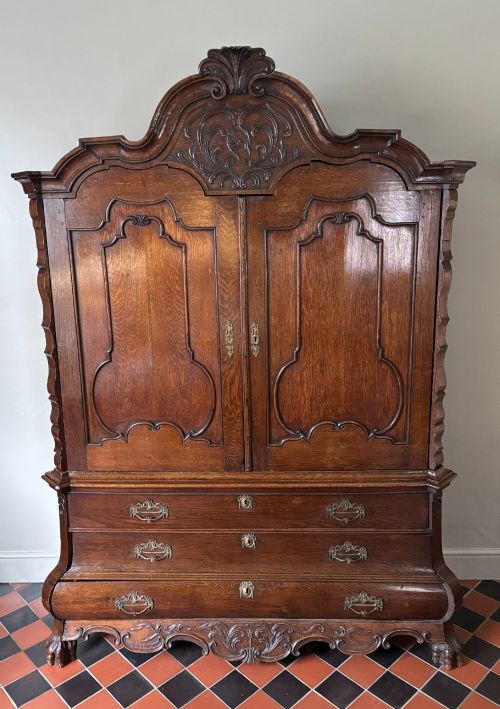
A dutch wardrobe encompasses substantial storage furniture including linen presses, armoires, and elaborate kasten originating from the seventeenth to the nineteenth centuries. These grand pieces serve primarily to store textiles and garments, utilising deep internal shelving and hanging spaces behind heavy panelled doors.
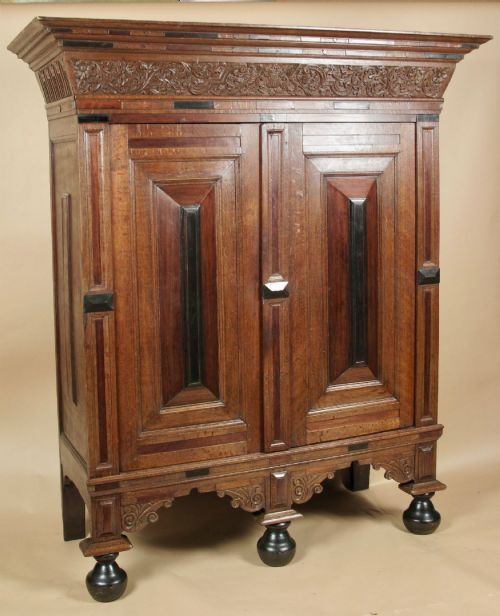
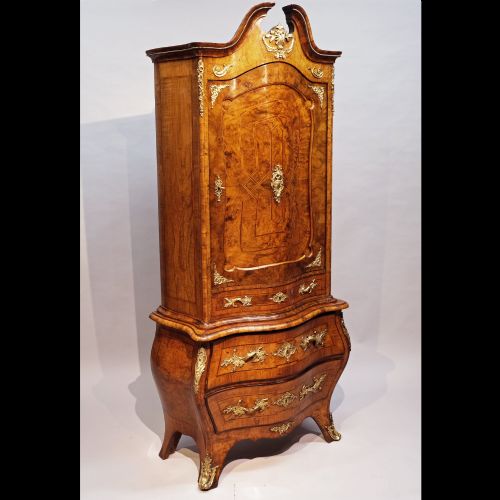
The varieties encountered span utilitarian pine country houses and bleached oak cupboards to ornate seventeenth century cushion fronts and eighteenth century burr walnut marquetry cabinets. Such diverse forms reflect both regional domestic utility and the high status of prosperous urban households.
Buyers meet eighteenth century walnut and oak examples most frequently, often featuring architectural cornices and generous double doors. These foundational forms demonstrate the enduring domestic requirement for large scale timber storage across European interiors.
How they were made
Carpenters constructed these large bodies using sturdy structural timbers like oak and pine, which provided a stable frame for decorative exterior veneers. Master cabinetmakers then applied costly face veneers of burr walnut, rosewood, ebony, and fruitwood to create striking visual patterns across the expansive door surfaces.
Marquetry technique involved meticulous hand-cutting of diverse wood species and floral inlays, fitting pieces together precisely before gluing them to the carcass. Brass fittings and mounts provided structural reinforcement and decorative contrast against the dark polished timbers.
Dutch Wardrobe Retail Price Guide 2026
Typical asking prices for dutch wardrobe among the pieces listed under this phrase on Sellingantiques today, from the lower quarter to the upper quarter. They describe what is for sale here now, not the wider market.
Current listings feature substantial seventeenth and eighteenth century forms constructed from oak, burr walnut, and rosewood.
What varies in quality
The distinction between standard domestic furniture and elite cabinetwork lies in the complexity of the timber selection and the intricacy of the surface decoration. Elaborate floral marquetry and cushion moulded door panels require advanced carpentry skill compared to plain planked construction.
Proportion and the preservation of original patination dictate the visual success of the piece, as excessive restoration diminishes historic integrity. The integration of architectural mouldings and the quality of the primary burr walnut veneers separate ordinary workshop production from masterworks.
The Dutch Wardrobe Glossary
- Marquetry
- Decorative veneer work where pieces of various coloured woods are fitted together to form geometric or floral designs. This technique transforms plain cabinet doors into elaborate pictorial surfaces.
- Kast
- A large traditional Dutch wardrobe or press cupboard characterised by deep proportions and heavy architectural cornices. These substantial storage pieces dominated seventeenth and eighteenth century interiors.
- Linen Press
- A tall cabinet specifically designed for storing folded textiles, featuring sliding trays or shelves behind the upper doors. The base often contains drawer storage for smaller garments.
- Cushion Kast
- A seventeenth century wardrobe featuring pronounced raised rectangular or cushion-moulded door panels. This specific design creates a bold three-dimensional facade using contrasting ebony and rosewood timbers.
- Ormolu
- Gilded bronze mounts and hardware applied to high status furniture for decorative enhancement. These metal ornaments frame the woodwork and protect vulnerable corners from wear.
Dutch Wardrobe: Frequently Asked Questions
How do I fit a dutch wardrobe in a modern room?
These large storage pieces require careful measurement of ceiling height and doorway clearance before placement in a contemporary home. Their substantial depth means they function best as primary statement furniture in bedrooms or large living spaces.
Interior shelving configurations often adapt easily for modern clothing storage while retaining historic exterior character. Ensuring adequate wall clearance protects the heavy timber mouldings from accidental damage.
What is the difference between an armoire and a kast?
A kast represents the traditional heavy Dutch architectural cupboard design, whereas an armoire originates from wider continental European wardrobe traditions. Both provide enclosed storage, but kasten typically display much deeper proportions and distinct cushion moulding.
Regional workshop practices dictated these subtle structural variations across the seventeenth and eighteenth centuries. Examining internal construction details usually reveals the specific origin of each form.
How do I maintain burr walnut surfaces?
Polishing requires gentle beeswax application and soft cloths to preserve the natural lustre of the aged walnut grain. Direct sunlight and sudden temperature changes must be avoided to prevent timber splitting and veneer lifting.
Maintaining stable room humidity protects both the structural oak carcass and the delicate decorative surface veneers. Regular dusting prevents particle accumulation within the intricate marquetry crevices.
How can I tell an eighteenth century piece from a nineteenth century piece?
Eighteenth century examples frequently employ rich burr walnut marquetry, oak framing, and dynamic baroque or rococo architectural lines. Construction methods from this era rely on hand-sawn timbers and traditional joinery without modern mechanical fasteners.
Nineteenth century revivals often utilise denser secondary woods and feature machine-processed elements hidden within the internal framing. Stylistic proportions also shift during the later period towards heavier, more symmetrical revival forms.