




Dutch Oak Furniture
Dutch oak furniture brings heavy timber and robust joinery into a room, offering practical storage through centuries of craftsmanship.
Dutch Oak Furniture
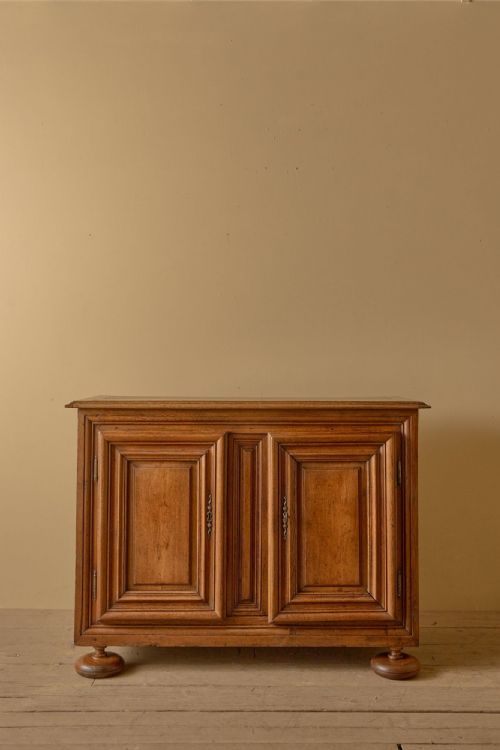
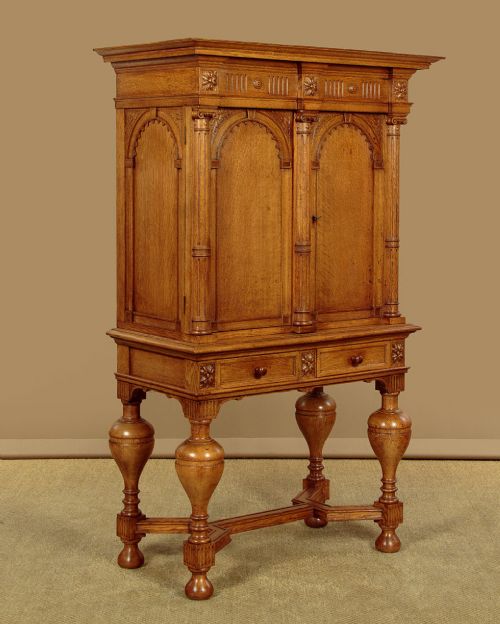
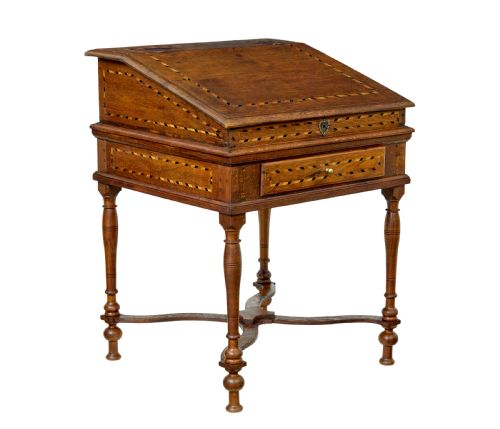
Dutch oak furniture encompasses substantial chests of drawers, armoires, and writing desks spanning from the seventeenth century through to the twentieth century. These domestic and formal pieces utilise sturdy construction methods suited for daily utility across generations.
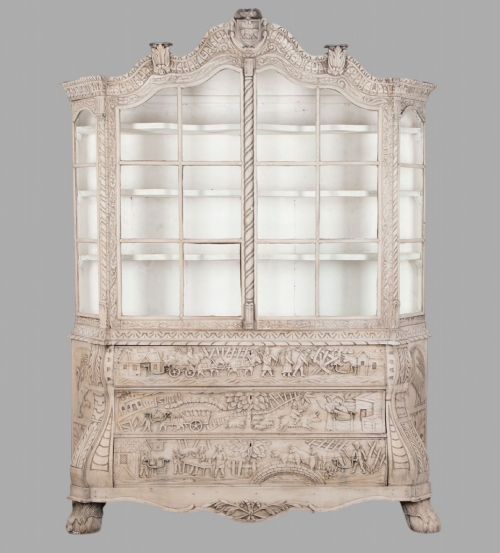
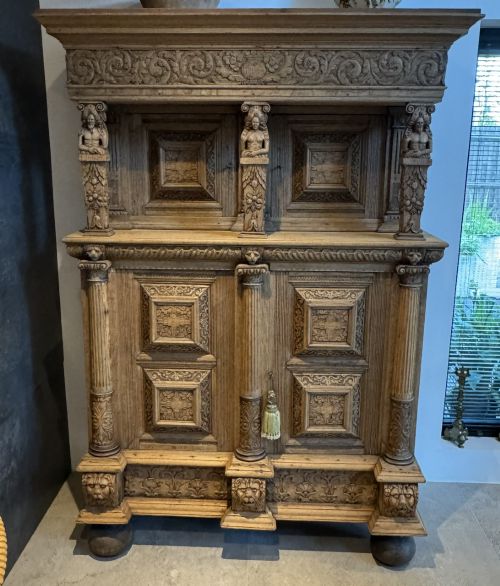
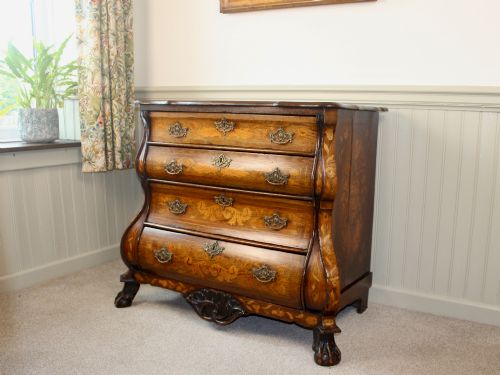
The pieces appearing most frequently on this page combine oak foundations with regional forms such as bombé commodes, linen cupboards, and dressers. Surviving examples demonstrate both rural country simplicity and ornate baroque or rococo revival styling.
Makers and workshops from seventeenth-century Gelderland to nineteenth-century revivalist studios created these works using native timber supplemented by exotic veneers. Buyers encounter varied typologies ranging from monumental kasten to modest apprentice chests.
How they were made
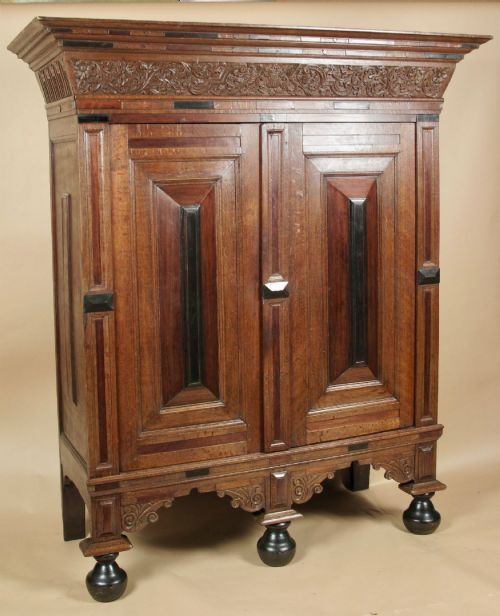
Carpenters constructed these items primarily from solid oak, often incorporating secondary timbers such as fruitwood, walnut, and pine for internal framing and panels. Workshops frequently applied contrasting veneers of ebony and rosewood to accentuate architectural mouldings and door panels.
Marquetry and fruitwood inlay techniques decorated drawer fronts and cabinet doors with floral or geometric motifs, requiring precise hand-cutting of thin wood sections. Blacksmiths forged brass handles, escutcheons, and hinges that secured heavy doors and drawers.
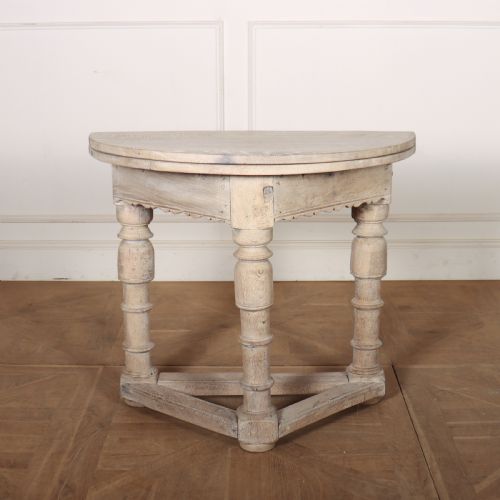
Cabinetmakers utilised pegged mortise and tenon joints to assemble heavy frames, ensuring stability for large structures like wardrobes and display cabinets. Bleaching treatments appeared on later interpretations, altering the raw timber tone.
Dutch Oak Furniture Retail Price Guide 2026
Typical asking prices for dutch oak furniture among the pieces listed under this phrase on Sellingantiques today, from the lower quarter to the upper quarter. They describe what is for sale here now, not the wider market.
Listings span from seventeenth-century kasten to twentieth-century revival oak cabinets, incorporating brass hardware and fruitwood inlay.
What varies in quality
Quality in these items depends upon the crispness of hand-carving and the structural integration of applied mouldings. Superior examples exhibit balanced proportions, particularly in bombé forms where the swelling curve demands precise joinery.
The selection and preservation of decorative veneers separate standard production from exceptional pieces. Finely executed marquetry displays tight alignment and varied grain orientation without lifting or excessive filling.
Original hardware and functional internal fittings elevate a piece above those altered with replacement brasses or modern drawer linings. The integrity of the underlying oak frame dictates long-term durability.
S&H Jewell
The Dutch Oak Furniture Glossary
- Bombé
- A swelling, convex curved front and sides found on chests of drawers and commodes. This distinctive profile requires advanced woodworking skill to shape solid timber or apply veneer over curved cores.
- Kast
- A large, two-door Dutch wardrobe or cupboard designed for storing linen and valuable household goods. These architectural pieces often feature heavy cornices and substantial paneling.
- Marquetry
- The art of applying decorative pieces of veneer to a structure to form intricate patterns or pictures. Craftsmen used various woods, including fruitwood and ebony, to create tonal contrast.
- Gelderse kussenkast
- A traditional cabinet originating from Gelderland featuring cushion-moulded door panels. These seventeenth-century forms display deep geometric projections.
- Writing slope
- A portable or table-standing desk featuring an angled lid for correspondence. Interiors typically incorporate small drawers and pigeonholes for stationery.
Dutch Oak Furniture: Frequently Asked Questions
What is a Dutch kas?
A kas is a large standing wardrobe traditionally used to store linen and household wealth in prosperous households.
These monumental pieces feature double doors and heavy cornices, often dismantled into sections for transport due to their size.
What woods were used besides oak?
Carpenters frequently combined oak with exotic and native decorative timbers for surface ornamentation.
Rosewood, ebony, walnut, and fruitwood appeared as veneers, stringing, and inlay work to create visual contrast against the primary oak structure.
How should I care for antique oak?
Maintain stable room humidity and keep wooden pieces away from direct heat sources to prevent timber splitting.
Apply traditional wax polish sparingly to nourish the grain without building up heavy residue on the surface.