



Dutch Golden Age Landscape
Dutch golden age landscape paintings are works of oil on canvas and panel capturing maritime scenes and woodland views from the seventeenth century.
Dutch Golden Age Landscape
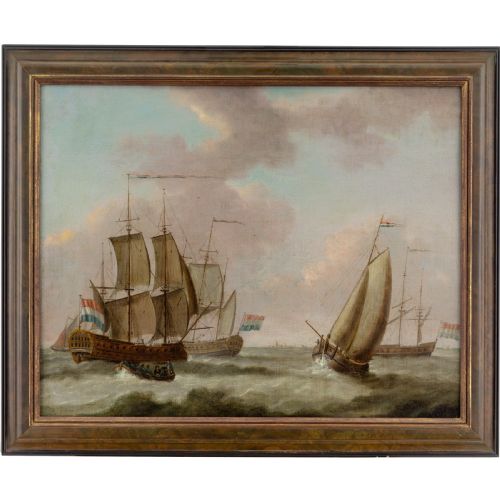
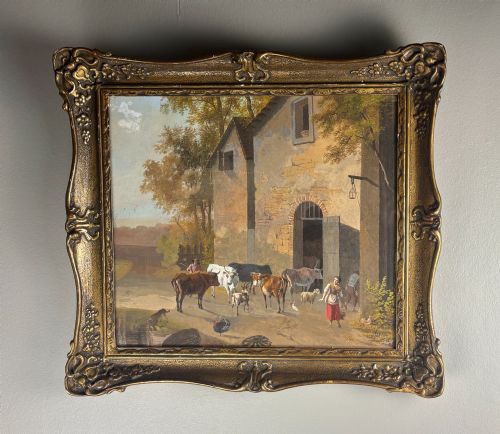
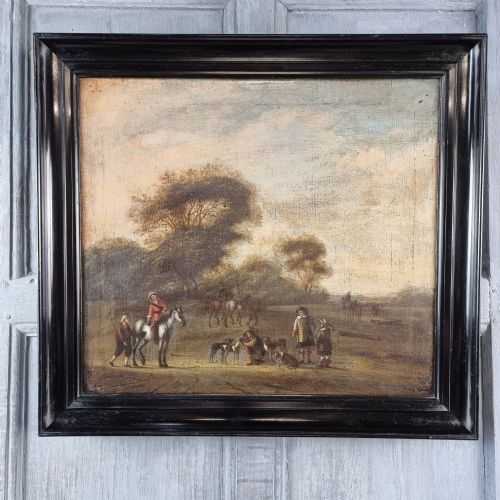
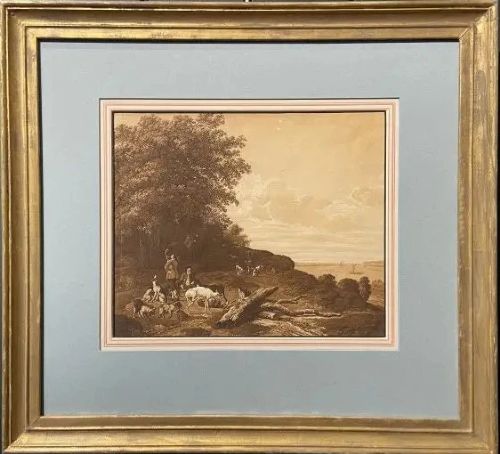
A dutch golden age landscape brings seventeenth century views of rivers, forests and maritime scenes into an interior, often framed in giltwood. These works depict everyday life, winter scenes and coastal gales with remarkable fidelity to nature.
The pieces on this page span the seventeenth, eighteenth and nineteenth centuries, alongside later revivals from nineteen twenty. You will encounter original seventeenth century panels and canvases alongside later interpretations influenced by the Dutch and Flemish tradition.
Subjects range from mountainous woodlands with figures and bathing nudes to shipyards and exotic birds. The dominant forms are framed oil paintings and fine art works executed on wood panel or canvas.
How they were made
Artists of this tradition worked primarily with oil paint on stretched canvas or prepared wood panels, building up luminous glazes to capture the play of light over water and foliage. The physical support often dictates the texture and preservation of the surface.
Dutch Golden Age Landscape Retail Price Guide 2026
Typical asking prices for dutch golden age landscape among the pieces listed under this phrase on Sellingantiques today, from the lower quarter to the upper quarter. They describe what is for sale here now, not the wider market.
Listings feature oil on canvas, wood panels and giltwood frames spanning the seventeenth to the nineteenth centuries.
What varies in quality
Quality rests upon the handling of light, atmospheric depth and the precision of the brushwork across canvas or panel. Master works demonstrate subtle tonal transitions that draw the viewer into the distance.
The integrity of the original paint layer and the character of the associated frame influence the standing of an individual painting. Earlier seventeenth century examples show distinct stylistic execution compared to later nineteenth century romantic interpretations.
Bonaventura Peeters·Johannes Lingelbach·Cornelis Van Poelenburgh·Marmaduke Cradock·Jacob Bogdani·James de Rijk·Jacob Knyff
The Dutch Golden Age Landscape Glossary
- Oil on Canvas
- A painting medium where pigments suspended in drying oils are applied to a woven fabric support. This combination allows for rich blending of colours and large scale compositions.
- Panel
- A rigid wooden support used by artists instead of canvas. These surfaces provide a stable base that often preserves fine detail over centuries.
- Giltwood
- Wood that has been treated with a thin layer of gold leaf or gold paint. It is commonly found on the decorative frames enclosing historic paintings.
- Baroque
- The dominant artistic style of the seventeenth century characterised by dramatic movement and deep contrast. It heavily influences the composition of these landscapes.
- Dutch School
- A term describing painters working within the Netherlands during the golden age period. It denotes a shared vocabulary of realism, landscape focus and domestic observation.
Dutch Golden Age Landscape: Frequently Asked Questions
How do I identify a seventeenth century canvas?
Examine the weave of the fabric and the preparation layers beneath the paint surface. Age imparts a specific network of fine cracking known as craquelure.
Compare the pigment handling and subject matter with documented examples from the same period to understand the workshop origins.
Where should I hang an oil painting?
Select a wall away from direct sunlight and steady heat sources to protect the delicate oil pigments and wooden supports. Stable environmental conditions prevent warping and fading.
Ensure the hanging hardware is securely fixed to support the weight of the canvas and its heavy giltwood frame.
What is the difference between panel and canvas?
Panels provide a rigid wooden foundation that resists puncture and holds fine detail with exceptional clarity. Canvas offers flexibility and supports larger compositions without excessive weight.
Both materials require careful humidity control to maintain the stability of the ground and paint layers over time.