

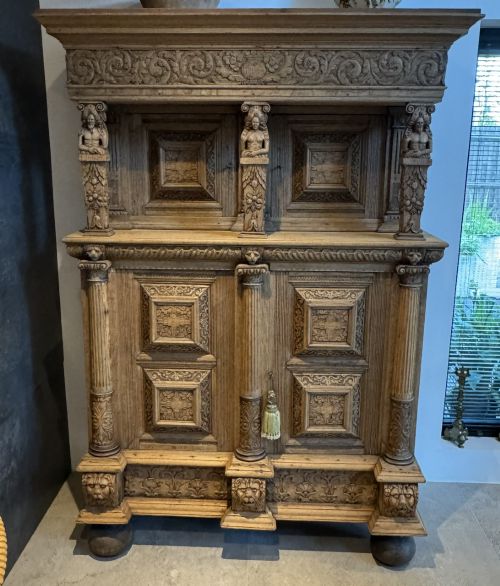


Dutch Carved Cupboard
These dutch carved cupboard pieces offer heavy timbers and ornate carved panels, bringing substantial historic presence to a room.
Dutch Carved Cupboard
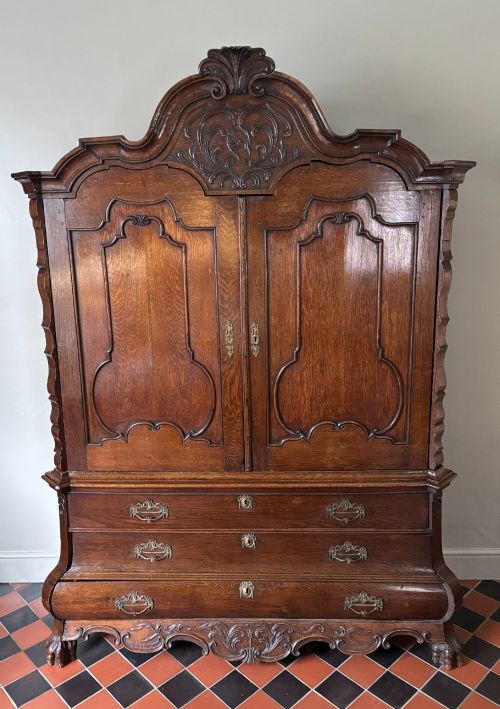
A dutch carved cupboard encompasses large linen presses, cabinets on stand, and substantial armoires spanning several centuries. Buyers meeting these pieces on this page encounter heavy timber construction, intricate surface carving, and traditional regional forms.
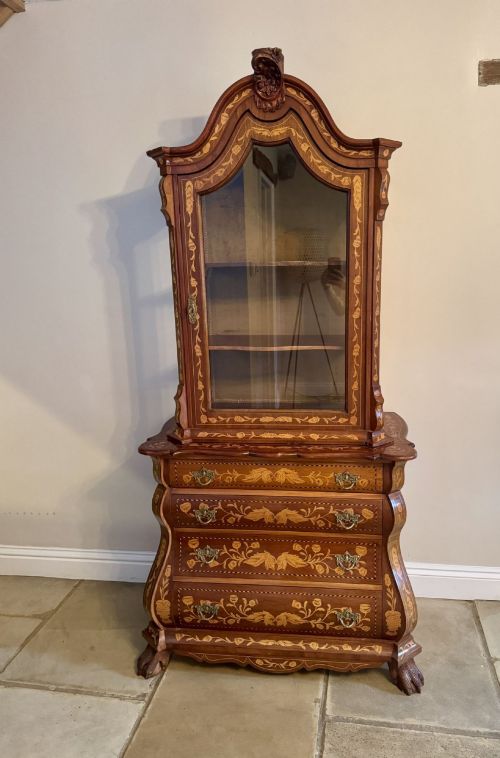
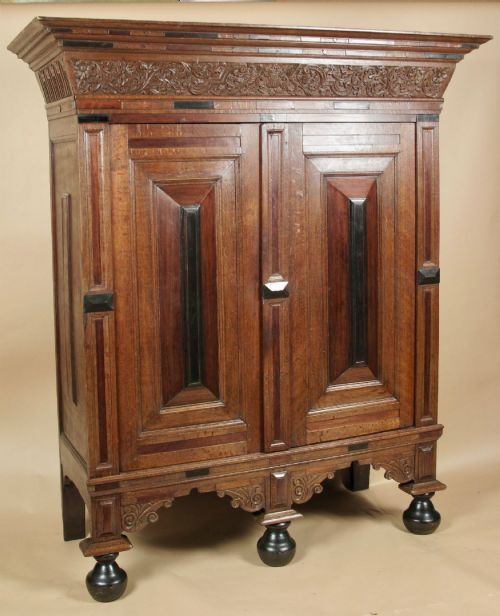
The selection ranges from seventeenth century oak and rosewood kussenkast armoires to eighteenth century marquetry bureau cabinet bookcases and nineteenth century burr walnut displays. Formats extend from monumental floor standing corner cabinets down to small apprentice chests of drawers.
Regional variations connect these items to Flemish and Dutch workshops, utilising styles from Dutch baroque and rococo to neoclassical revivals. The surviving examples demonstrate domestic storage traditions across centuries of European joinery.
How they were made
Makers built these pieces primarily from solid oak, walnut, and burr walnut, often incorporating contrasting timbers such as ebony, rosewood, and fruitwood for inlay and marquetry detailing. Joinery relied on heavy plank construction, pegged frames, and panelled doors designed to house household linens and valuables.
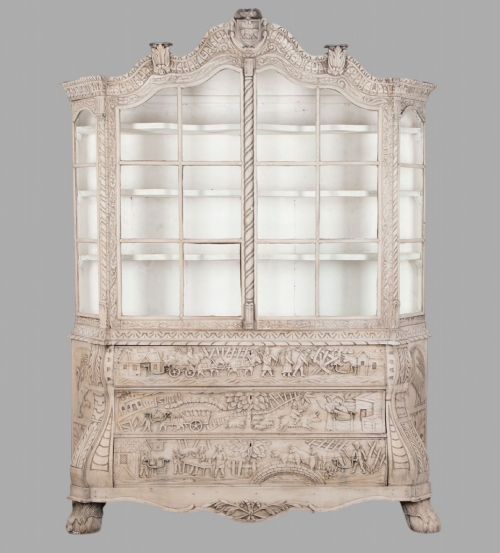
Carving technique defines the surface ornamentation, showing deep relief work alongside detailed floral and geometric marquetry patterns. Brass hardware, iron hinges, and glass panels appear on display variants to secure and showcase the contents.
Dutch Carved Cupboard Retail Price Guide 2026
Typical asking prices for dutch carved cupboard among the pieces listed under this phrase on Sellingantiques today, from the lower quarter to the upper quarter. They describe what is for sale here now, not the wider market.
Listings feature items spanning the sixteenth century to nineteen thirty, constructed in oak, walnut, burr walnut, rosewood, and pine.
What varies in quality
Quality separates through the crispness of the hand carving and the selection of figured veneers like burr walnut and rosewood against primary structural timbers. Superior examples maintain balanced proportions, original brass fittings, and cohesive marquetry patterns across large expanses of timber.
The integrity of the structural joinery and the survival of bleached or polished patination dictate the standing of individual items within the historical range. Pieces retaining their original stands, cornices, and internal shelving hold distinct character compared to heavily altered specimens.
The Dutch Carved Cupboard Glossary
- Kussenkast
- A large cushion-fronted wardrobe or armoire originating in the seventeenth century, typically featuring prominent raised cushion moulding on the doors. These substantial pieces represent high status domestic storage in Dutch interiors.
- Marquetry
- The art of applying decorative veneer pieces in various woods to form geometric patterns or pictorial scenes. Craftspeople used this technique extensively on eighteenth century cabinets and bureaus.
- Linen Press
- A tall storage piece designed with sliding trays or shelves in the upper section for pressed linens, sitting above a chest of drawers base. They provide deep internal capacity.
- Bombé
- A swelling, convex furniture shape characterised by rounded vertical profiles on the front and sides. This exuberant contour appears on nineteenth century display cabinets.
- Cabinet on Stand
- A raised storage box supported on a separate open frame or table base. This elevated form lightens the visual weight of heavy oak and walnut bodies.
Dutch Carved Cupboard: Frequently Asked Questions
How do I clean a dutch carved cupboard?
Dust surfaces regularly with a soft, dry cloth to prevent dirt accumulation on the carved panels and mouldings. Avoid modern liquid polishes that can damage historic wax and timber patination.
Feed dry wood occasionally with traditional beeswax applied sparingly and buffed thoroughly. Keep the cupboard away from direct heat sources and dramatic humidity shifts to protect the joints.
Where should I place a large cupboard?
Position these heavy pieces against solid interior walls capable of supporting substantial timber weight. Ensure the floor level is even so the large doors hang correctly and latch smoothly.
Keep them out of direct sunlight to prevent fading on walnut veneers and marquetry inlay work. Allow adequate clearance around the doors for full opening access.
Are these cupboards suitable for daily storage?
Internal shelving and deep linen press compartments offer practical capacity for modern clothing, blankets, and tableware. The historic construction handles regular household use when loaded evenly.
Check the interior depth and shelf configuration before storing bulky items. Sliding trays in press variants suit folded garments effectively.
How can I tell the period of a cabinet?
Examine the primary timber, construction methods, and hardware to gauge the manufacturing era. Seventeenth century pieces often display heavy oak and rosewood frames with cushion mouldings, whereas eighteenth century examples favour intricate marquetry.
Compare the style markers, such as baroque carving versus neoclassical restraint, against documented historical designs. Secondary timbers inside drawers and backboards also indicate the working period.