

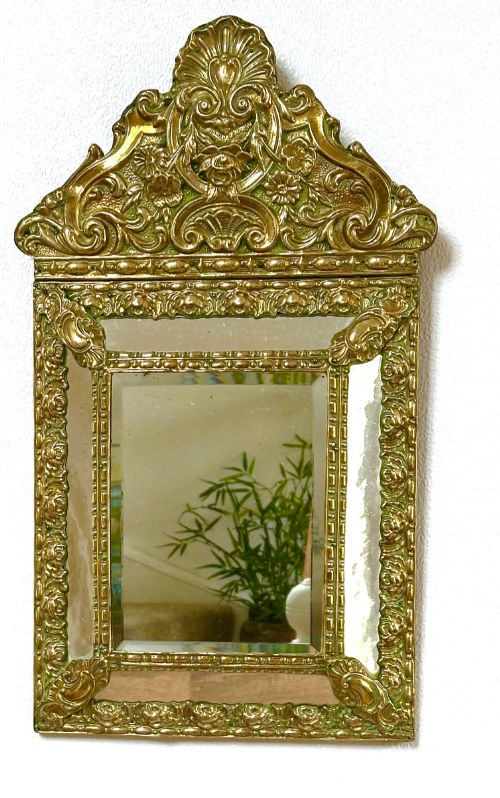


Dutch Brass Mirror
A Dutch brass mirror brings rich metalwork and deep frames to a wall, offering a striking focal point for any room.
Dutch Brass Mirror
A Dutch brass mirror is a distinct wall hanging defined by its reflective central glass and surrounding metal frame. Buyers searching for a Dutch brass mirror encounter wall mirrors that draw upon Victorian, Edwardian, and Regency influences.
The pieces appearing on this page most commonly take the form of cushion framed mirrors and wall mirrors. These items showcase historical revivals like Flemish Renaissance Revival and Dutch Baroque Revival within nineteenth and early twentieth century periods.
Makers shaped these frames from brass, ebonised wood, and tortoiseshell to create heavy, decorative surrounds. Such mirrors serve as functional hall accents and reception room pieces that capture light effectively.
How they were made
Craftsmen built these frames using brass, embossed brass, and patinated brass mounted over wooden structures. Metal sheets underwent repoussé and hand embossing techniques to raise detailed ornamental designs across the surface.
Makers incorporated ebonised wood and tortoiseshell elements to contrast against the polished and patinated metal borders. Mirror glass was then fitted securely into the deep cushion frames to complete the wall hanging.
Dutch Brass Mirror Retail Price Guide 2026
Typical asking prices for dutch brass mirror among the pieces listed under this phrase on Sellingantiques today, from the lower quarter to the upper quarter. They describe what is for sale here now, not the wider market.
Materials recorded across the inventory include brass, glass, ebonised wood, and tortoiseshell.
What varies in quality
The depth and crispness of the repoussé work separate standard examples from finer pieces. Sharply defined metal relief and careful handling of patinated brass show superior workshop skill.
The choice of secondary materials such as ebonised wood or tortoiseshell alters the visual weight of the frame. Superior construction integrates the glass and metal securely within the wooden carcass.
The Dutch Brass Mirror Glossary
- Repoussé
- Metalworking technique where the metal is hammered from the reverse side to form a raised design in relief. This method creates the tactile surface decoration seen on brass frames.
- Cushion framed
- A frame profile that curves outward like a stuffed cushion before meeting the outer edge. This bulbous shape provides extra surface area for decorative metalwork.
- Ebonised wood
- Timber treated to imitate the dark, dense appearance of ebony wood. It supplies a dark background that highlights the bright brass elements.
- Patinated brass
- Metal that has developed a natural surface sheen and deeper tone through age and oxidation. This finish gives the brass a warmer, less reflective appearance than new metal.
Dutch Brass Mirror: Frequently Asked Questions
What is a Dutch brass mirror?
A Dutch brass mirror is a decorative wall mirror featuring a prominent metal frame, often worked in relief.
These pieces draw on historical revival styles from the nineteenth and early twentieth centuries.
How were these mirrors used?
They functioned primarily as decorative wall hangings in reception rooms, hallways, and living spaces.
Their reflective glass and shining metal borders helped to brighten darker corners of period homes.
How do I style a Dutch brass mirror?
Hang the piece on a plain wall where the textured metal frame can stand out without visual clutter.
Pair it with traditional wooden furniture to complement the nineteenth century aesthetic of the brass and wood.
How can I tell the period of a mirror?
Examine the construction methods of the frame and the backing materials used behind the glass.
Stylistic cues such as Flemish Renaissance Revival details help point towards Victorian or Edwardian production dates.