


Dutch Botanical Still Life
A dutch botanical still life brings rich centuries of floral artistry into a room, offering enduring depth through layered oil paints and period frames.
Dutch Botanical Still Life
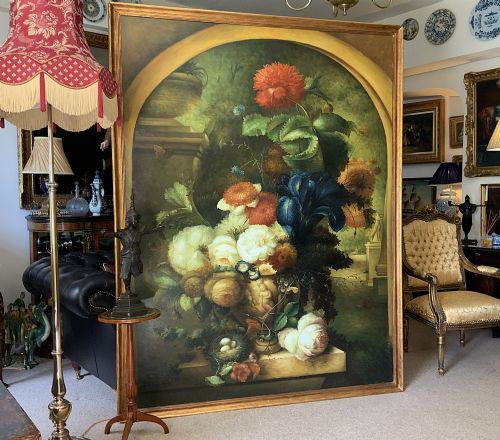
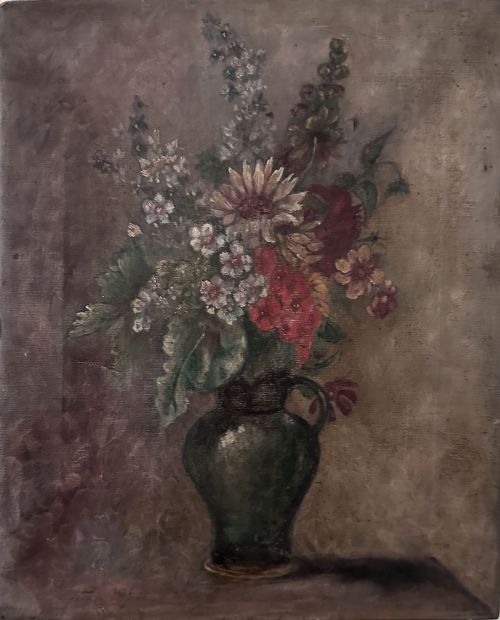
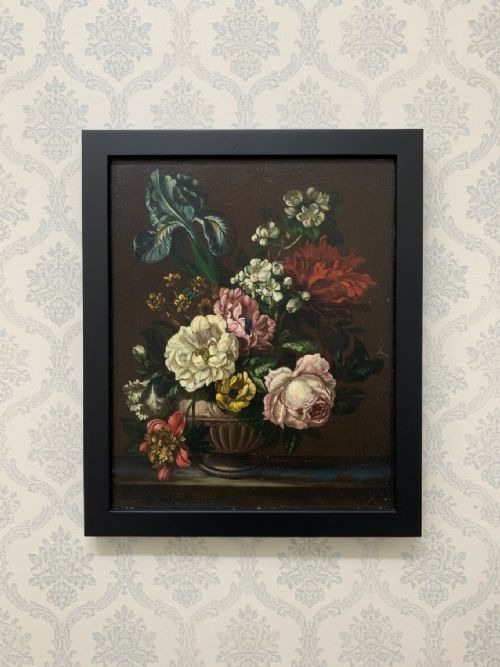
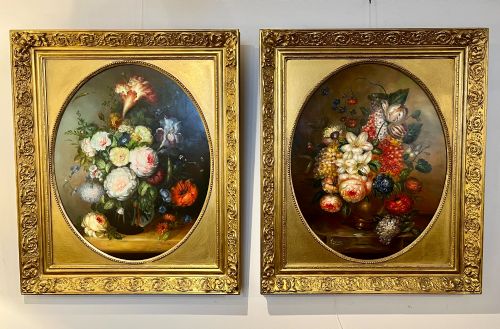
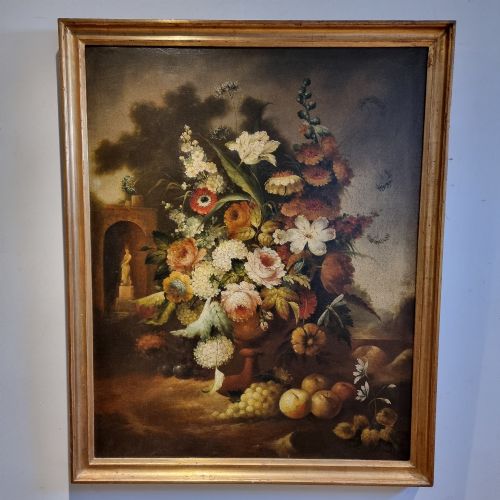
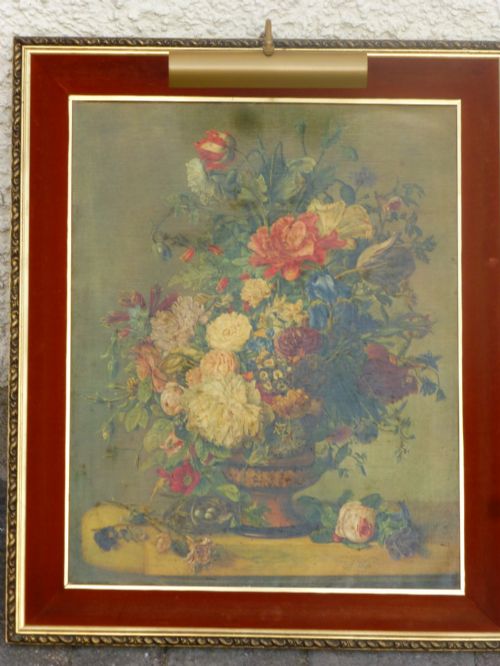
A dutch botanical still life captures intricate arrangements of flowers and fruit, rooted primarily in the traditions of the 17th century and later revivals. Buyers encounter works ranging from early oil paintings on oak panel to later canvas interpretations and decorative oleographs.
The selections span several periods, encompassing genuine 17th century pieces alongside 18th century compositions and 20th century revivals. Forms vary from monumental canvases to intimate panels housed in ornate gilded wood frames.
Materials and construction methods
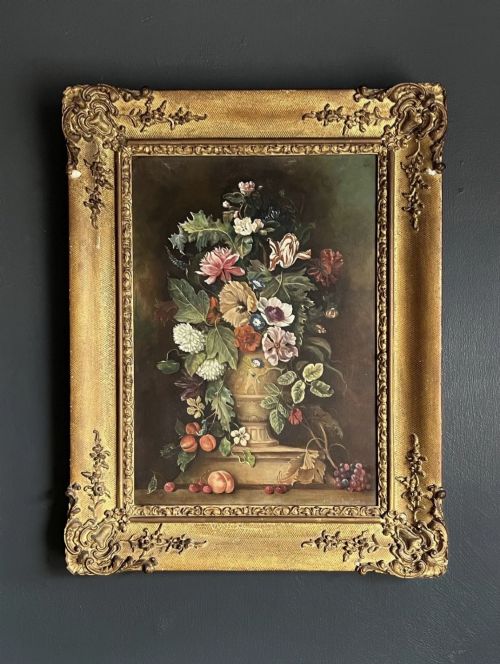
Artists traditionally applied oil paint to stretched canvas or prepared wooden panels such as oak, building rich textures and deep tones. Canvases and panels frequently reside within heavy giltwood or gesso frames finished with gold leaf.
Makers utilised precise brushwork to render petals, leaves, and glass vessels with remarkable realism. Framing techniques combined carved wood with moulded gesso to create the opulent surrounds typical of the Dutch Golden Age style.
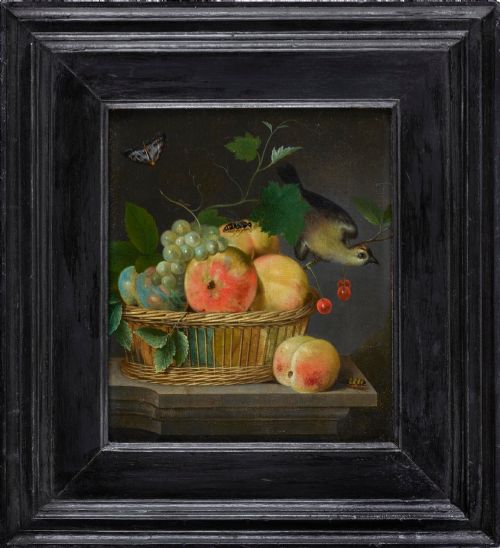
Even a painted wicker basket comes complete with an unexpected visiting bird.
Defining factors of quality
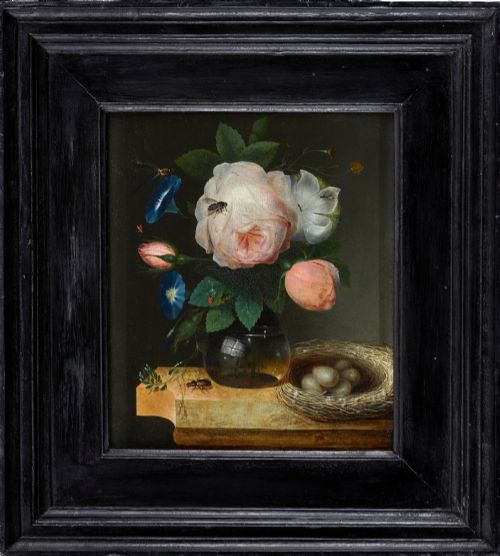
Quality rests in the precision of the brushwork and the naturalism of the floral composition, distinguishing masterly depth from simpler decorative works. The harmony between the painting and its original or period frame heavily influences the overall standard.
The handling of light and shadow, particularly in the rendering of glass vases and dewdrops, separates superior pieces from standard workshop output. Preservation of the underlying canvas or panel also dictates the integrity of the surviving artwork.
Gaspar Peeter Verbruggen·Simon Pietersz Verelst·Terence Loudon·William Jones of Bath·Calzolari
The Dutch Botanical Still Life Glossary
- Oil paint
- A slow-drying medium consisting of pigments suspended in a drying oil, most commonly linseed oil. This medium allows artists to achieve rich colour saturation and subtle tonal gradations.
- Gesso
- A paint mixture consisting of a binder mixed with chalk, gypsum, or pigment, used to prepare wood surfaces or create raised ornament on frames. It provides a smooth base for subsequent gilding.
- Giltwood
- Wood that has been treated and covered with a thin layer of gold leaf or metallic powder. It forms the decorative border characteristic of many formal European picture frames.
- Panel
- A rigid flat piece of wood, frequently oak, utilised as a primary support for paintings before canvas gained widespread use. Panels provide a stable surface for detailed historical compositions.
- Trompe l'oeil
- An art technique involving extremely realistic imagery that creates the optical illusion that the depicted objects exist in three dimensions. It often plays with visual perception in still life subjects.
Dutch Botanical Still Life: Frequently Asked Questions
How do I hang a heavy framed oil painting?
Heavy framed artworks require secure picture hooks fixed directly into wall studs or heavy-duty wall anchors suitable for the weight. Ensure the hanging wire and D-rings on the rear of the frame are robust enough to support the piece safely.
Position the artwork at eye level to ensure optimal viewing of the botanical details. Avoid hanging paintings in areas subject to direct sunlight or damp conditions to protect the oil paint and gilded frame.
What defines the Dutch Golden Age style?
The Dutch Golden Age style is characterised by meticulous attention to detail, dramatic lighting against dark backgrounds, and realistic botanical arrangements. Paintings often depict flora with scientific precision while conveying symbolic themes of transience.
Works in this tradition utilise rich oil pigments to create luminous petals, insects, and water droplets. Subsequent revivals imitated these precise techniques and compositional layouts.
Are these paintings executed on canvas or wood?
The pieces utilise a variety of supports depending on their period and origin, including stretched canvas and rigid wood panels like oak. Earlier works and specific regional schools frequently favoured wooden panels for stability.
Later revivals and 20th-century interpretations more commonly employed canvas or modern board supports. Examining the reverse of the artwork reveals the construction material.