




Droplet Crystal Ceiling Fixture
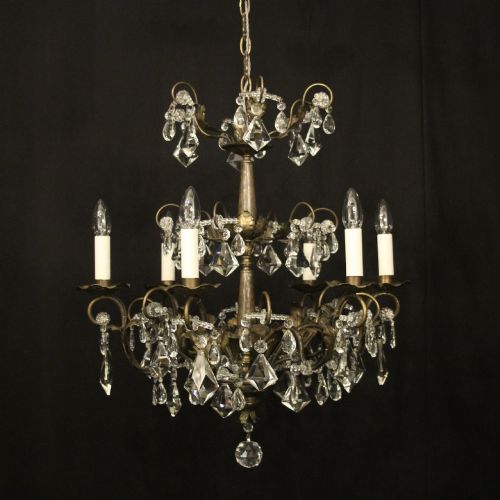
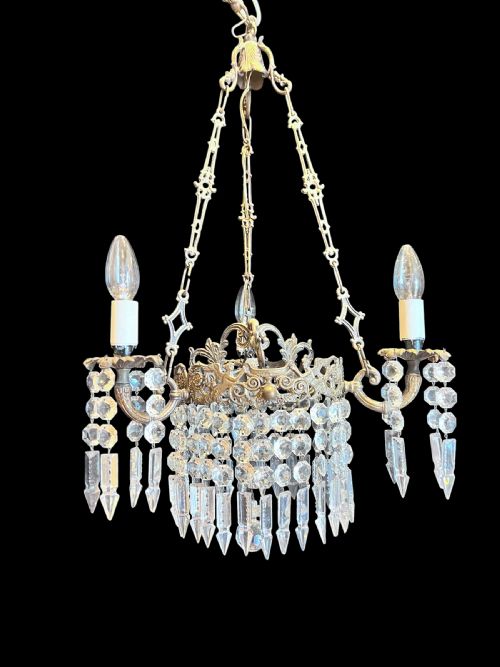
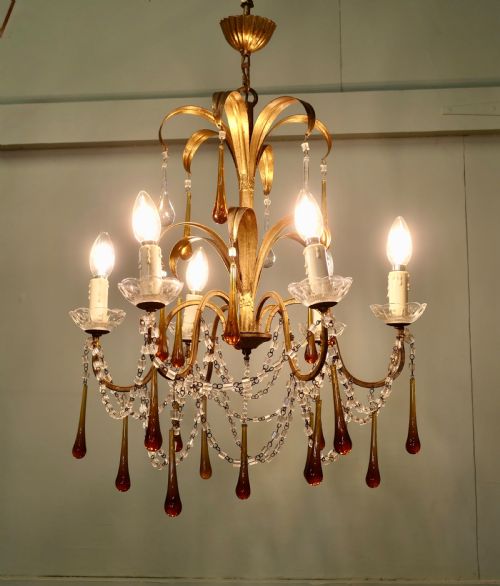
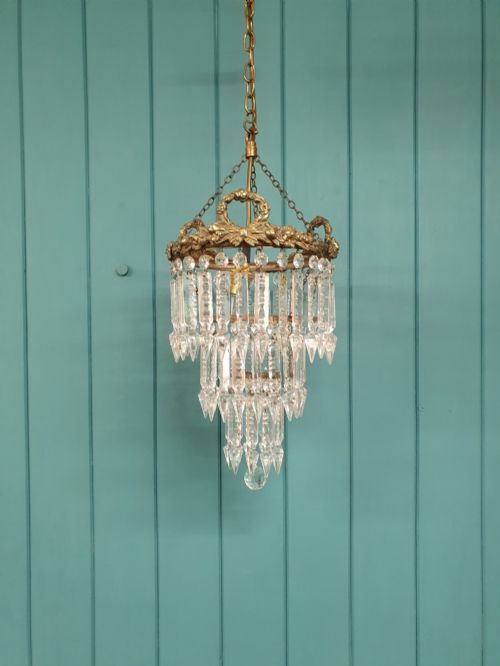
These droplet crystal ceiling fixture examples bring together cut glass and brass frames to cast bright, refractive light across a room.
Droplet Crystal Ceiling Fixture
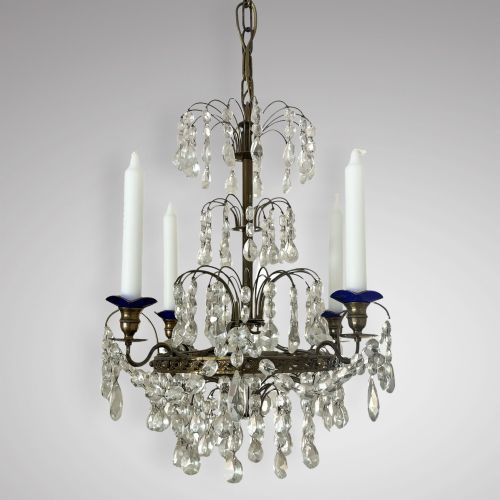
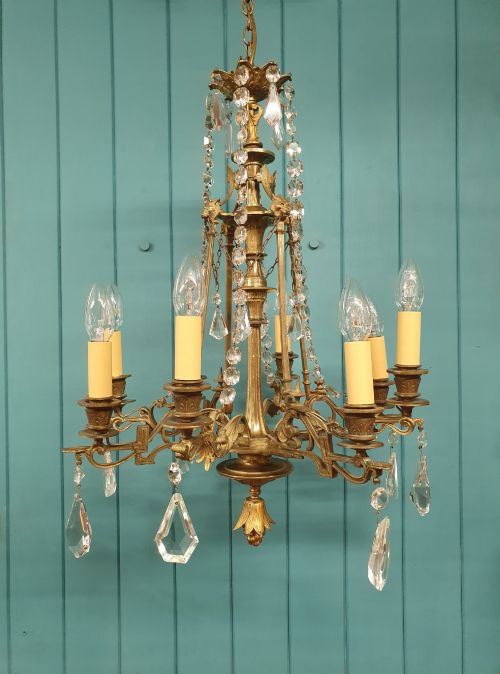
A droplet crystal ceiling fixture encompasses chandeliers, pendant lights, and flush plafonniere ceiling lighting designed to catch and refract light through suspended glass components. When searching for a droplet crystal ceiling fixture, buyers encounter pieces primarily originating from the Edwardian era through the nineteen-thirties.
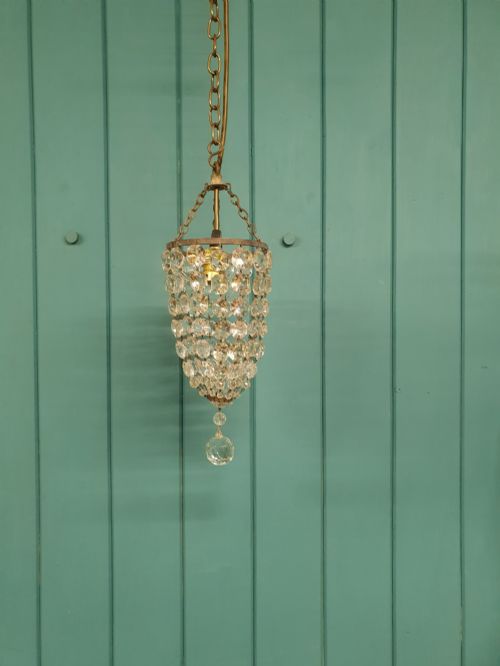
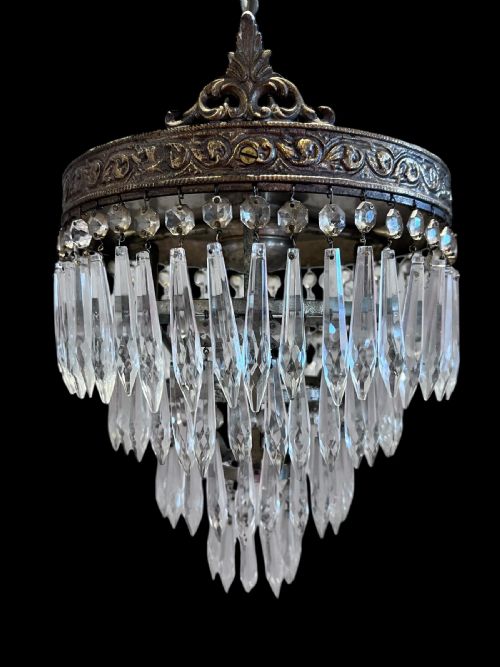
The selection ranges from compact single-light bag chandeliers and small wire frames measuring mere inches to grand multi-branched Italian and French fixtures featuring numerous arms. Common variations include basket shapes, tiered designs, and waterfall configurations hung with crystal teardrops.
Materials span brass, gilt metal, silvered metal, and iron frameworks paired with clear cut glass, amber crystal, and coloured glass elements. Styles lean heavily towards French Chateau, Edwardian, Art Deco, Italian Neo-Classical, and French Empire Revival aesthetics.
How They Were Made
The structural framework relies on cast and spun metals such as brass, gilt metal, and silvered metal, shaped into arms, rings, and wire baskets to support the weight of the glass. Metal components often incorporate decorative details like lion masks or floral motifs.
Glass elements are formed from cut glass, crystal, and moulded glass, shaped into beads, pendants, teardrops, and larger bowls before being wired individually to the metal frame by hand. Prisms and droplets are positioned precisely to maximise light refraction from internal bulb configurations.
Listings span several decades, featuring materials from basic brass and iron to cut crystal glass, alongside French and Italian stylistic influences.
What Varies in Quality
Quality rests upon the clarity and cutting of the glass components, where deeply faceted crystal creates sharper light refraction than simpler moulded glass. The density and weight of the metal frame also determine stability, particularly in larger multi-tiered configurations.
The integration of the design defines superior examples, visible in how closely the metalwork complements the arrangement of the crystal drops and the proportion of the frame to the glass elements.
The Droplet Crystal Ceiling Fixture Glossary
- Bag chandelier
- A lighting fixture featuring a flattened or rounded base formed by a dense mesh of glass beads or drops tapering towards the ceiling.
- Plafoniere
- A ceiling-mounted lighting fixture that sits close to the surface, often taking the form of a single shallow bowl or basket.
- Teardrop
- A drop-shaped crystal pendant suspended from the arms or rim of a chandelier to refract light.
- Cut glass
- Glass that has been decoratively shaped and faceted using a grinding wheel to enhance its reflective properties.
Droplet Crystal Ceiling Fixture: Frequently Asked Questions
How do I clean a crystal chandelier?
Dust the fixture gently with a soft feather duster or microfibre cloth to remove loose particles. For deeper cleaning, apply a specialist glass cleaner to a cloth and wipe each droplet individually rather than spraying the fixture directly.
Support hanging crystals from beneath with one hand while wiping to avoid straining the wire fixings. Ensure the power remains switched off until every component dries completely.
What ceiling height do these fixtures need?
Smaller bag chandeliers and compact flush plafonnieres suit standard room heights where clearance is limited. Multi-branched chandeliers with extended drops require higher ceilings to hang properly without obstructing movement below.
Consider the drop measurement of the specific lighting fixture against your room proportions before installation. Positioning a chandelier over a dining table allows for a lower hanging height than placing it in an open hallway.
How do I tell Edwardian pieces apart?
Edwardian lighting often incorporates lighter brass frames and delicate wirework arrangements holding smaller bead sections and drops. These pieces reflect the transitional tastes of the early twentieth century, balancing ornate metal casting with refined glass work.
Later nineteen-thirties designs lean towards geometric tiered structures and bolder cut glass basket forms. Examining the construction of the metal frame and the cut of the glass helps distinguish these periods.
Can these lights handle modern bulbs?
Most antique fixtures accommodate modern LED candle bulbs provided the lamp holders match current electrical standards. Rewiring is frequently necessary for older pieces to ensure safe operation with contemporary household circuits.
Consult a qualified electrician to inspect the internal wiring and update lamp holders where needed. Selecting low-heat LED bulbs reduces thermal stress on fragile antique glass elements.