




Drop Flap Writing Table
A drop flap writing table offers a compact surface that expands when needed, bringing period character to a study or drawing room.
Drop Flap Writing Table
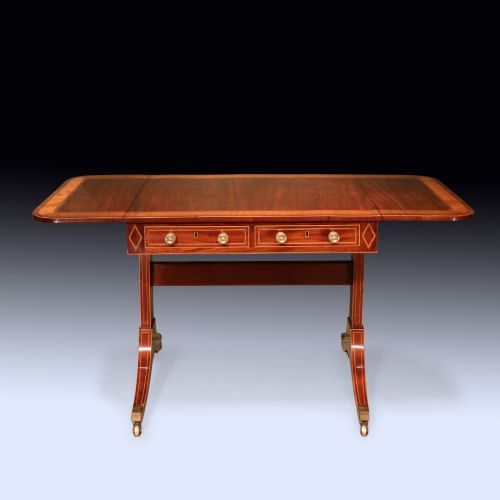
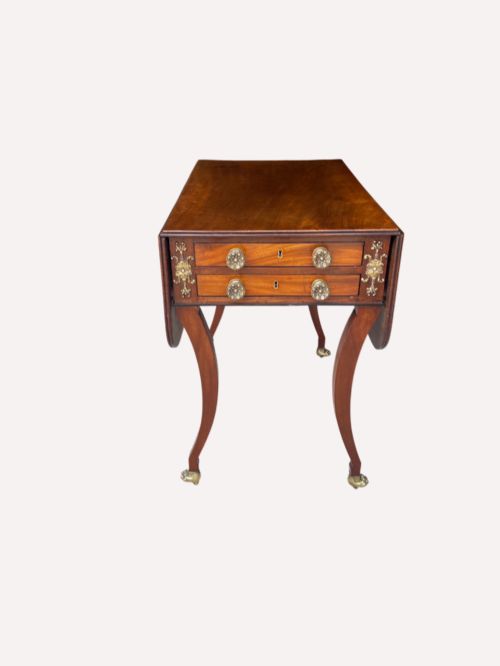
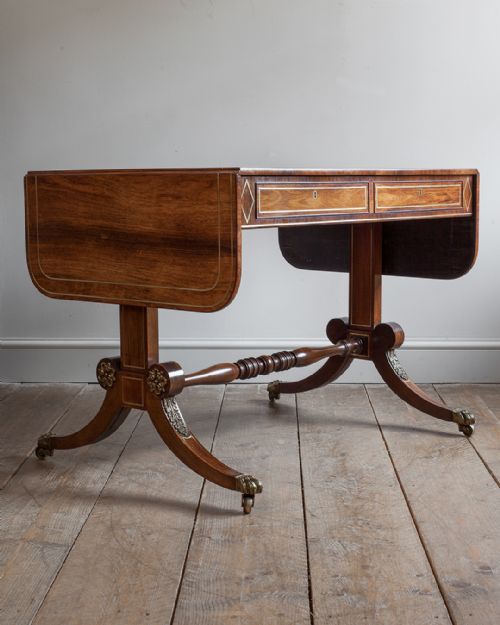
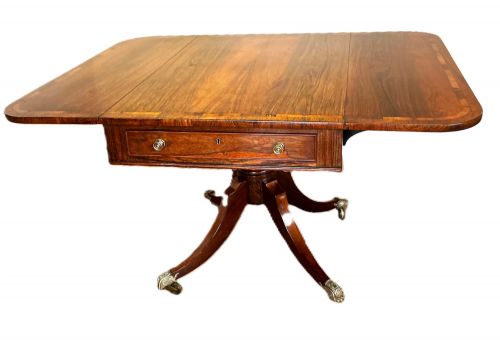
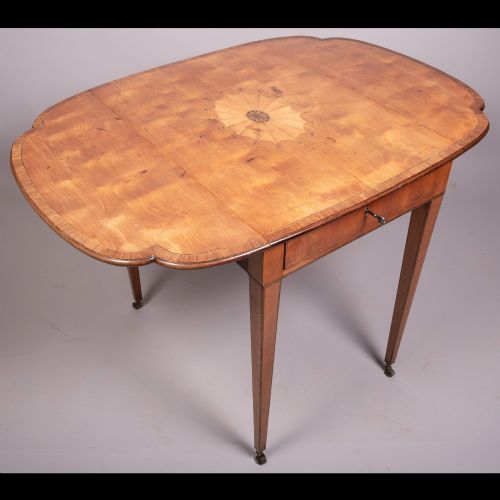
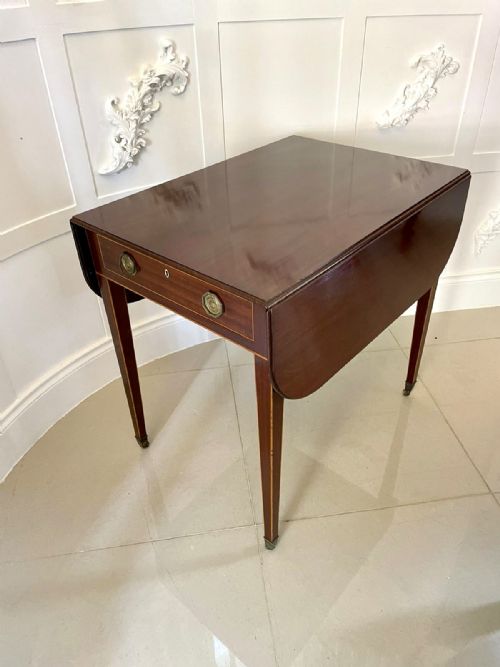
A drop flap writing table is a versatile surface designed for correspondence and reading, frequently taking the form of a sofa table, Pembroke table, or dedicated writing desk. These pieces appear across Georgian, Regency, Victorian, and Edwardian periods, demonstrating how cabinetmakers adapted writing furniture for domestic sitting rooms.
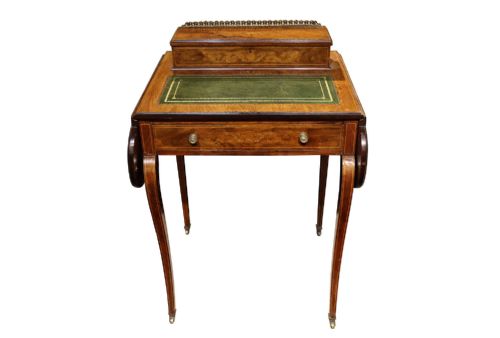
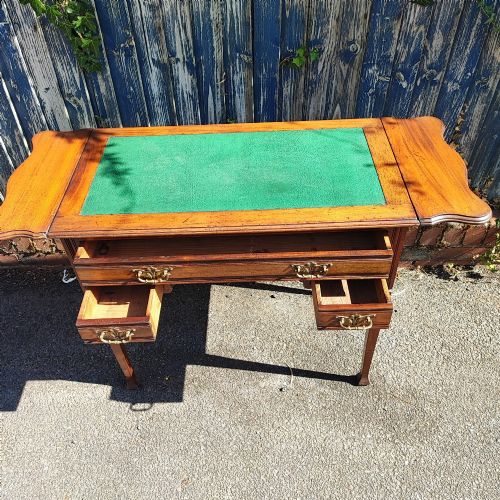
The most common examples on this page are Regency and 19th-century mahogany or rosewood sofa tables featuring drop leaves, alongside Edwardian inlaid rosewood lady's writing tables and Georgian Pembroke tables. Buyers encounter forms ranging from simple side tables with drop flaps to elaborate library and centre tables with fitted interiors.
Makers utilised various secondary forms such as occasional tables, side tables, and occasional desks to provide a practical writing surface without dominating the floor space of a room. Each period introduced subtle proportions and specific leg configurations, from slender tapered legs to robust turned pedestals.
How they were made
Construction relies heavily on timbers such as mahogany, rosewood, and walnut, often enhanced with contrasting wood inlay, satinwood inlay, or ebony stringing to define the borders of the flaps and drawers. Cabinetmakers selected these dense hardwoods for stability, allowing the drop leaves to operate smoothly on hinges without sagging under pressure.
Secondary decorative details incorporate brass fittings, such as casters and drawer pulls, alongside fitted interiors featuring small compartments and leather-lined writing surfaces. The integration of crossbanding, particularly in rosewood and mahogany, highlights the structural joints and showcases the natural grain of the timber.
Drop Flap Writing Table Retail Price Guide 2026
Typical asking prices for drop flap writing table among the pieces listed under this phrase on Sellingantiques today, from the lower quarter to the upper quarter. They describe what is for sale here now, not the wider market.
The selection includes sofa tables, Pembroke tables, and lady's writing desks equipped with fitted interiors and brass casters.
What varies in quality
Quality rests in the choice of timber veneers, the precision of the wood inlay or stringing, and the integrity of the drop flap mechanism. Superior examples display carefully matched grain patterns across the top and the folding leaves, ensuring a seamless appearance when the table is fully extended.
The sophistication of the internal fittings, such as custom drawers with tidy compartments and original brass hardware, elevates the standing of a piece. Finer tables exhibit crisp carving, well-fitted hinges that support the drop leaves evenly, and robust underframes that eliminate wobbling.
James Mein Kelso
The Drop Flap Writing Table Glossary
- Drop flap
- A hinged leaf attached to the side of a table that folds down when not in use and lifts to extend the surface area. This mechanism allows the furniture to adapt to smaller rooms.
- Pembroke table
- A small rectangular table featuring two hinged drop leaves on opposite sides and usually one or two drawers. It emerged in the 18th century as a convenient breakfast or writing table.
- Sofa table
- A type of library or writing table designed to stand in front of a sofa, typically featuring drop leaves on either end and trestle supports or twin pillars. They date predominantly from the Regency and late Georgian eras.
- Crossbanding
- A decorative border of veneer laid around the edge of a table top or drawer front with the grain running perpendicular to the central panel. It frames the main timber.
- Stringing
- A thin inlay of contrasting wood or light-coloured material set into grooves on the surface to create delicate linear patterns. It defines the edges of drawers and tabletops.
Drop Flap Writing Table: Frequently Asked Questions
What is a drop flap writing table?
A drop flap writing table is a functional antique surface with hinged leaves that extend the top when needed. They were built primarily during the Georgian, Regency, and Edwardian periods for writing and light household tasks.
These pieces combine the utility of a desk with the compact footprint of a side or sofa table, making them adaptable for modern living spaces.
How do I identify a Regency writing table?
Regency tables often feature rich rosewood or mahogany timbers, bold brass details, and distinct pedestal or saber leg supports. Look for fine ebony stringing and symmetrical proportions characteristic of the early 19th century.
Many incorporate drop leaves designed to rest beside a sofa or serve as a compact library desk.
Where should I place a drop flap table?
These tables suit hallways, drawing rooms, or studies where floor space changes throughout the day. Drop the leaves to keep the table flat against a wall or open them when you need a writing surface.
Their finished backs and detailed pedestals mean they often look best standing away from the wall as a centre or sofa table.