



Drinks Cupboard on Legs
A drinks cupboard on legs brings freestanding height and concealed storage to a room, lifting bottles and glassware neatly off the floor.
Drinks Cupboard on Legs
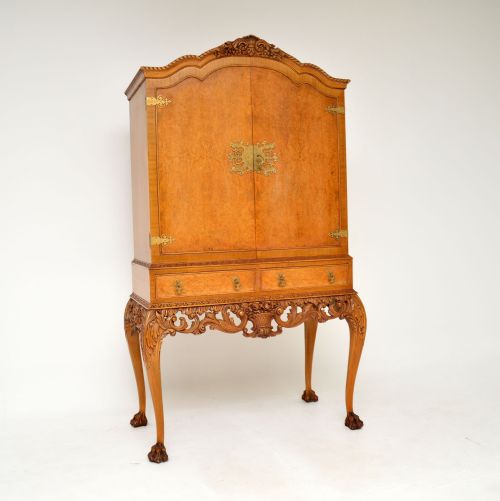
When you search for a drinks cupboard on legs, you encounter elevated storage pieces designed specifically to hold bottles, decanters, and glassware off the ground. These take the form of cocktail cabinets, side cabinets, and traditional cabinets on stands.
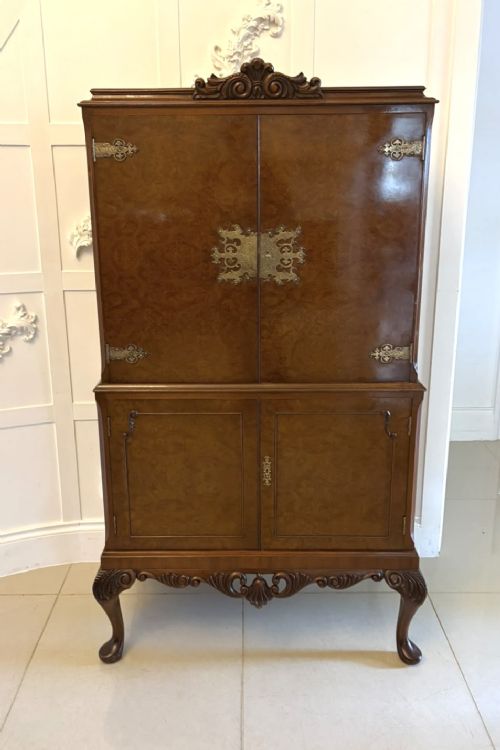
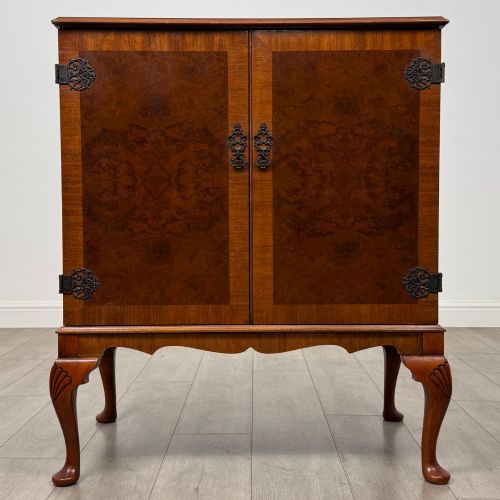
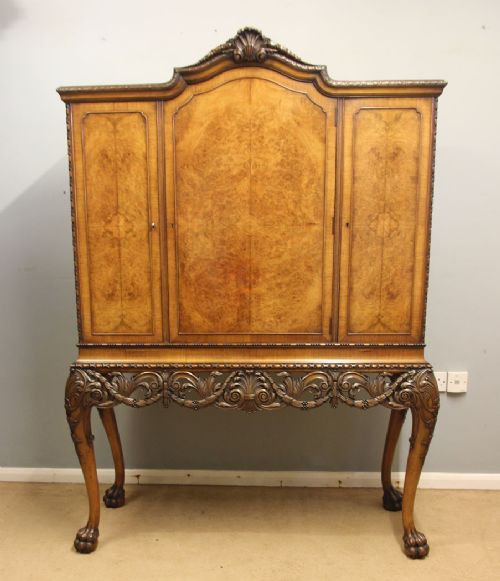
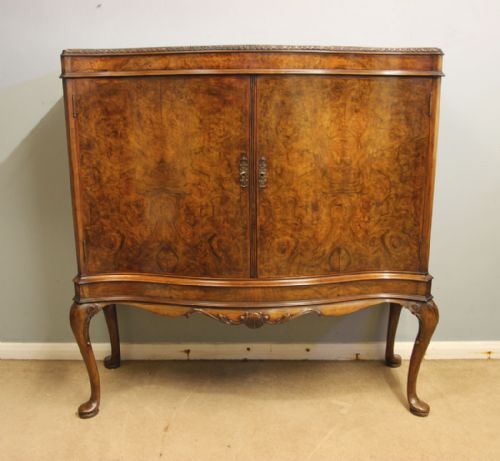
The most frequent versions you meet on this page date from the 1920s and 1930s, often rendered in burr walnut with a fitted interior. Earlier examples stretch back to the 18th Century and the Victorian era, presenting heavy carved oak or lacquered finishes on raised bases.
How they were made
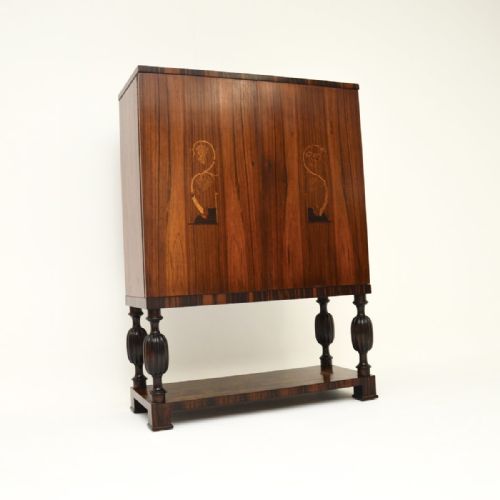
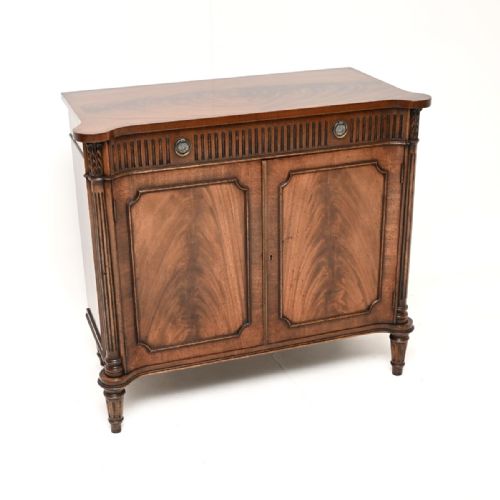
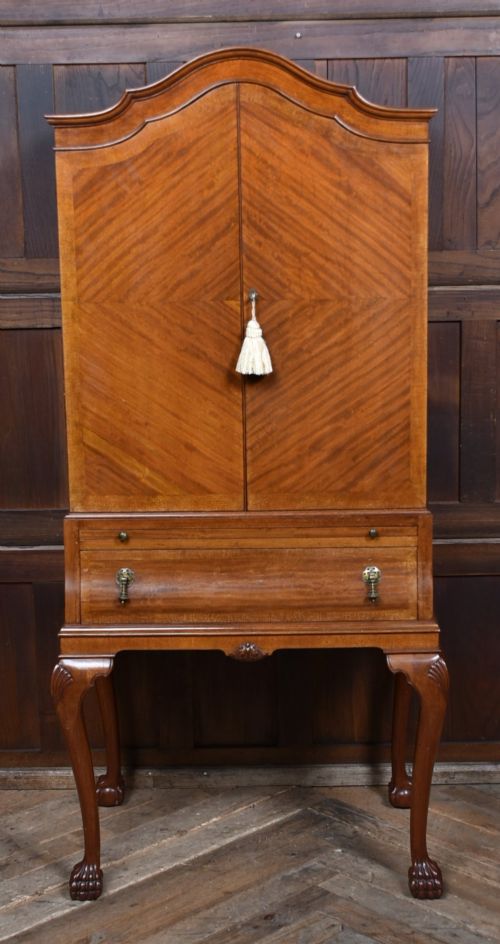
Cabinet makers utilised choice timbers such as walnut, burr walnut, mahogany, oak, and rosewood over solid wood carcases. Many surfaces rely on decorative veneers to create figured grain patterns across the front doors.
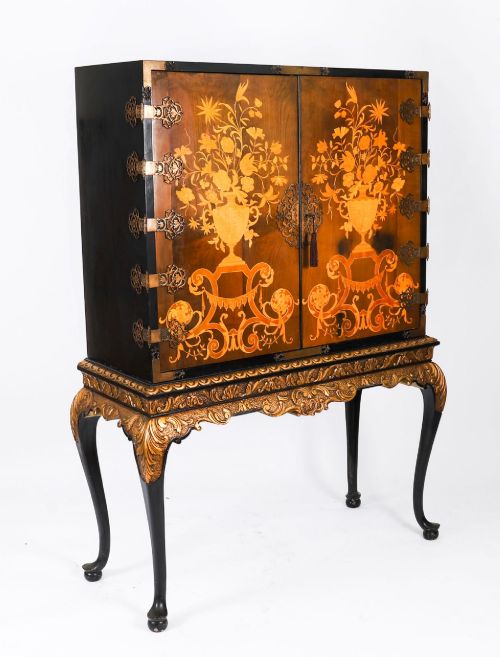
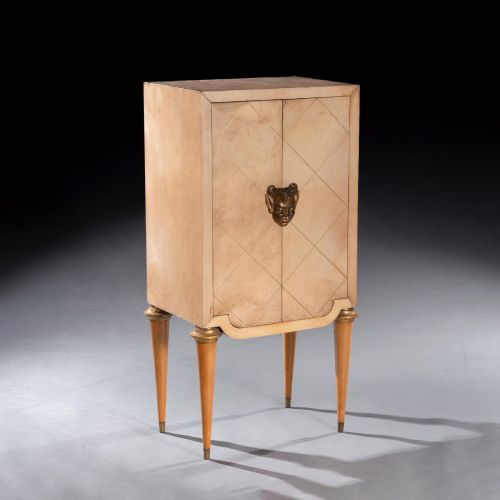
Details such as brass handles, glass panels, and specialised internal fittings give these elevated pieces their function. Surface decoration ranges from lacquer work and inlay to parchment panels and carved lion masks.
Drinks Cupboard on Legs Retail Price Guide 2026
Typical asking prices for drinks cupboard on legs among the pieces listed under this phrase on Sellingantiques today, from the lower quarter to the upper quarter. They describe what is for sale here now, not the wider market.
Listings feature walnut, mahogany, and oak across periods spanning the 18th century to the 1940s.
What varies in quality
The depth of figure in the wood veneer dictates much of the visual weight, with matched burr walnut standing apart from plain timber boards. Grain alignment across multiple doors shows the care taken by the original maker.
Internal joinery and the execution of fitted compartments separate standard utility from finer cabinet work. The proportion of the legs relative to the main body creates a balanced silhouette that marks out better examples.
Maurice Jallot
The Drinks Cupboard on Legs Glossary
- Burr walnut
- A figured wood veneer taken from the wart-like growths on walnut trees. It provides swirling patterns across cabinet doors.
- Cabinet on stand
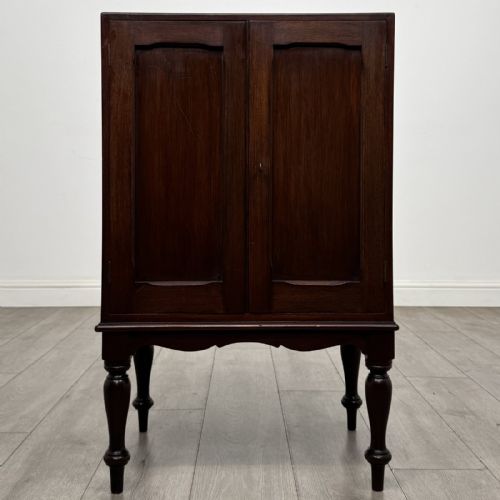
- A freestanding storage box elevated on a separate framework of legs. This form lifts the main compartment to a convenient height.
- Cocktail cabinet
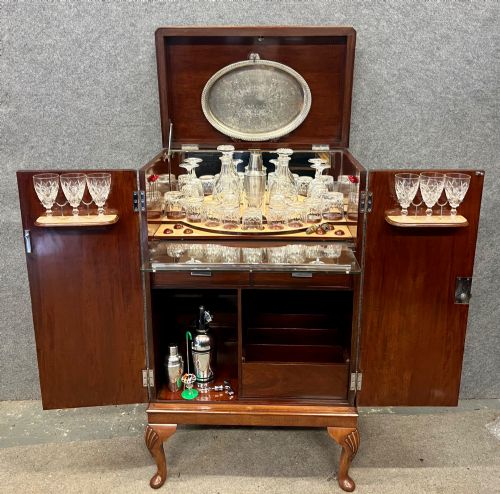
- A specialised piece designed for mixing drinks, containing fitted interior shelves and mirrored surfaces. It conceals glassware behind hinged doors.
- Queen Anne style
- A decorative movement characterised by cabriole legs and restrained curves. It influenced furniture design across several revival periods.
- Lacquered cabinet
- A storage piece finished with layers of glossy resin paint. This technique often incorporates oriental motifs and red or dark pigments.
Drinks Cupboard on Legs: Frequently Asked Questions
What is a drinks cupboard on legs?
A drinks cupboard on legs is an elevated storage cabinet designed to hold bottles, glasses, and barware. It combines a main compartment with a raised stand or supportive legs.
These pieces range from specialised 1930s cocktail units to 18th-century cabinets on stands. They keep entertaining supplies contained within a single piece of furniture.
How were these cabinets used?
Owners used these cabinets to store spirits, wine bottles, and drinking glasses in entertaining spaces. The raised height made it easy to pour drinks without bending down.
Many interiors included pull-down mixing slides, mirrored backs, and specialised racks for bottles. They served as social hubs in dining rooms and sitting rooms.
How do I style one in a room?
Place a drinks cupboard on legs against a flat wall in a living room, dining area, or hallway where you entertain. The elevated design allows light to pass underneath, keeping the floor space visually open.
Pair the timber finish with complementary seating or occasional tables. Keep the top surface clear or display a single tray and decanter.
How do I tell the periods apart?
Examine the timber, hardware, and structural silhouette to determine the age of a cabinet. 1920s and 1930s examples often feature burr walnut veneers and fitted cocktail interiors, reflecting Art Deco or revival tastes.
Earlier pieces from the 18th century or Victorian era display heavier oak construction, hand-carved details, or lacquered surfaces. Revival styles borrow these older motifs while retaining the construction methods of their own decade.