



Dressing Table Ring Box
A dressing table ring box keeps cherished rings close at hand, bringing refined silver and tortoiseshell to the morning routine.
Dressing Table Ring Box
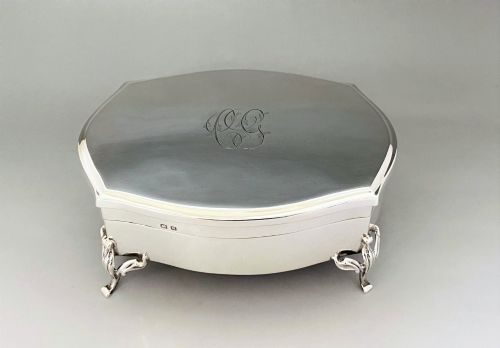
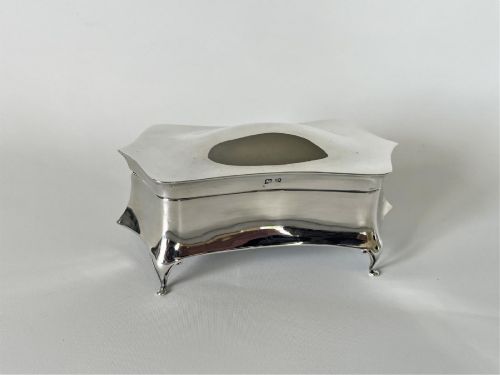
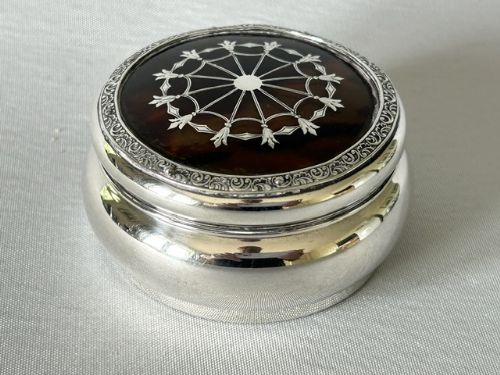
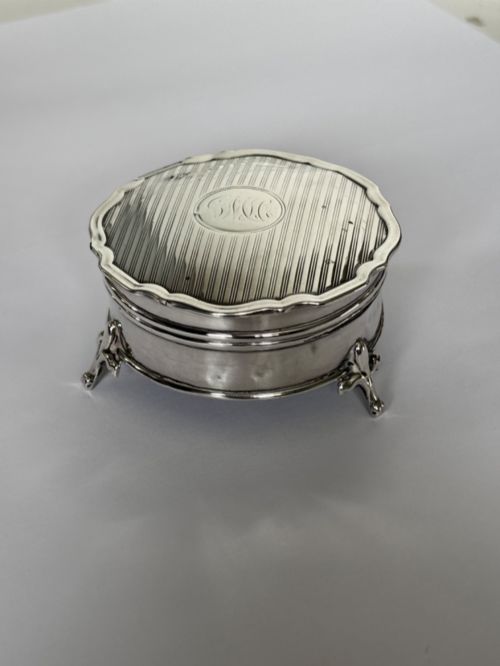
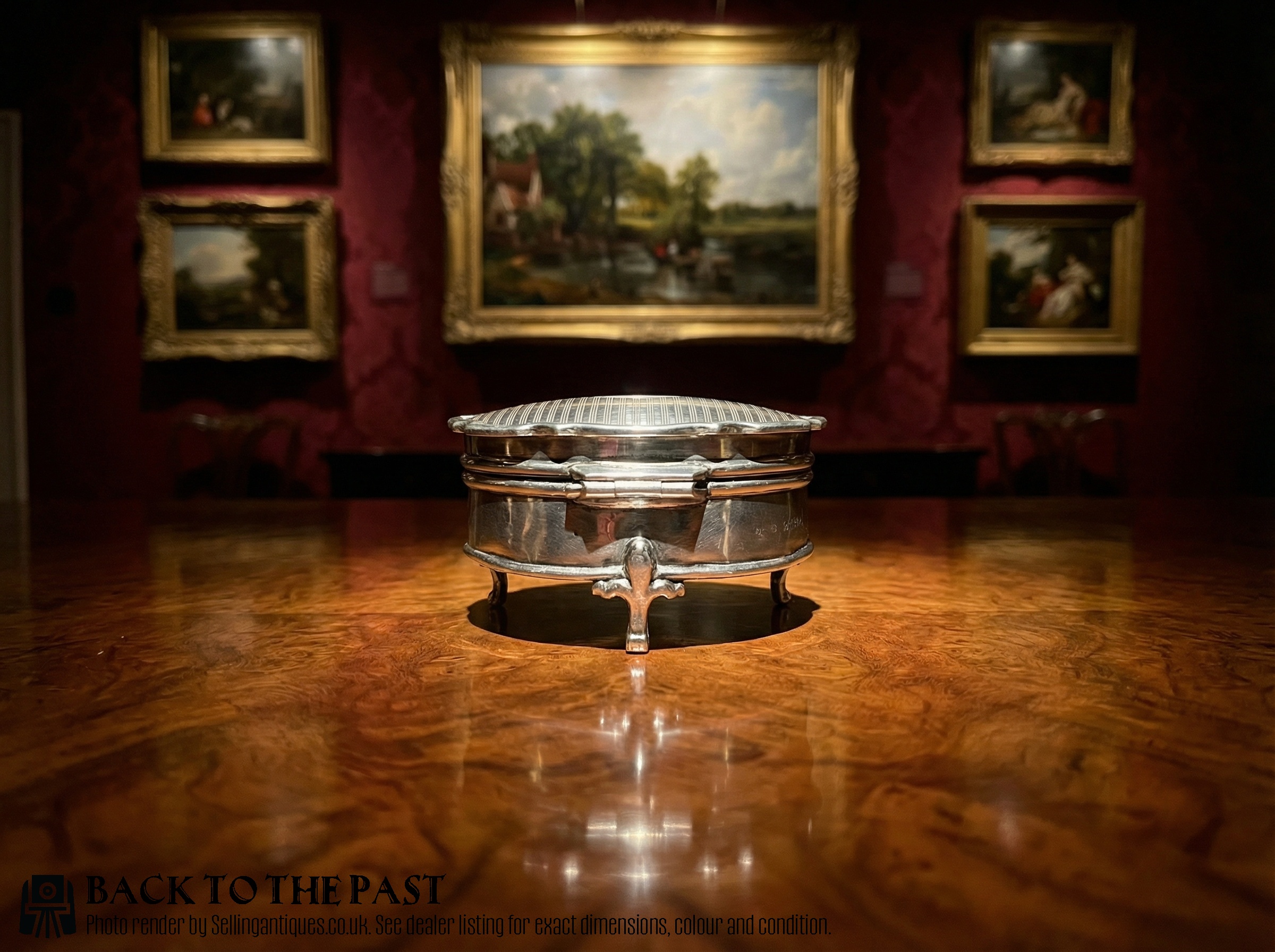
A dressing table ring box is a compact vessel designed specifically to hold small items like rings and cufflinks upon a bedroom surface. The pieces you encounter here span from the late Victorian era through the Edwardian period and into the reign of George V.
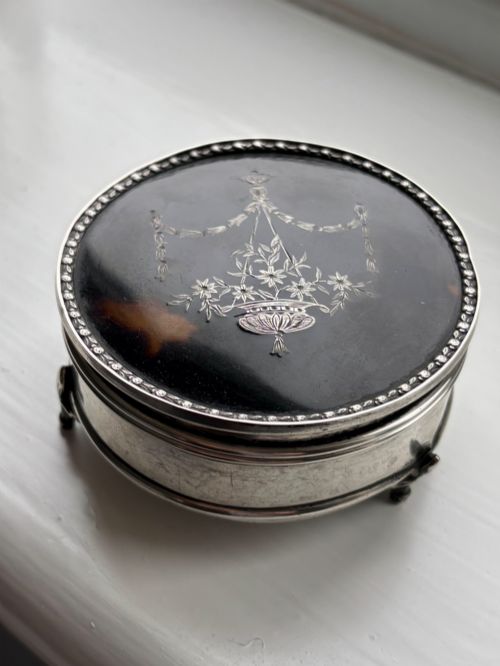
The assortment relies heavily on sterling silver and silver, frequently paired with tortoiseshell, faux tortoiseshell, walnut and mother-of-pearl inlay. Interiors are typically lined with delicate silk or velvet to cushion the jewellery.
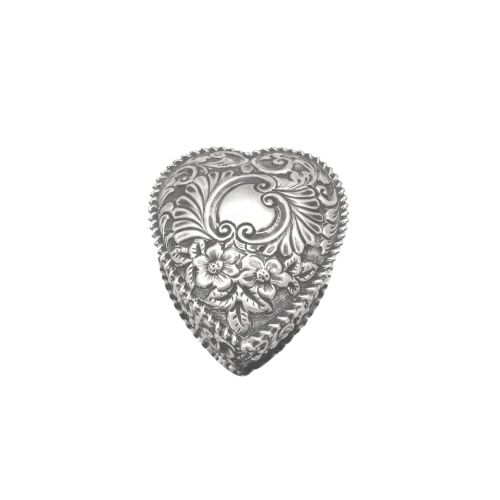
Forms vary from simple circular and heart shapes to more elaborate figural dressing table designs featuring integrated mirrors. These objects emerged from dressing room traditions where personal adornments were neatly organised at the start and end of the day.
Materials and construction
Metalsmiths shaped sterling silver using traditional hammering and stamping techniques, often applying hallmarks to denote assay offices such as Birmingham, Chester, London and Sheffield. Pique work and silver mounts were carefully affixed to organic materials like tortoiseshell.
Cabinetmakers constructed wooden variants from walnut, incorporating detailed pearl inlay and boxwood stringing into the timber lids and frames. Silk and velvet fabrics were tailored tightly to fit the interior bases, creating soft channels or pads for rings.
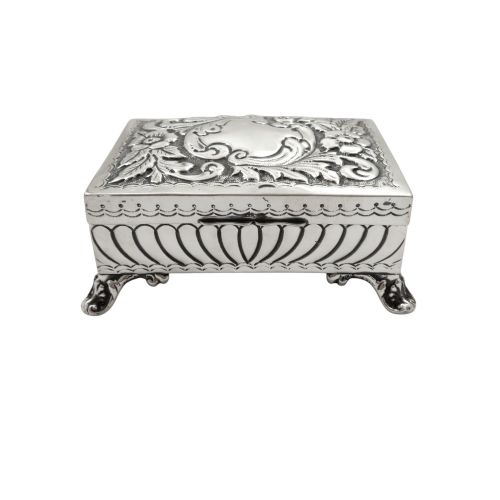
Hinges and clasps were engineered from brass or silver to ensure smooth opening and secure closure of the lids. Makers balanced structural integrity with ornamental flair, incorporating Rococo Revival, Neoclassical Revival and Art Nouveau motifs into the metalwork.
The listings span from the 1880 Victorian period through Edwardian designs to George V pieces of the 1920s.
Evaluating craftsmanship
Quality rests in the crispness of the hallmarks, the precision of the metal stamping and the refinement of any decorative motifs. Superior examples display clean lines and well-fitted hinges that allow lids to open smoothly without wobble.
The integration of secondary materials dictates distinction, particularly in how securely tortoiseshell or mother-of-pearl is set into the silver frame. Finer boxes utilise rich silk or velvet linings that remain intact and complement the exterior material.
The presence of recognised silversmiths elevates a piece, as does unusual form, such as figural models shaped like miniature furniture or heart-shaped boxes with detailed repoussé work.
Ollivant & Botsford·Asprey & Co.·William Comyns·William Neale & Sons·Henry Williamson Ltd·Deakin & Francis·Mappin & Webb·William Griffiths·Henry Matthews
The Dressing Table Ring Box Glossary
- Hallmark
- Official stamps applied to precious metals indicating the standard of purity, the assay office, and the year of manufacture. These markings provide secure dating for antique silver boxes.
- Pique work
- The technique of inlaying tiny points of gold or silver into tortoiseshell or ivory to create delicate patterns. It appears frequently on Edwardian dressing table boxes.
- Stringing
- Inlay of contrasting thin strips of wood used to outline drawers or edges on wooden boxes. It adds subtle linear detail to mahogany and walnut pieces.
- Faux tortoiseshell
- A manufactured imitation designed to replicate the mottled amber and brown patterns of genuine tortoise shell. It was utilised as a cost-effective alternative during the early twentieth century.
Dressing Table Ring Box: Frequently Asked Questions
What is a dressing table ring box?
A dressing table ring box is a small lidded container designed to hold rings and delicate jewellery on a bedroom surface. They were essential accessories for keeping precious items safe and organised.
Most surviving examples date from the late Victorian period through the Edwardian era to the 1920s. They combine precious metals with decorative inlays and soft fabric linings.
How do I know my box is sterling silver?
Sterling silver boxes carry official hallmarks stamped into the metal by an assay office. These tiny marks typically include a lion passant, a city symbol, and a date letter.
Checking these hallmarks allows you to identify the exact year of manufacture and the town where the silver was tested. Unmarked pieces are usually described simply as silver or plated metal.
What were the interior linings made from?
Interiors are lined with delicate textiles such as silk or velvet to protect the jewellery from scratching against the metal or wood. These fabrics were often padded to create secure slots for rings.
Over the decades, these fabric linings frequently show signs of wear or fading. Original undisturbed linings add to the authentic character of the piece.